
The Great Fire of 1776: The Night New York Burned. America 250 NYC

Updated: Jul 2
A City in Chaos—and a Fire That Changed Everything
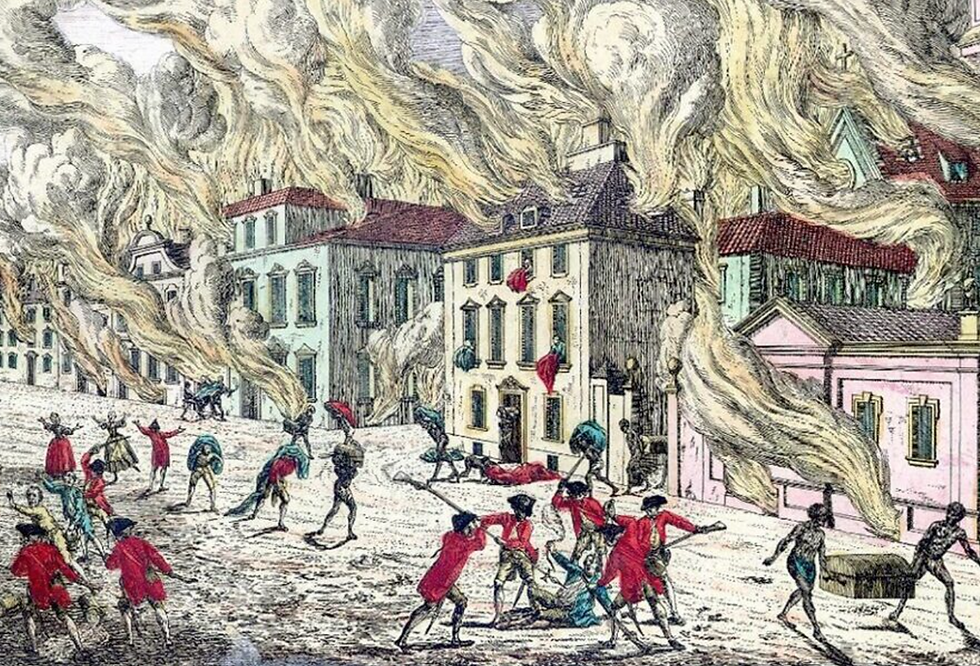
On the night of September 21, 1776, just days after British forces took control of New York City, a fire broke out near the southern edge of Manhattan.
By sunrise, much of the city was gone.
But the Great Fire of 1776 isn’t just a story of destruction—it’s a story of mystery, survival, and a city forced to rebuild itself in the middle of war.
Where the Fire Began—and How It Moved
The fire is widely believed to have started near Whitehall Slip, close to the harbor.
In 1776, this area was:
densely packed
largely wooden
filled with homes, taverns, and warehouses
Once the fire started, it spread fast.
Strong winds carried flames northward through narrow streets, jumping from rooftop to rooftop. With limited firefighting capabilities—and a city already destabilized by war—there was little anyone could do to stop it.
Want to uncover New York's deepest hidden relics with an expert guide? Grab tickets for our small-group America 250 Revolutionary War Experience here.
One of the most powerful ways to understand the Great Fire of 1776 isn’t just to read about it—but to walk the exact path it took through Lower Manhattan. On our America 250: Occupied City NYC walking tours, we explore how this destruction reshaped the city and how its impact is still visible today.
Wind Controlled the Fire
According to most accounts, the fire didn’t spread evenly, it followed the wind. Detractors claim the fire broke out in two separate locations that could not be connected by wind.
That meant:
entire blocks were destroyed
others, just streets away, were untouched
Wind turned the fire into a directional force, pushing destruction through specific parts of the city.
Firebreaks and Spacing
Even in a dense city, small gaps mattered.
Some buildings survived because:
nearby structures collapsed early
open spaces slowed the spread
wider streets created natural breaks
These accidental firebreaks helped stop the fire’s momentum.
Human Intervention
British troops and civilians did attempt to stop the fire—but not everywhere equally.
Efforts were often focused on:
strategic buildings
key infrastructure
areas worth preserving
This uneven response also contributed to the patchwork pattern of destruction.
The Mystery: Patriot Sabotage or British Accident?
Almost immediately, suspicion took hold. The British believed the fire was deliberate—an act of sabotage by American Patriots trying to deny them control of the city.
The timing made that theory plausible:
the fire began just days after British occupation
it destroyed valuable infrastructure
it created chaos within British-controlled territory
Some even accused George Washington of approving such a plan, but there is no definitive evidence.
Other accounts suggest a far simpler explanation:
a cooking fire
an accident
a flame carried by wind
Even today, historians remain divided and the cause of the fire remains 'officially' unknown, although there are leanings toward the fire being deliberately set.
Why Some Buildings Burned—and Others Didn’t
The destruction across Lower Manhattan wasn’t uniform.
Entire sections were reduced to ash—while nearby structures survived. That wasn’t luck alone. It came down to materials, wind, and geography.
Trinity Church, one of the most prominent structures in colonial New York, was destroyed in the fire. Built in 1698 and standing as a symbol of British influence and Anglican authority, Trinity was consumed as the flames moved north through the city.
Wood vs. Stone
Most buildings in 1776 New York were made of wood:
timber frames
wooden roofs
highly flammable materials
Once ignited, they burned quickly and completely.
But some buildings—like St. Paul's Chapel—were constructed with:
thicker stone walls
more durable materials
less exposed wood
These structures resisted ignition and could withstand the heat longer.
The original Trinity Church (built in 1698) was very different from the stone structure you see today—and that difference is exactly why it burned.
What It Was Made Of
The first Trinity Church was built primarily of:
Wood framing (timber structure)
Wooden siding/cladding
Wood shingle roof
Basic masonry foundation (likely stone or brick at the base)
It followed typical late 17th-century colonial construction—practical, relatively quick to build, but highly vulnerable to fire.
Why That Mattered in 1776
When the Great Fire of New York (1776) swept through Lower Manhattan, Trinity didn’t stand a chance.
The wooden roof would have caught first from airborne embers
The timber frame allowed fire to spread rapidly through the structure
Once ignited, the building would have collapsed quickly under intense heat
Its destruction marked not just architectural loss, but a turning point in the landscape of Lower Manhattan. When Trinity Church was later rebuilt, it rose in a city that had fundamentally changed—no longer just a colonial outpost, but a place being reshaped by revolution, fire, and the uncertain beginnings of a new nation.
What Came After
Trinity Church was rebuilt after the fire (and later rebuilt again in the 19th century into the Gothic stone structure standing today).
That evolution tells a bigger story:
After 1776, New York began shifting toward more fire-resistant construction—more brick, more stone, less wood
The fire didn’t just destroy Trinity, it changed how the entire city was built.
The “Miracle” of St. Paul’s Chapel
As the fire moved north, it approached one of the most remarkable survival stories in New York: St. Paul's Chapel
Surrounded by devastation, it should have burned, yet it didn’t.
Accounts suggest:
the wind shifted at a critical moment
surrounding buildings burned in a way that redirected flames
its construction helped it resist ignition
However it happened, St. Paul’s survived—and this is where the fire effectively stopped.
Today, it stands as a physical marker of how close the city came to losing even more.
Two hundred and twenty five years later, St. Paul's Chapel would once again defy the odds and emerge from September 11th unscathed, despite being only a block and a half away during New York City's worst catastrophe.
The Aftermath: The “Burnt District”
By the time the fire ended, the scale of destruction was enormous. Estimates suggest 10–25% of the city was destroyed.
What remained became known as the “Burnt District”:
blackened foundations
empty lots
partial walls
long-term devastation
This wasn’t quickly rebuilt. For years, Lower Manhattan carried visible scars of the fire—reshaping how the city developed moving forward.
The British struggled to manage a damaged city, while residents faced displacement and uncertainty.
The fire didn’t just destroy New York, it forced it to evolve.
Why the Fire Still Matters Today
When you walk through Lower Manhattan today, you’re seeing the result of what survived—and what had to be rebuilt.
The Great Fire influenced:
building materials (less wood, more brick and stone)
city planning
how New York adapted to disaster
It changed the physical landscape of the post-Revolutionary city.
Walking the Path of the Fire
One of the most powerful ways to understand this event is geographically.
The fire:
began near Whitehall Slip
moved north through dense colonial streets
stopped near St. Paul’s Chapel
That path still exists and you can walk it. Once you do, the story becomes real—not just something that happened, but something that shaped the ground beneath your feet.
"This was a fun and very informative tour, and a great way to learn a little more about Alexander Hamilton and the downtown area. A good amount of walking and well paced. Highly recommended!"
★★★★★ — Sarah D., TripAdvisor Review
Final Thought: A City Rebuilt from Ash
The Great Fire of 1776 nearly erased New York, and what survived feels improbable.
What was lost reshaped everything, and what remains is a story defined by uncertainty, resilience, and transformation.
A fire with no clear cause. A city under occupation. And a landscape rebuilt from ruin.
America 250 in NYC Walking Tour
If you want to experience this history in context—standing where it happened and understanding how close the city came to collapse—explore our America 250: Occupied City NYC walking tour of Lower Manhattan, where we bring these moments to life on the streets themselves.
Updated July 2, 2026

