
Visiting the 9/11 Memorial in 2026: The 25th Anniversary Guide to Ground Zero (But Please Do Not Call it That Anymore)

Updated: Sep 5
Updated September 6, 2026
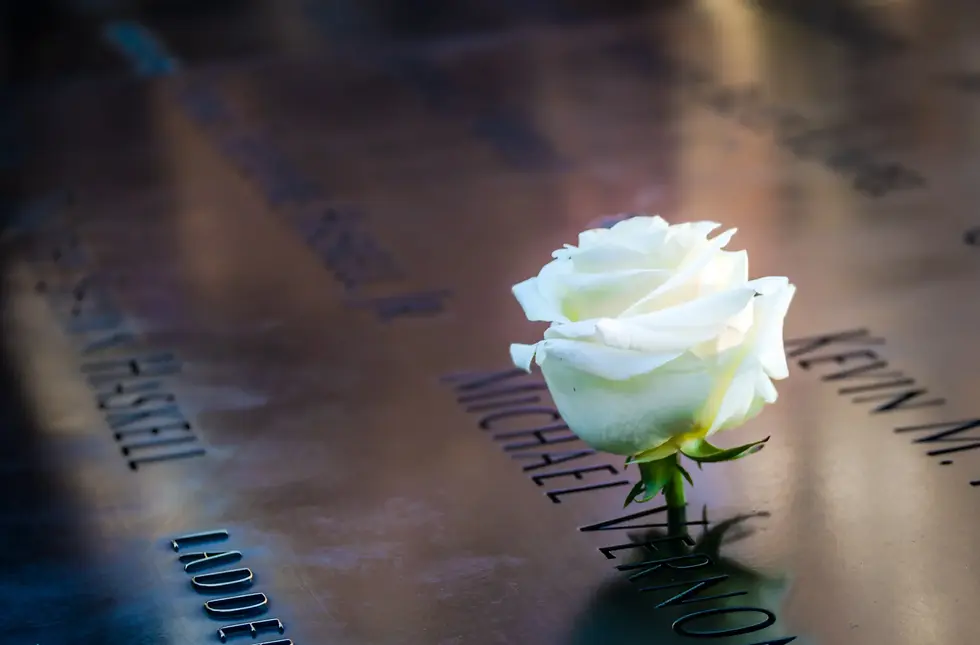
Visiting the National September 11 Memorial is one of the most profound experiences you can have in New York City. More than two decades after the attacks, the Memorial has become one of America's most important places of remembrance—a place where millions of visitors gather each year to honor those who were lost while reflecting on the resilience of New York City.
However, because it sits directly in the center of a bustling, high-speed financial district, many visitors arrive unprepared for the emotional shift the space demands. This complete guide explains what to see, how to visit with the utmost respect, and the hidden context most tourists miss when standing on this sacred ground.
RELATED 2026 UPDATE: The New York City Fire Museum reopened in August after being closed for more than two years. Located at 278 Spring Street, the Museum is currently open Wednesday through Sunday from 10 a.m. to 5 p.m. Its major new exhibition, Ground Zero 360 Remembrance, opens September 11, with admission for the general public beginning September 12, and continues through January 2027. The exhibition brings together contemporary artwork, authentic 9/11 artifacts and personal stories honoring victims, survivors and first responders. Read more about the reopening and what visitors can see inside.
A Personal Perspective on 9/11
This guide is written from the perspective of someone deeply and permanently connected to September 11. Having lost my brother in the attacks, this is not just a list of local attractions for me—it is a lifelong commitment to helping visitors understand the true human cost, resilience, and sacred meaning of this space.
The 25th Anniversary Significance: Why 2026 is Different
September 11, 2026 marks exactly 25 years since the world changed in Lower Manhattan. A quarter of a century has passed, meaning an entire generation of adults has now grown up with no living memory of the original Twin Towers.
Visiting the Memorial this year carries a unique historical weight. The site is no longer just a place of immediate recovery; it has evolved into a global monument to human endurance. Over the last 25 years, New York City did not just clear the rubble—it intentionally wove a space of quiet remembrance directly into the fabric of a living, breathing city.
IMPORTANT SEPTEMBER 11, 2026 ACCESS INFORMATION: The 25th-anniversary commemoration ceremony will begin on the Memorial plaza at 8:30 a.m. Access to the plaza will begin at 7 a.m. for 9/11 family members attending the ceremony. The Museum’s first admission will be at 8 a.m., with final admission at 5:30 p.m. and closing at 7 p.m. Public access arrangements may differ from an ordinary day, so visitors should check the official 9/11 Memorial website immediately before traveling to the site.
Many Visitors Arrive with Questions
What's the difference between the Memorial and the Museum? How much time should you plan? Is the Memorial free? What should you see nearby? And perhaps most importantly, how do you visit respectfully?
Whether you're visiting for the first time or returning during the 25th anniversary year, this guide will help you understand both the history of the World Trade Center site and the significance it continues to hold today.
National September 11 Memorial vs. the 9/11 Museum
One of the most common questions visitors ask is whether the Memorial and the Museum are the same experience.
They aren't.
The National September 11 Memorial is the outdoor memorial plaza surrounding the footprints of the Twin Towers. Admission is completely free, making it one of New York City's most meaningful free attractions. Here you'll find the twin Reflecting Pools, the engraved names of every victim of both the September 11 attacks and the 1993 World Trade Center bombing, the Survivor Tree, Memorial Glade, and peaceful plazas designed for quiet reflection.
Most visitors spend between 30 and 60 minutes exploring the Memorial itself.
The National September 11 Museum is located beneath the plaza and requires a separate timed-entry ticket. The museum contains thousands of artifacts recovered from Ground Zero (proper term for the site in the immediate aftermath only), multimedia exhibits, oral histories, preserved structural elements from the original World Trade Center, and deeply personal stories from victims, survivors, first responders, and recovery workers.
If you're planning to visit both, allow at least three to four hours.
If you're short on time, the Memorial alone offers an incredibly moving experience. For a deep dive you can book a Private 9/11 Memorial tour in NYC
Quick Visitor Information
Location: 180 Greenwich Street, Lower Manhattan
Admission: Memorial Plaza is Free and open to the public
9/11 Museum: Timed ticket required
How Long Should You Spend Here? Memorial only: 30–60 minutes, Memorial and Museum: 3–4 hours
Best Time to Visit
Early mornings generally offer the quietest atmosphere before tour groups arrive. Evenings can also be beautiful, especially as the waterfalls become illuminated and Lower Manhattan begins to quiet down.
If you want to understand how the original World Trade Center was built, what happened throughout September 11, and how the neighborhood was transformed afterward, Vibe NYC Tours founder Dana Tamuccio offers a private 9/11 Memorial walking tour. Dana’s brother Mike was among the 2,977 people killed in the September 11 attacks, making this an exceptionally personal tour grounded in accurate history, remembrance and lived experience.
How to Get to the 9/11 Memorial
The Memorial sits in the heart of Lower Manhattan and is easily reached by subway.
The closest stations include:
• World Trade Center: E
• WTC Cortlandt: 1
• Cortlandt Street: R and W
• Fulton Street/Fulton Center: A, C, J, Z, 2, 3, 4 and 5
• Park Place: 2 and 3
The Oculus transportation hub also connects with PATH trains serving New Jersey.
If you're already exploring Lower Manhattan, the Memorial is within easy walking distance of Wall Street, Trinity Church, the Charging Bull, Battery Park, Stone Street, One World Observatory, and the Staten Island Ferry.
9/11 Memorial Etiquette: How to Visit Respectfully
The 9/11 Memorial is an active place of remembrance and, for many families—including mine—a cemetery in every meaningful sense. Treat your visit with the same decorum you would bring to a national cemetery.
Keep Your Voice Down: The plaza is designed to muffle city noise. Speak in hushed tones to give those mourning around you the space they need. Yes, we are still there and we are still mourning even 25 years later. We might be standing right beside you.
Mindful Photography: Personal photography is generally permitted, but please do not take cheerful selfies, strike poses or treat the Memorial pools as a vacation-photo backdrop. Be conscious that victims’ relatives, survivors and friends may be mourning beside you.
Names Displayed: Do not cover anyone's name and do not set cups down upon, lay bags on or lean across the names. You would not do that to a headstone in a cemetery so please do not do this at the 9/11 Memorial.
Look for the White Roses: As you walk along the bronze panels, you will notice fresh white roses placed inside specific engraved names. This is done by staff every single morning to honor that individual’s birthday. Do not move the roses, if a family member comes to visit and the white rose is missing it's a painful experience to know someone disrespected their loved one by moving the rose. Do not do it.
What to See at the World Trade Center Plaza
1. The Twin Reflecting Pools: The Emotional Center
At the heart of the plaza sit two massive, acre-sized reflecting pools tracking the exact physical footprints where the North and South Towers once stood. They feature the largest man-made waterfalls in North America, cascading continuously down into a central, seemingly bottomless void.
The design is entirely intentional. The roaring water creates a natural wall of sound that blocks out Manhattan’s traffic, while the bottomless drop forces you to feel a tangible sense of physical absence.
Engraved into the bronze borders are the names of all 2,977 victims of the 2001 attacks, alongside the 6 victims of the 1993 World Trade Center bombing. Rather than listing them alphabetically, the names are arranged by "meaningful adjacency"—placing coworkers, flight crews, first responder units, and families side-by-side exactly as they lived and died.

2. The Engineering of the Towers: What Most Visitors Miss
Most people view the original Twin Towers primarily as symbols, but their structural design was also groundbreaking. Each tower used a framed-tube system combining closely spaced steel perimeter columns with a central core of steel columns. Lightweight floor trusses connected the core to the exterior structure, creating exceptionally large, open office floors while allowing the buildings to withstand substantial wind loads.
On September 11, the aircraft impacts damaged structural columns and dislodged fireproofing from portions of the steel. The fires that followed weakened the affected floors and columns, eventually initiating collapse. Investigations of the disaster led to major changes in high-rise fireproofing, emergency communications, evacuation procedures and building-safety standards.
3. The Survivor Tree: A Living Icon of Rebirth
Standing quietly on the plaza is a Callery pear tree known simply as the Survivor Tree. In October 2001, recovery workers discovered the badly damaged tree among the rubble. Its limbs appeared lifeless, its roots were snapped and its trunk was blackened—but it was still alive.
The New York City Parks Department moved it to the Arthur Ross Nursery in Van Cortlandt Park, where it was carefully nursed back to health before returning to the World Trade Center site in 2010. Today, its visible scars and thriving new growth make it a living symbol of survival, resilience and renewal.
Memorial Glade
Many visitors walk past Memorial Glade without realizing its significance.
Dedicated in 2019, this peaceful section of the Memorial honors the thousands of rescue workers, recovery personnel, volunteers, construction workers, and others whose illnesses and deaths have been linked to exposure to toxins at Ground Zero during the months-long recovery effort.
Six large monolithic stone slabs point toward the area where the Twin Towers once stood. Embedded with steel recovered from the original World Trade Center, the stones acknowledge a painful reality that continued long after September 11 itself.
For many families, the story of 9/11 did not end in 2001. Memorial Glade recognizes those whose sacrifices continued for years afterward.
The Sphere
Before September 11, visitors entering the plaza between the Twin Towers were greeted by a massive bronze sculpture known simply as The Sphere, created by German artist Fritz Koenig.
Although badly damaged during the collapse of the towers, the sculpture remarkably survived.
From 2002 until 2017, The Sphere stood in nearby Battery Park as an unofficial memorial. It returned to the World Trade Center site in 2017 and now stands in Liberty Park overlooking the Memorial plaza, where its battered surface remains a visible reminder of destruction, survival and endurance.
St. Nicholas Greek Orthodox Church
Overlooking the southern portion of the Memorial is the stunning St. Nicholas Greek Orthodox Church and National Shrine.
The original church, founded by Greek immigrants in the early 20th century, was completely destroyed when the South Tower collapsed, making it the only house of worship lost on September 11.
The new church, designed by renowned architect Santiago Calatrava, opened in 2022. Inspired by the Byzantine churches of Istanbul, its translucent marble exterior glows beautifully after sunset, creating one of the most striking architectural landmarks at the rebuilt World Trade Center.
Visitors are welcome to enter during public visiting hours, and it's well worth a stop while exploring the Memorial.
Listen as You Walk
If you'd like to experience these stories while walking the campus, our self-guided audio tour brings historical context to each stop, personal stories, and the hidden details that many visitors miss. Rather than reading plaques as you walk, you'll hear the history unfold around you with a "silent guide" which is the only respectful way to tour the grounds.
Don't experience Ground Zero as just another tourist site. Walk the 16-acre memorial guided by a family member. Accurate history, personal stories, and quiet moments of reflection across all major stops—at your own pace, on your own phone. This is the most respectful and reverent way to learn about, explore and experience this sacred site. No circus, no sensationalized "facts", no shouting tour guide, no herds. No disrespect to families and friends who may be right next to you.For a free intro and more details, please visit our full 9/11 Memorial Audio Tour page. | Experience the World Trade Center & 9/11 Memorial at Your Own Pace Through a Sister's Eyes 9/11 Memorial & WTC Audio Guide Download Now $9.99 |
The Architecture of Renewal: Rebuilding the Skyline
The modern World Trade Center complex is designed to strike a delicate balance between looking backward in honor and looking forward in hope.
One World Trade Center: Designing the Safest Building on Earth
Rising above the plaza, One World Trade Center reaches a symbolic height of 1,776 feet, referencing the year of American independence. Its design incorporates lessons learned from September 11, including a reinforced concrete core, wider and more protected emergency stairways, enhanced fireproofing, improved emergency communications and extensive structural safeguards. The building opened in 2014 as both a working skyscraper and a defining symbol of Lower Manhattan’s rebuilding.

The Oculus: Rebirth and Movement
Designed by legendary architect Santiago Calatrava, the World Trade Center Transportation Hub—the Oculus—is a stark white, ribbed masterpiece built to mimic a bird being released from a child's hands. Inside, it serves as a bustling train terminal and shopping space. This intentional juxtaposition of a high-energy commuter hub right next to a somber memorial reminds us of a foundational New York truth: life continues, boldly, even in spaces shaped by immense tragedy.
Why a Guided Experience With a Surviving Family Member Changes Everything
It is easy to walk through the beautiful plaza, take a few photos of the waterfalls, and leave with only a surface-level understanding of what occurred here. The real history of the World Trade Center site is not found in the architecture—it is found in the human stories that aren't written on the signs. I no longer do large group public tours as I feel they are disruptive. You may book a private tour or use our new self-paced Audio Guided Tour
⭐⭐⭐⭐⭐ "I can't speak highly enough of Dana and the tour she provided us! She was a wealth of knowledge from the beginning to the end. She made sure to stop and answer any questions or elaborate further on information the group wanted. I appreciate her vulnerability in sharing personal information about her and her family's experience losing loved ones from 9/11." — Morgan Goorsky, Google Review
⭐⭐⭐⭐⭐ "My wife and I were part of a 9-11 tour in mid-July provided by Dana, and simply put...she gave one THE BEST tours we've experience in all our travels. We thought we knew a fair amount about that terrible day, but Dana shared personal stories (having lost a brother in the towers that day) and balanced her tour with stories of heroism and hope, along with interesting info regarding engineering deficiencies of the twin towers which led to their collapse and improvements and specifics of the new OWTC. When we return to NYC, we will definitely seek her out for other tours given the our tour experience with Dana. She is master of her craft and therefore to be sought for an excellent tour experience." — Ed Falis, Google Review (Local Guide)
Taking a guided walking tour—especially one led by a local New Yorker with a deep personal connection to the events—transforms the landscape. A guide helps you trace the chronological footsteps of that morning, explains the hidden design cues of the monuments, and connects the physical locations to real, lived human experiences.
If you are looking for an authentic, respectful, and deeply human way to understand the WTC Site and Memorial during this milestone 25th anniversary year, we invite you to walk with us.
Frequently Asked Questions About the 9/11 Memorial (FAQ)
Is the 9/11 Memorial free?
Yes. The outdoor memorial plaza, including the Survivor Tree and both Reflecting Pools, is entirely free and open to the public daily from 8:00 AM to 8:00 PM. No tickets are required to walk the grounds.
Do I need tickets for the 9/11 Museum?
Yes, the indoor underground museum requires a timed-entry ticket, which should be booked well in advance during peak travel seasons.
Is the site appropriate for young children?
The outdoor Memorial can be appropriate for children when adults prepare them for the meaning of the site and the behavior expected there. The Museum contains emotionally intense audio, video, photographs and artifacts. Parents and caregivers should consider each child’s age and sensitivity before visiting the Museum.
How has Lower Manhattan changed since 9/11?
In the 25 years since the attacks, the Financial District (FiDi) completely reinvented itself. Once a strictly corporate neighborhood that went dark after 5:00 PM, it has transitioned into a vibrant, highly residential community full of parks, world-class dining, and historic waterfront destinations.
Can you visit the 9/11 Memorial without visiting the Museum?
Yes. The outdoor Memorial is completely free and does not require a ticket.
Do you need reservations?
No reservations are needed for the Memorial Plaza.
Reservations are recommended for the Museum, especially during weekends, holidays, spring break, and the summer travel season.
Can you take photographs?
Yes.
Photography is allowed, but visitors should remain mindful that this is an active memorial visited daily by victims' families. Respectful photography helps preserve the solemn atmosphere of the site.
Is the Memorial wheelchair accessible?
Yes.
The Memorial Plaza is fully accessible, with paved pathways throughout the grounds. The Museum also provides accessible entrances, elevators, wheelchairs, and other accommodations for visitors.
Are there restrooms?
Restrooms inside the 9/11 Museum are intended for ticketed Museum visitors. Public restrooms are also available inside the Oculus. Availability and access can change, so visitors should not rely on entering the Museum solely to use its facilities.
Are dogs allowed?
Only trained service animals are permitted within the Memorial Plaza.
How much walking is involved?
Most visitors walk less than one mile while exploring the Memorial and nearby attractions. Benches are located throughout the plaza for anyone who would like to sit and reflect.
A Final Thought
There is no single "correct" way to experience the 9/11 Memorial. Some visitors come to read the names, some come to study the engineering marvels, and others simply stand in silence by the water.
What matters most is that you arrive with intention. The site asks very little of you—just your presence, your respect, and your willingness to remember. In return, it offers something incredibly rare in the middle of Manhattan: a quiet place to pause, reflect, and witness the triumph of renewal.
⭐⭐⭐⭐⭐ "My wife and I did a tour with Dana at the end of August and we found her to be well informed and extremely precise in giving a detailed rendition of what happened on that horrible day in September when New Yorkers and the United States were attacked. When my wife and I travel we like to stay away from the big travel companies who are just about the bottom line. If you book with Dana you will not be disappointed and you will get a personal touch" — David Jodoin, Google Review (Local Guide)
More Reading: The Friend to the Friendless - My Brother Mike (Part 1 of the Always Remember 9/11 Series)

