
The Astor Real Estate Empire: How Fur and Manhattan Land Built a New York Dynasty

Updated: Jul 8
Key Entity | Historical Impact |
Full Name | John Jacob Astor I (1763–1848) |
Primary Base | Astor House / Waldorf Astoria / 350 Fifth Ave, NYC |
Major Monopoly | American Fur Company / Manhattan Real Estate |
Women of Wall Street Stars | Sarah Todd Astor & Marion S. Parker |
Social Gatekeeper | Caroline Schermerhorn Astor (The Mrs. Astor) |
2026 Relevance | Waldorf Astoria Reopening / America 250 |
In 2026, as New York City prepares for the America 250 celebrations, the Astor name is synonymous with old-world prestige and the Waldorf Astoria. However, the foundation of this fortune was built on a series of predatory monopolies and a landlord system that prioritized ground rents over human living conditions. John Jacob Astor I was not just the first multi-millionaire in the United States; he was the first to realize that the most valuable commodity in a growing republic was the literal dirt of Manhattan Island. He did not build New York; he owned the space it was forced to occupy.
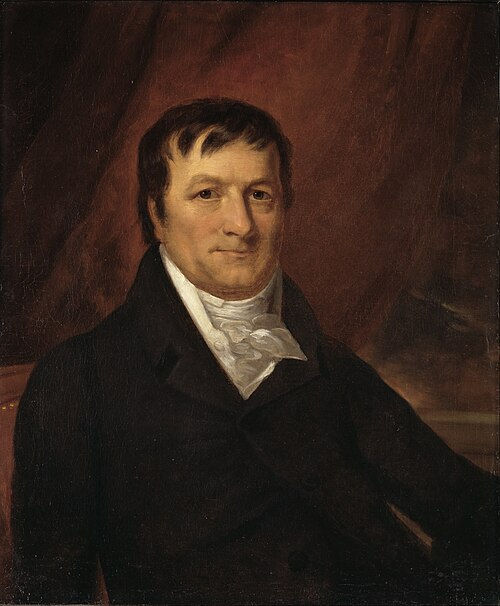
John Jacob Astor I: Furs, Opium, and the Foundation of a Global Empire
John Jacob Astor arrived in the United States in 1784 with $25 and a handful of German flutes. By 1808, he had founded the American Fur Company, which established a 90% monopoly on the American fur trade. Astor’s tactics were purely mercenary; he utilized a network of trading posts (most notably Astoria in the Oregon Territory) to squeeze out independent trappers and establish the country's first true vertical monopoly. He treated the American wilderness as a resource to be stripped, often providing trappers with alcohol and shoddy goods in exchange for high-value pelts.
What is frequently omitted from the standard historical narrative is Astor’s pivot into the opium trade. To facilitate his China trade (shipping furs to Canton), Astor began exporting high-grade Turkish opium into China to fund his purchases of silk, tea, and porcelain. As Ron Chernow notes in his broader observations on early American capital, Astor possessed a calculating personality that allowed him to diversify his portfolio into high-risk, high-reward international markets before any of his contemporaries. He viewed moral considerations as secondary to the accumulation of liquid capital.
Sarah Todd Astor: The Meticulous Mind Behind the American Fur Company
While history books focus on John Jacob, his wife Sarah Todd Astor was a vital business partner and supporting actors on the Women of Wall Street NYC Tour. When they married in 1785, Sarah brought a $300 dowry, but more importantly, she brought a superior knowledge of furs and a meticulous business mind. Sarah was far more than a supportive spouse; she was a senior partner in everything but name.
Sarah personally inspected the pelts that entered the Astor shop, identifying prime skins with a precision that John Jacob initially lacked. She managed the accounts and provided the financial discipline that allowed the family to survive early market fluctuations.
Legend has it that she charged her own husband an hourly rate for her consulting services during the early years of the business.
Without Sarah’s methodical management and her ability to detect quality in a chaotic market, the American Fur Company would likely have succumbed to the competition of the early frontier.
The 'Slumlord' Legacy: Engineering Poverty through Ground Leases
In the 1830s, Astor sold his interests in the fur trade to focus exclusively on Manhattan real estate. His strategy was based on two cold calculations: buying the future and leveraging the reversion clause. He purchased massive tracts of farmland north of the developed city limits—including the areas that would become Times Square and the Upper West Side—correctly predicting that the population would surge northward.
Astor rarely built on his land. Instead, he utilized long-term ground leases (typically 21 years). He would rent the vacant land to a sub-landlord who was responsible for building a structure. When the lease expired, the land and the building reverted to the Astor family for free. This created a slumlord legacy. Because sub-landlords knew they would lose the building in 20 years, they performed zero maintenance. This resulted in the dense, decaying tenement conditions that defined much of Lower Manhattan in the late 19th century. On his deathbed in 1848, Astor’s only regret was a lack of further ruthlessness, famously stating:
"Could I begin life again, knowing what I now know, and had money to invest, I would buy every foot of land on the Island of Manhattan."
Caroline Astor: The OG Housewife and the Battle for 34th Street
By the late 19th century, the Astor name had shifted from trade to social gatekeeping under the iron rule of Caroline Schermerhorn Astor, known simply as "The Mrs. Astor." She was the original housewife of New York City, a woman who treated social standing as a blood sport. Caroline was the architect of "The 400," a curated list of New York society members who were deemed worthy of entering her ballroom at 34th Street and Fifth Avenue (the site where the Empire State Building stands today).
Caroline spent decades maintaining 34th Street as the epicenter of old-world prestige. However, the neighborhood began to change as commerce moved north. When her nephew, William Waldorf Astor, built the 13-story Waldorf Hotel directly next to her brownstone as an act of familial spite, the social war was won. In 1894, Caroline finally retreated, moving further uptown to a palatial mansion at 65th Street and Fifth Avenue designed by Richard Morris Hunt. This move signaled the end of the 34th Street era and the beginning of the uptown social circuit that still defines Manhattan today.
Ask us about our private Gilded Age Mansion Walking Tour
The Waldorf and The Astoria: A Spite-Fueled Connection
The Waldorf-Astoria was not born as a single building but as a result of a bitter family feud between William Waldorf Astor and his aunt, Caroline Astor.
The Waldorf (1893): William Waldorf Astor built the first half of the complex on the site of his former mansion at 33rd Street and Fifth Avenue. It was 13 stories high and designed by Henry Janeway Hardenbergh.
The Astoria (1897): Four years later, John Jacob Astor IV (Caroline’s son) retaliated by tearing down his mother’s mansion next door and building the Astoria Hotel. This section was 17 stories high, towering over his cousin’s hotel.
The two hotels were built as separate entities, but J.J. Astor IV insisted on a design that would allow them to be adjoined if the feud ever cooled. When they eventually reached a truce, the famous Peacock Alley was created—a 300-foot-long marble corridor that connected the two buildings, creating the largest and most lavish hotel in the world at the time.

Marion S. Parker: Engineering the Astoria and the Waldorf Expansion
Marion S. Parker was a senior structural engineer at the prestigious firm Purdy & Henderson. While the firm’s male founders are often the only ones listed in standard texts, Parker was the lead calculator on some of the most complex steel-frame projects of the Gilded Age.
Parker specifically worked on the structural steel for the Astoria Hotel (1897). Because the Astoria was significantly taller and more massive than the original Waldorf, it required a revolutionary approach to weight distribution. Parker performed the high-level mathematical calculations that allowed the Astoria to stand safely on Manhattan’s schist while supporting the unprecedented weight of its elaborate Beaux-Arts facade. When the hotels were adjoined, her engineering ensured the two disparate steel skeletons worked in harmony.

The Flatiron Building: The Skeleton That Changed Everything
History correctly identifies the Flatiron Building (1902) as a seminal moment in architecture. Before the Flatiron, "skyscrapers" were often hybrid structures that still relied on thick masonry walls at the base to support the weight of the building.
The Flatiron Building, however, used a pure steel skeleton that functioned like a biological cage. This "precursor" skeleton proved that the exterior walls no longer had to be load-bearing; they could simply be "curtains" of stone or glass hung on a steel frame.
Marion S. Parker’s Critical Contribution: The Flatiron presented a nightmare for engineers due to its narrow, triangular shape. The primary concern wasn't just gravity; it was wind load. In a heavy storm, a building of that shape and height could act like a sail, potentially twisting or toppling.
Parker was responsible for the wind-bracing calculations that allowed the Flatiron to withstand the gale-force winds of 23rd Street.
She calculated the "shear stress" and implemented a system of heavy steel bracing that was hidden within the narrow "prow" of the building.
Her math proved that a steel skeleton could be manipulated into any shape—even a sharp triangle—without compromising structural integrity.
Because of Parker's work, the Flatiron became the prototype for every future skyscraper. If the Flatiron skeleton hadn't succeeded, the skyline of 2026 Manhattan would not exist.
Madeleine Talmage Force Astor: The Scandalous Survivor of the Titanic
A lesser-known figure who is central to the Astor narrative is Madeleine Talmage Force. In 1911, the 47-year-old John Jacob Astor IV scandalized New York by marrying the 18-year-old Madeleine. The 29-year age gap was so controversial that the couple fled to Europe and Egypt on an extended honeymoon to wait for the gossip to subside.
They were returning to New York on the RMS Titanic in April 1912 so that Madeleine could give birth in the United States.
While J.J. Astor IV went down with the ship (his body was found with a gold pocket watch that sold in 2024 for $1.46 million), Madeleine survived. As a pregnant, teenage widow, she became the subject of intense media fascination, eventually forfeiting her massive Astor trust fund to remarry for love—twice. She represents the tragic, human end of the original Astor "Titan" line.
The Great Liquidation: Vincent Astor’s Moral Pivot and the Ghost Empire (2026)
By 2026, the family has effectively liquidated their massive New York City real estate empire. The "Great Liquidation" was initiated by Vincent Astor, the son of J.J. Astor IV, who inherited the empire after his father died on the Titanic. Unlike the previous three generations of "Titan" landlords, Vincent was deeply conflicted about the family’s wealth.
The Slum-Clearing Liquidation and First Houses
Vincent Astor viewed the family’s vast tenement holdings as a moral and financial liability. In 1935, in an unprecedented move for a Robber Baron heir, he sold a massive parcel of land on the Lower East Side to the New York City Housing Authority (NYCHA) for less than half its market value. This land became the site of First Houses, the first public housing project in the United States.
He also transformed the family’s real estate approach from extraction to stewardship. He built handsomely appointed Georgian-style apartment houses at East 86th Street and East End Avenue, which remain stolid fixtures of the neighborhood in 2026.
Poverty Row and the Rejection of "The 400"
In a direct rejection of his grandmother Caroline’s "400" elitism, Vincent converted a row of Victorian-era brownstones between 88th and 89th Streets into what he fondly called Poverty Row. He designed these apartments for young artists and professionals who hadn't yet made their fortunes. It was a calculated effort to use the family land to foster the city's creative future rather than its stagnant elite.
Brooke Astor’s Spend It All Philosophy
The final phase of the liquidation fell to Brooke Astor, who presided over the Vincent Astor Foundation from 1960 until its dissolution in 1997. Her philosophy was simple: "Spend it all." She believed the Astor fortune should be returned to the city that created it.
She disbursed nearly $200 million in grants to New York City institutions, including:
The New York Public Library: The massive "Lion" steps were a primary beneficiary.
The Metropolitan Museum of Art: Funding the Astor Court (the Chinese scholar's garden).
The Bronx Zoo and various settlement houses.
What the Astors Own Today (2026)
Today, the family grip on NYC real estate has effectively slipped.
One Astor Plaza (1515 Broadway): Once the site of the Hotel Astor, the land and building are now owned by SL Green Realty (53%) and Allianz (47%). The family no longer holds the fee-simple interest in the ground.
Astor Place: While the name remains, the land is largely held by institutions like Cooper Union or private developers who bought out the original ground leases decades ago.
The St. Regis: Vincent sold it, regained it through a mortgage default in 1935, and eventually it passed into the hands of global hospitality conglomerates.
Remaining Traces: The only significant historical land still held by direct descendants is Rokeby, a 450-acre estate in the Hudson Valley still occupied by the Aldrich family (descendants of Margaret Astor Chanler).
In 2026, the Astors are essentially a ghost empire Their name can still be seen on street signs and subway stops, but the deeds to the dirt of Manhattan have long since been converted into the city's libraries, parks, and museums.
Astors Guide 2026: The Waldorf Astoria A Reclaimed Icon for America 250
The Astor legacy has reached a new milestone in 2026 as detailed in this guide. Following a decade-long, multi-billion dollar renovation by the Dajia Insurance Group, the Waldorf Astoria New York officially reopened in late 2025. For the America 250 celebrations this year, the hotel remains the "Must-Visit" location in Midtown. The renovation meticulously restored the 1893 World's Fair clock in the lobby and converted the upper floors into luxury condominiums. Standing in the lobby today, visitors are standing in the physical culmination of Sarah Todd’s pelt-counting, Marion S. Parker’s engineering, and John Jacob’s predatory dirt monopoly.
Go Deeper: More Wall Street History from Vibe NYC
J.P. Morgan: The Ruthless History of Wall Street's Most Powerful Robber Baron
John D. Rockefeller: The Ruthless History of the Standard Oil Monopoly
Andrew Carnegie: The Ruthless Robber Baron of Steel and the Gospel of Wealth
Cornelius Vanderbilt: The Ruthless History of NYC's Railroad Empire
Jay Gould: The Robber Baron Known as the Mephistopheles of Wall Street
The Real Story Behind the Buttonwood Agreement and the Origins of the NYSE
The Fearless Girl: Symbol, Strategy, and the Story Behind Wall Street's Most Contested Statue


