
The Ultimate Hamilton NYC Guide 2026: Historical Sites, Walking Tour Pricing, and Broadway Comparison for Visitors

Updated: Jul 8
Exploring the rich history of Alexander Hamilton in New York City offers a unique blend of education and entertainment. This guide delves into the must-visit historical sites associated with Hamilton, the costs and booking processes for NYC Hamilton walking tours, and a comparison between the Broadway musical and the walking tour experience. Visitors often seek engaging ways to connect with history, and Hamilton's legacy provides a compelling narrative that resonates with many. This article will cover key historical sites, pricing details for tours, family-friendliness, and visitor reviews, ensuring a comprehensive understanding of Hamilton tours in NYC.
What Are the Must-Visit Alexander Hamilton Historical Sites in NYC?
Alexander Hamilton's influence on American history is profound, and several key sites in New York City commemorate his legacy. These historical sites not only provide insight into Hamilton's life but also serve as important landmarks in the narrative of the United States. Notable locations include Federal Hall, where Hamilton served as the first Secretary of the Treasury (though it was George Washington who was inaugurated as the first President there), and Trinity Church, his final resting place. Each site offers a unique perspective on Hamilton's contributions to the nation.
Ready to trace Wall Street's founding secrets on foot? See our real-time availability for the Hamilton Musical Walking Tour here.
Exploring Hamilton Grange National Memorial and Its Significance
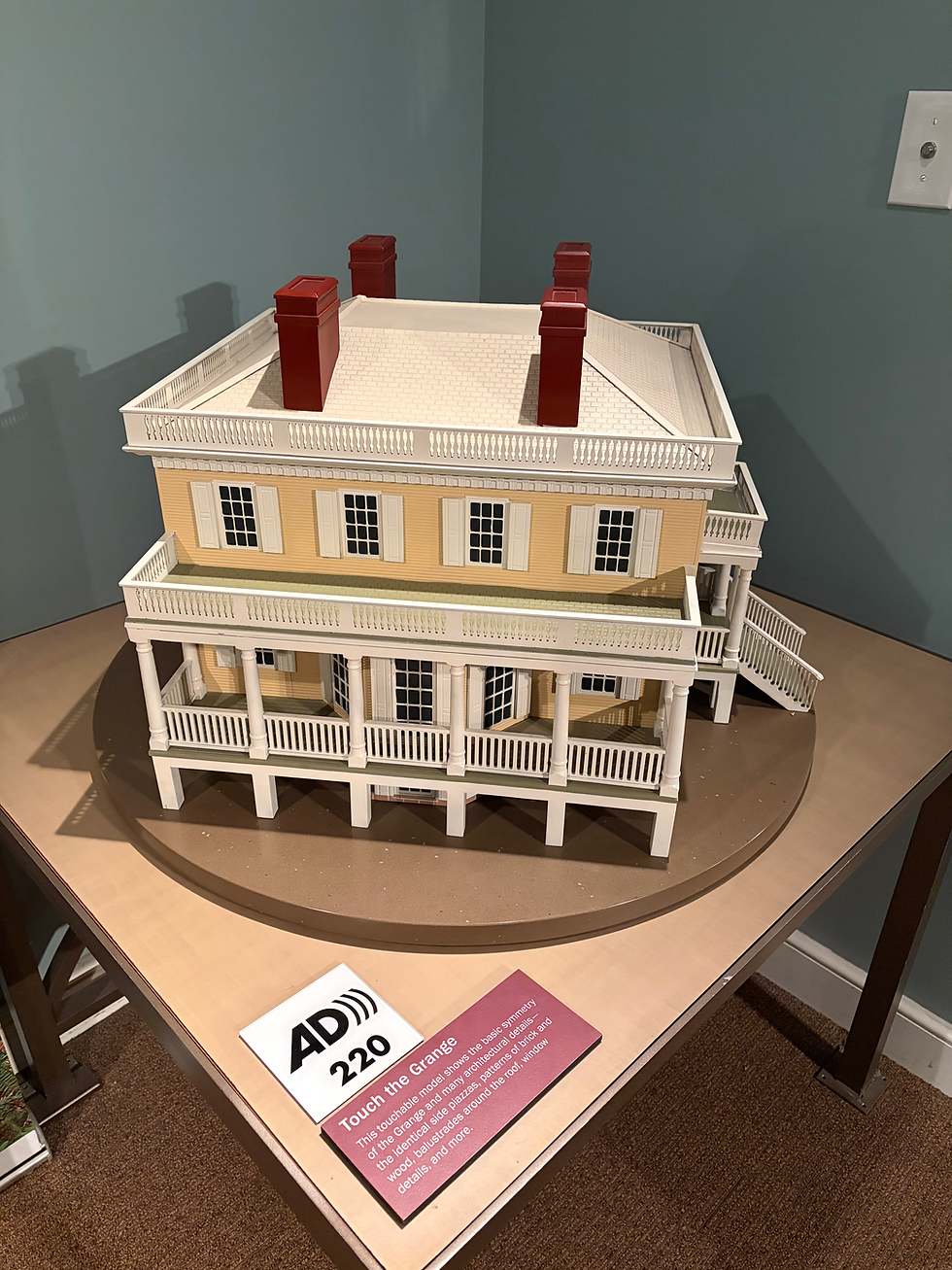
Hamilton Grange National Memorial is the only home ever owned by Alexander Hamilton — and its survival is a story almost as dramatic as his life. Hamilton walking tours typically do not go this far north, but it's a must do on your own.
Originally built in 1802 on what was then rural upper Manhattan, the house did not always sit in today’s St. Nicholas Park. As Harlem developed in the late 19th century, the Grange was moved in 1889 to save it from demolition and placed beside St. Luke’s Episcopal Church. Decades later, preservationists determined that location was both architecturally and historically limiting — the house was tightly wedged against the church, obscuring two sides of the structure and resting on a compromised foundation.
In 2008, the National Park Service undertook an extraordinary engineering effort to move it again. The entire wooden structure was carefully lifted onto hydraulic dollies, raised high enough to clear surrounding obstacles, and slowly rolled out — quite literally up and over the adjacent church property — before being relocated to its current, more historically appropriate setting within St. Nicholas Park. If you decide to visit The Grange, there is a video presentation of this incredible endeavour just inside the main entrance. There, in St. Nicholas Park, it now sits freestanding, much closer to its original orientation and design intent.
Within St. Nicholas Park itself, visitors can also observe the historic landscape context that once surrounded Hamilton’s country estate. When the Grange was originally constructed in 1802, this area was pastoral and removed from downtown Manhattan — a setting chosen intentionally by Hamilton for health, retreat, and status.
Interestingly, the bronze statue of Hamilton that once stood near the house was left behind during the relocation. Visitors can still see that statue today just a few blocks away, offering an additional stop for those exploring Hamilton’s legacy in the neighborhood.
Inside the Grange, period rooms reflect Hamilton’s final years and his aspirations for both family life and national prominence. Access to the upstairs level is available only through the site’s free ranger-led tours, which are the sole way to view the historic keyboard instrument owned and played by the Hamilton family — a square piano called a Pianoforte.
The first reference to this piano appeared in a 1794 letter from Angelica Schuyler Church to her sister, Elizabeth Hamilton. In this letter, Angelica expressed her wish to purchase a piano for her niece, Angelica. At the time, square pianos were approaching peak popularity in Europe and North America. This instrument was sought after for its well-rounded sound and modern capabilities. It was also lightweight and much smaller than other keyboard instruments that preceded it.
Free Ranger-led tours are typically offered several times daily — often late morning and mid-afternoon (for example, around 11:00 AM, 1:00 PM, and 3:00 PM) — though schedules can shift seasonally or due to staffing, so visitors are strongly encouraged to check the National Park Service website in advance of their planned visit.
Today, Hamilton Grange stands not just as a preserved home, but as a testament to Hamilton’s ambition, resilience, and lasting architectural and political legacy — saved twice from disappearance and now thoughtfully interpreted for modern audiences.

Morris-Jumel Mansion — Burr, Washington, the Aftermath of Hamilton and Musical Inspiration?
Built in 1765, the Morris-Jumel Mansion is Manhattan’s oldest surviving house. During the Revolutionary War, it served as headquarters for George Washington in 1776 during the Battle of Harlem Heights. That alone makes it Hamilton-era ground. But the Aaron Burr connection is where the narrative connects the then and now from history to musical. Much like the Hamilton Grange National Memorial, Hamilton NYC walking tours do not typically visit the mansion. However, the mansion sits just a short distance from the Grange, making it easy to combine both sites into a single, well-structured uptown visit.
(Note: at the time of this writing the Morris-Jumel Mansion is temporarily closed for renovations)
Aaron Burr’s Final Chapter
In 1833 — nearly three decades after killing Hamilton in their duel — Aaron Burr married Eliza Jumel, the wealthy widow who owned the mansion.
By the time he married Eliza Jumel, Burr was living modestly and was dependent on legal work and social maneuvering. He was not destitute in the literal sense, but he was financially unstable and socially diminished compared to his earlier stature.
The marriage to one of the wealthiest women in New York appears, at least in part, to have been economically strategic.The final chapter of Aaron Burr's life unfolded with a dramatic and ironic flourish at the Morris-Jumel Mansion, a place where his rival, Alexander Hamilton's mentor George Washington, once held court. Nearly three decades after killing Hamilton in their infamous duel, Burr, at the age of 77, married Eliza Jumel in 1833. She was a woman of immense wealth, one of the richest in New York, and the mansion's owner.
By this time, Burr was a shadow of his former self. His once-promising political career had been utterly destroyed by the duel in 1804, compounded by a charge of treason in 1807, from which he was acquitted, but the scandal permanently damaged his reputation. Following years of financial struggle and near-exile in Europe, he had returned to a modest law practice in New York, never regaining his earlier political standing or significant wealth. Though not literally destitute, he was financially unstable and socially diminished, suggesting the marriage to Eliza Jumel was, at least in part, an economically strategic move.
The union, however, was brief, lasting less than a year. Eliza Jumel soon filed for divorce, citing financial mismanagement. In an extraordinary twist of fate that seems worthy of the stage, the divorce was finalized on September 14, 1836—the very day Aaron Burr died. The man who ended Hamilton’s life spent his final years in a house that was a key part of Washington's, and thus Hamilton's, Revolutionary orbit, culminating in a final act of theatrical symmetry.
Washington’s Headquarters
The Morris-Jumel Mansion, built in 1765, is a place steeped in the drama of the Revolutionary Era. In 1776, it was secured by George Washington to serve as his headquarters, strategically chosen for its elevated vantage point overlooking the Harlem River and the Hudson Valley. Though his presence is not specifically documented inside its walls, Alexander Hamilton, then a young artillery officer, was already moving within Washington’s close military circles. This historical thread makes the mansion a singular, physical overlap point where the lives and orbits of Washington, Hamilton, and, later, Aaron Burr—his rival and killer—all converged within the span of one revolutionary era.
Lin-Manuel Miranda & the Musical’s Origins
In 2015, while serving as an artist-in-residence at the mansion, Lin-Manuel Miranda reportedly drafted portions of what became Hamilton inside the very rooms where Burr once lived. That poetic symmetry is powerful for storytelling: Burr, who ended Hamilton's life, has his rival's story resurrected artistically two centuries later in his final home. The narrative quite literally returns to the room where Burr spent his last years. Miranda has described the creative experience as feeling haunted—historically, if not literally—by the presence of Burr and the Revolutionary generation.
Visiting the Hamilton Statue and Other Key Landmarks Uptown
Beyond Hamilton Grange National Memorial, and the Morris-Jumel mansion, Upper Manhattan holds several meaningful sites connected to Hamilton’s era and legacy.
Just 10-20 minutes away (bus vs. walking), near West 110th Street at Morningside Park, you’ll find the Washington and Lafayette Monument. This striking double equestrian statue honors George Washington and the Marquis de Lafayette — two towering figures of the Revolutionary generation. While Hamilton is not depicted, the monument powerfully evokes the military and political world in which he rose to prominence as Washington’s aide-de-camp and trusted advisor. Standing here offers a vivid sense of the Revolutionary leadership circle that defined Hamilton’s early career.

Farther south, inside Central Park stands the Alexander Hamilton Statue, located near East Drive at approximately 83rd Street on the park’s east side. Sculpted by Carl Conrads and dedicated in 1880, the statue depicts Hamilton in Revolutionary-era attire, gazing south toward the city he helped shape. Its placement along the park’s perimeter — closer to Harlem than to Wall Street — is a reminder that Hamilton’s final home and personal life were rooted uptown.
Trinity Church Cemetery — Hamilton’s Social & Political Generation
Trinity Church Cemetery (Broadway at 155th Street) is the uptown extension of the original Trinity Churchyard downtown where Hamilton is buried.
Notable burials here include:
John James Audubon – Naturalist and artist whose work reflects the expanding American identity of the early republic.
Clement Clarke Moore – Author traditionally credited with A Visit from St. Nicholas (’Twas the Night Before Christmas), representing early 19th-century New York cultural life.
John Jacob Astor – Early American capitalist whose rise followed the commercial structures Hamilton helped create.
Alfred Tennyson Dickens – Son of Charles Dickens, illustrating New York’s 19th-century global connections.
While Hamilton himself rests downtown at Trinity Church, the uptown cemetery reflects the economic, cultural, and civic evolution of the city that emerged from the Federalist era he helped shape.
Columbia University — From King’s College to Revolutionary Crucible
Columbia University began in 1754 as King’s College, a royal charter institution under George II. By the time Hamilton arrived in New York in 1772, it had already become a center of colonial intellectual life.
Before the American Revolution, Alexander Hamilton studied at the Elizabethtown Academy in New Jersey in 1772 to prepare for university. He then enrolled in King's College (now Columbia University) in New York City in 1773 or 1774, where he studied curriculum including Latin, Greek, and mathematics before leaving in 1776 to join the Revolutionary War. The King's College campus where Hamilton studied was in the vicinity of Park Place and Church Street in Lower Manhattan.
After the Revolution, King’s College was renamed Columbia College, symbolizing the ideological shift from monarchy to republic — the same political transformation Hamilton himself helped engineer.
Today’s uptown campus , relocated in 1897 from it's second location of 49th Street & Madison Ave, sits only blocks from Hamilton’s final home — a geographic echo of how Revolutionary ideals migrated and matured across the city. The main undergraduate building at Columbia is named Hamilton Hall in honor of the alumnus, and there is a statue of him on campus.
Together, these uptown sites shift the narrative away from finance and toward Hamilton’s personal world — his home, his Revolutionary circle, and the physical landscape of early 19th-century Manhattan — offering a richer and more intimate understanding of his life beyond Wall Street.
Are There Any Hamilton Related Sites in and Around the West Village of NYC?
82 Jane Street — The Room Where Hamilton Died
Today, 82 Jane Street is a quiet West Village address lined with brick townhouses and boutique storefronts. But in July of 1804, this stretch of Manhattan was still part of the Bayard family estate — semi-rural land along the Hudson River, north of the densely built city.
It was here — in the country home of William Bayard Jr. — that Alexander Hamilton was carried after the duel with Aaron Burr at Weehawken in New Jersey on July 11, 1804. Hamilton did not die on the dueling grounds.

He was rowed back across the Hudson, gravely wounded, and brought to the Bayard house in the area 82 Jane Street, which was the southern border of the estate. The house itself stood a few blocks north of Jane Street, on elevated land with river views — a peaceful setting for what would become one of the most consequential deaths in American political history. He lingered there for roughly 31 hours.
His wife Eliza and their children were brought to his bedside where they spent the last hours of his life. Physicians attempted treatment, but the wound — a pistol ball lodged near his spine and liver — was catastrophic. He died in an upstairs room on July 12, 1804.
When Hamilton was carried to 82 Jane Street, the West Village did not yet resemble today’s tight street grid. The Bayard estate extended across rolling land overlooking the Hudson. The duel itself took place in New Jersey, but Hamilton’s final hours unfolded in a liminal zone — no longer urban, not quite countryside.
Hamilton died not in a government building, not at Wall Street, not at his own home — but in the country residence of a merchant ally.
It underscores how intertwined elite merchant families were with the political class. William Bayard Jr. was part of the commercial network that Hamilton’s financial system had empowered. In death, Hamilton was surrounded not by senators — but by mercantile New York.
The Fireplace That Survived
One of the most remarkable physical survivals from that house is the fireplace before which Hamilton spent his final hours.
When the Bayard house was later demolished as the Village urbanized in the 19th century, elements of it were preserved. The fireplace mantle was eventually installed in Gracie Mansion, the 1799 Federal-style home along the East River that today serves as the official residence of New York City’s mayor.
So when visitors stand inside Gracie Mansion, they are in the presence of a direct architectural artifact from Hamilton’s deathbed room.
That transfer is symbolically powerful:
Hamilton’s final breath occurred in a private merchant’s country house.
The fireplace mantle from that room now resides in the mayor’s mansion — the civic home of the city he helped financially structure.
It is a quiet but potent continuity between private tragedy and public legacy.
Burr’s Stables in the West Village
Aaron Burr’s equestrian life is less theatrically documented than Hamilton’s final hours, but we do have evidence that Burr maintained stables in what was then the developing outskirts of Manhattan.
Records place Burr’s property interests and equestrian holdings near what is today the West Village, then part of expanding residential estates north of the city proper. While precise modern street numbering is difficult to confirm with absolute certainty due to renumbering and shifting lot lines in the early 19th century, archival references indicate his stables were located near the Hudson River corridor not far from the Jane Street and Greenwich Street area. Yes, in close proximity to where his nemesis drew his last breath.
This area in the early 1800s was still semi-rural — dotted with country seats, carriage houses, and open land suitable for horses.
Maintaining horses in Manhattan was expensive. It required land, feed supply, labor, and infrastructure. Even after the duel destroyed his political future, Burr clung to the habits and signals of elite status.
Horsemanship was not mere recreation. It was:
Social positioning
Networking
Masculine prestige
Tactical mobility
In the early republic, a gentleman rode.
That Burr continued to maintain stables after his fall suggests something important about his psychology: he never stopped imagining himself within the upper tier of society, even as political legitimacy slipped away.
Gracie Mansion — A Symbol of Federal New York Preservation?
Gracie Mansion was built in 1799 by Archibald Gracie, a shipping magnate whose wealth depended on the maritime trade systems stabilized under Hamilton’s Treasury policies.
The mansion served as a social gathering point for New York’s commercial elite — the class that benefited most directly from Hamilton’s funding system, customs enforcement, and credit architecture.
The fireplace relocated there is more than decorative salvage. It is a literal transfer of memory. The object that warmed the room in which Hamilton died now stands in a house representing New York’s civic continuity.
Is Lower Manhattan the Best Place to Do a NYC Hamilton Walking Tour?
If you’re hunting for Alexander Hamilton in New York City, Lower Manhattan is usually the first stop. But is it the best place to understand him? Not necessarily.
It is, however, the most dense and geographically efficient concentration of Hamilton-era sites anywhere in the city. Down in FiDi you can cover a lot of ground quickly, and that's precisely why most Hamilton tours take place in the most southern part of Manhattan.
Within just a few walkable blocks in the Financial District, you can stand at Federal Hall, where the new federal government first convened in 1789 and where Hamilton’s financial system took institutional shape.
Federal Hall
Federal Hall stands on Wall Street as a symbolic birthplace of the American federal government. Although the current Greek Revival structure dates to 1842, it occupies the site of the original 18th-century building where the new republic first operated under the Constitution.

In 1789, George Washington took the oath of office on its balcony. Inside, the First Congress convened. For Hamilton, this was not ceremonial — it was operational ground zero. As the first Secretary of the Treasury, he delivered his transformative reports here: on public credit, on a national bank, on manufacturing. The debates that unfolded within these walls determined whether the United States would be a loose agrarian confederation or a centralized commercial republic. Read: The Real Room Where it Happened for a deeper dive into this topic.
Federal Hall is where Hamilton’s abstract financial theories became federal policy. Funding state debts, assuming Revolutionary liabilities, establishing national credit — these were not academic exercises. They were argued, resisted, amended, and ultimately codified steps away from where you stand today.
The building marks the moment Hamilton’s vision shifted from pamphlets and persuasion to enforceable law.
Trinity Church
Trinity Church is both sacred space and political landmark. The current Gothic Revival structure dates to 1846, but the parish itself reaches back to 1697, making it one of the oldest Anglican congregations in New York.
In its churchyard lies Alexander Hamilton, buried there after his death in 1804 following the duel with Aaron Burr. His grave, marked by a prominent white monument, remains one of the most visited sites in Lower Manhattan. Nearby rests his wife, Elizabeth Schuyler Hamilton, who outlived him by 50 years and played a central role in preserving his legacy.
Standing in the churchyard today offers a striking juxtaposition: Hamilton’s grave sits in the shadow of skyscrapers financed by the very economic system he designed. Trinity is where the human story intersects with the financial empire that grew from his policies — intimate, quiet, and enduring amid the vertical force of Wall Street.
While there, don't forget to visit the graves of Hercules Mulligan and Angelica Schuyler Church (who is on the other side of the church just across from the American Stock Exchange).
Fraunces Tavern
Fraunces Tavern is one of the few surviving Revolutionary-era buildings in Manhattan. Originally constructed in 1719 and later operated by Samuel Fraunces, it became a central gathering place for the Patriot leadership during and after the Revolution.

The tavern is most famously associated with George Washington, who delivered his emotional farewell to his officers here in December 1783. But beyond that singular moment, it functioned as a political and social hub for the generation that built the republic.
Hamilton would have moved within this culture of tavern politics — spaces where alliances were formed, patronage negotiated, and strategies refined over meals and Madeira. In the 1780s, portions of the building also housed federal offices, further blending the social and governmental spheres.
Fraunces Tavern reminds us that the early American republic was not forged solely in formal chambers. It was shaped in rooms filled with conversation, ambition, rivalry, and calculation.
If Federal Hall represents institutional authority and Trinity represents legacy, Fraunces Tavern captures atmosphere — the human scale of power in a city that was still young, combustible, and improvising its future.
What makes Lower Manhattan powerful is compression. Politics, finance, religion, and social life all unfolded within a tight grid of streets that still largely follow their colonial footprint. You can cover enormous historical ground in under a mile. And beyond the headline landmarks, the surrounding streets hide dozens of lesser-known sites layered quietly into the fabric of the Financial District, waiting to be noticed.
How Much Do Hamilton Walking Tours in NYC Cost and How to Book Them?
Hamilton walking tours provide an immersive experience, allowing visitors to explore the historical sites associated with Alexander Hamilton. Understanding the costs and booking process is essential for planning a visit.
Detailed Breakdown of Hamilton Walking Tour Prices in 2026
The pricing for Hamilton walking tours in 2026 is structured to accommodate various budgets. Adults can expect to pay $39.00, while children under 14 are charged $30.00. This pricing structure makes the tours accessible for families and groups, ensuring that everyone can enjoy the rich history of Hamilton. Private tours are also available with prices beginning at $250 for up to 6 people.
Step-by-Step Guide to Booking Hamilton NYC Tour Tickets
Booking tickets for Hamilton walking tours is a straightforward process. Visitors can navigate the booking site easily, selecting their preferred tour dates and times. It is advisable to book in advance, especially during peak tourist seasons. For assistance, potential visitors can reach out via email at info@vibenyctours.com. This proactive approach ensures a smooth experience, allowing guests to focus on enjoying the historical journey.
What’s the Difference Between Seeing Hamilton on Broadway and Taking a Hamilton Walking Tour?
Both experiences celebrate Alexander Hamilton’s legacy — but they deliver it in very different (and equally powerful) ways. If you loved the Broadway show, the next step isn’t just another performance… it’s stepping directly into the history that inspired it.
Broadway’s Hamilton vs. The Vibe Tours Hamilton Walking Experience
The Broadway Musical
Hamilton by Lin-Manuel Miranda revolutionized modern musical theater when it premiered in 2015. Blending hip-hop, R&B, traditional show tunes, and intricate choreography, the production reimagines the life of Alexander Hamilton through a contemporary cultural lens. With its diverse casting and rapid-fire lyrics, the musical reshaped how audiences engage with early American history, making the founding era feel immediate, urgent, and relevant. It’s theatrical.It’s emotional.It’s stylized.
The show compresses decades of political debate, personal rivalry, and revolutionary change into a tightly structured dramatic arc. Cabinet meetings become rap battles. Political philosophy becomes lyrical refrain. Personal heartbreak unfolds through soaring ballads. The result is a dynamic retelling that captures the spirit and stakes of a young nation finding its voice.
Miranda famously described the musical as telling the story of “America then, as told by America now.” That framing is central to its impact. The language, music, and casting choices create a bridge between 18th-century figures and 21st-century audiences. Rather than presenting history as distant and static, Hamilton makes it feel alive, contested, and culturally resonant.
At the same time, it is important to remember that Hamilton is a work of theater. It is shaped by artistic decisions — what to emphasize, what to condense, what to heighten for dramatic effect. Timelines are streamlined. Relationships are distilled. Events are interpreted through song and staging.
That creative lens is part of what makes the musical so powerful. It doesn’t aim to be a documentary; it aims to be a story — crafted for the stage, designed to move an audience, and structured for dramatic momentum.
In that way, Hamilton stands as both a cultural phenomenon and a theatrical interpretation: a bold artistic retelling of America’s founding era that invites audiences to explore the history behind the music.
The Vibe Tours Hamilton Walking Tour Experience
Vibe Tours offers something Broadway can’t: the chance to stand where history actually happened.
What makes the Vibe Tours experience truly special?
They use music from the Broadway play during the walking tour to connect guests directly to the real history Miranda wrote about.
You don’t just hear the story —You stand in the places where it unfolded.
As you visit historic sites in Lower Manhattan, the soundtrack becomes a bridge between art and reality. Songs from Hamilton are woven into the experience to deepen emotional connection while your guide explains what really happened there — what the musical condensed, dramatized, or left out.
It’s immersive.It’s educational.It’s powerful in an entirely different way.
Instead of watching history from a seat, you walk through it.
Why Many Guests Choose Vibe Tours Before or After Seeing the Show
If Broadway's Hamilton makes you feel the story, the Vibe Tours Hamilton Walking Tour is designed to help you touch it. Guests often speak about how the tour brings a new clarity to the historical timeline, expanding on the crucial political stakes that underpin the show's lyrics. This immersive approach makes key moments from the musical far more meaningful, connecting you emotionally through familiar songs played right in the real-world locations where history actually unfolded. In this way, the tour transforms the powerful lyric, "Who lives, who dies, who tells your story?" from a dramatic line into a lived experience.
Guests often say the walking tour:
Brings clarity to the historical timeline
Expands on the political stakes behind the lyrics
Makes key moments from the musical more meaningful
Connects emotionally through familiar songs in the real-world locations
Which Experience Is Right for You?
Broadway Hamilton | Vibe Tours Hamilton Walking Tour |
Theatrical retelling | Real historical context |
Music & choreography | Historic locations in NYC |
Emotional storytelling | Immersive, site-based learning |
2.5-hour seated performance | 90 Minute active, guided exploration |
For many visitors, the best answer is: both. See the show and walk the story.
Family-Friendly & Accessible
Vibe Tours designs its Hamilton walking experience to be:
Engaging for teens and adults
Educational without feeling like a lecture
Accessible for guests with mobility considerations
Interactive and dynamic
Because the music creates familiarity, even younger guests who know the soundtrack feel instantly connected.
What Are Guests Saying?

Other Google Reviews reveal:
Local Guide • 11 reviews • 17 photos
I'd give it 10 stars if I could! This tour scored in every way! The historical information was extremely interesting, and the fact that it matched with songs and events in the Hamilton musical made it extra special. Dana was so pleasant and entertaining. Especially if you are into both history and musicals, don't miss it!
2 reviews • 0 photos
I was on the Hamilton musical tour this past Sunday. It was amazing! It combined two of my favorite things (history and Broadway musicals) beautifully! Dana was a fantastic tour guide! She was so knowledgeable and it was fun singing songs from the show on the streets of New York with her. Be prepared to say “wow” a lot because the information she provides is fascinating!!
The Bottom Line
Broadway gives you the performance, Vibe Tours gives you the place, the context, and the connection.
If you want to experience the history behind the hit — not just watch it — the Vibe Tours Hamilton Walking Tour is the unforgettable next step.
More Reading
Updated June 17, 2026


