
July 11, 1804: The Morning Two Founding Fathers Crossed the Same River and Only One Survived

Updated: Jul 8
Here's the thing about the Burr-Hamilton duel that I think gets lost in the shorthand version of it: by 1804, this wasn't a sudden eruption between two men who barely knew each other. It was the end of a fifteen-year rivalry between two of the most talented, ambitious, and relentlessly competitive political operators in the United States.
By the time Aaron Burr and Alexander Hamilton faced each other at Weehawken, they had spent years crossing paths in New York politics, frustrating each other's ambitions, and helping shape the future of a country that was still figuring out what it was going to become.
The duel was dramatic. The story that led to it is even more interesting.
Fifteen Years in the Same Small City
It's difficult to overstate how intertwined Burr's and Hamilton's lives had become.
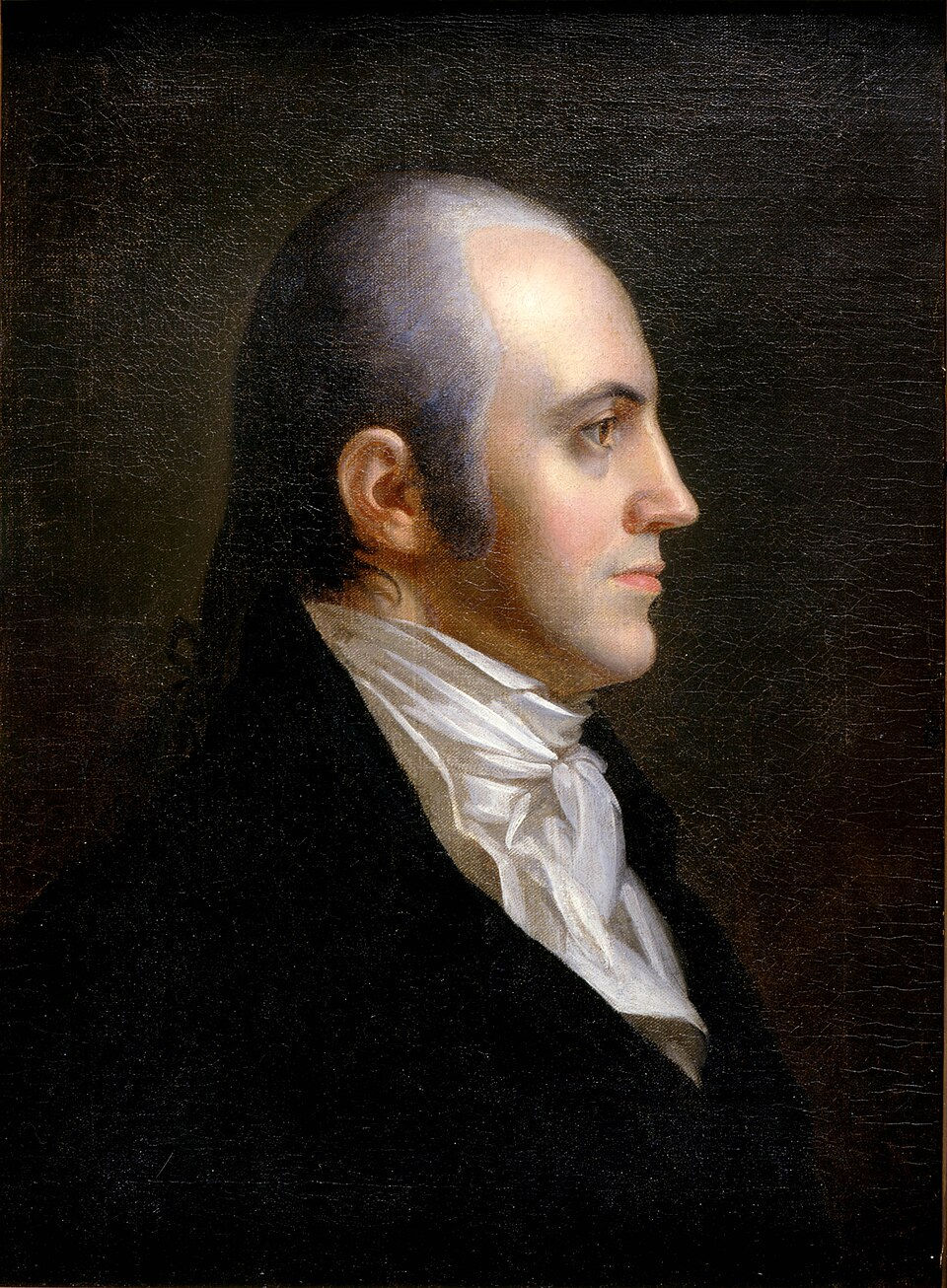
Both were Revolutionary War veterans. Both were brilliant lawyers. Both built influential political networks in New York. Both were ambitious enough to believe they belonged at the center of national politics.
 |  |
And almost from the beginning, they found themselves competing for many of the same prizes.
Hamilton viewed Burr with deep suspicion. Over the years he repeatedly described him as dangerous, unprincipled, and motivated more by personal advancement than political conviction. Burr, meanwhile, watched Hamilton become one of the most influential figures in the country while repeatedly using that influence against him.
One of the most famous examples came during the election of 1800.
Thomas Jefferson and Aaron Burr tied in the Electoral College, sending the decision to the House of Representatives. Although Hamilton disagreed with Jefferson on almost everything, he spent considerable political capital arguing that Jefferson should become president rather than Burr.
Jefferson won. Burr became vice president. It's hard to imagine that humiliation didn't linger. The vice presidency in 1800 carried little real power. For Burr, it was a daily reminder that the office he actually wanted had been nudged out of reach by Alexander Hamilton.
By 1804, Burr's political future was already looking uncertain. Jefferson had decided not to keep him on the Republican ticket, and Burr was instead running for governor of New York.
Hamilton worked against that campaign as well.
Burr lost.
Then came the letter.
The Insult That Wouldn't Go Away
Contrary to some modern retellings, the duel was not sparked by a single dramatic insult delivered face-to-face. Instead, it began with a published account of a political dinner.
A physician named Charles D. Cooper wrote that Hamilton had expressed a very unfavorable opinion of Burr and referred to what he called an even "more despicable opinion" that Hamilton had supposedly shared privately.
That phrase immediately caught Burr's attention. What exactly had Hamilton said? Burr wanted an answer. He wrote to Hamilton demanding an explanation and asking him to either confirm or deny making statements that could justify Cooper's description. Hamilton refused to do either.
His argument was essentially legalistic: Cooper's accusation was too vague. The phrase "more despicable opinion" could refer to any number of remarks made over many years. Without knowing exactly what statement was being referenced, Hamilton argued, he couldn't responsibly confirm or deny it.
From Hamilton's perspective, that may have been a reasonable position, however from Burr's perspective, it sounded like something else entirely. It sounded like a refusal to clear his name.
The exchange of letters grew increasingly hostile. Neither man found a path that preserved what early nineteenth-century gentlemen considered honor. And once the correspondence reached a certain point, the logic of the era became difficult to escape.
The Spot They Chose, and Why
Dueling was illegal in both New York and New Jersey. That didn't stop people from doing it.
The solution favored by New York's political and social elite was to cross the Hudson.
Weehawken, New Jersey offered relative seclusion and somewhat lighter legal consequences. A narrow ledge above the river, shielded by trees and accessible primarily by boat, had already become one of the most notorious dueling grounds in America.
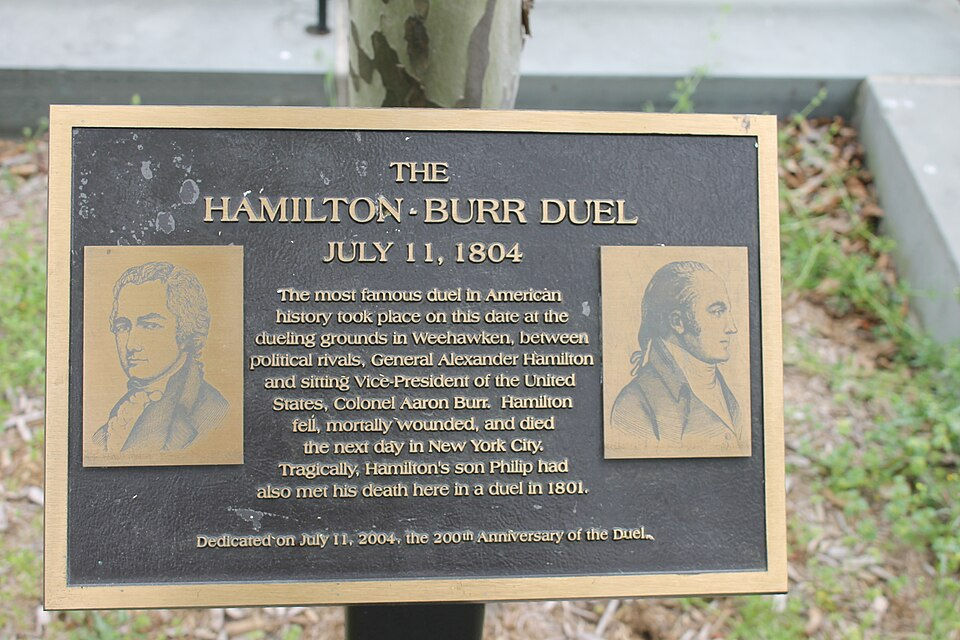
There was another reason the location carried weight for Hamilton. Three years earlier, his eldest son Philip had died there after fighting a duel of his own. Philip had been defending his father's honor. Now Hamilton was returning to the same ground.
That fact alone has always struck me as one of the most haunting details in the story.
Hamilton was not a man who routinely settled disputes with pistols. In fact, throughout his career he had successfully avoided several potential duels. He had publicly criticized the practice and understood exactly how senseless it could be.
Yet in 1804 he accepted Burr's challenge anyway.
Whether because of personal conviction, political calculation, the expectations of the time, or some combination of all three, he ultimately concluded that refusing would cost him more than accepting.
The Morning at Weehawken
Before sunrise on July 11, 1804, both men left Manhattan separately. Each crossed the Hudson by boat. Each brought a second whose job was not merely to witness the event but, ideally, to prevent it from happening at all.
Hamilton's second was Nathaniel Pendleton, a fellow Revolutionary War veteran, prominent attorney, and longtime Federalist ally whom Hamilton trusted completely. Burr chose William Van Ness, a gifted young lawyer, political confidant, and one of the most fiercely loyal members of his inner circle. Neither man was simply there to witness the duel. Under the customs of the day, their primary responsibility was actually to prevent it.

For weeks, much of the dispute had been conducted through Pendleton and Van Ness. They exchanged letters, clarified grievances, explored possible compromises, and searched for a resolution that would allow both men to preserve their honor without bloodshed. The fact that the duel happened at all is evidence of how completely those efforts failed. Burr wanted Hamilton to account for years of attacks on his character.
Hamilton refused to retract statements he believed were true. By the summer of 1804, the two seconds had remarkably little room left to negotiate.
A few minutes later, the duel began.
One of the ironies of the story is that Pendleton and Van Ness almost certainly spent far more time trying to prevent the duel than Hamilton and Burr spent fighting it. The correspondence stretched over weeks. The duel itself lasted only minutes.
What happened next remains one of the most debated moments in American history.
Both men fired. Hamilton's bullet struck a tree branch high above and behind Burr.
Why? That depends on which historian you ask.
Hamilton left behind statements suggesting he intended to reserve and throw away his shot. Pendleton later maintained that Hamilton never intended to shoot Burr at all.
Many historians accept that interpretation, while others remain skeptical, noting that no surviving witness could definitively establish exactly when Hamilton fired or whether the shot was intentional, involuntary, or simply a miss.
What is beyond dispute is what happened next. Burr's shot struck Hamilton in the abdomen, shattered part of his liver, and lodged near his spine. The wound was catastrophic and Hamilton collapsed almost immediately. He was then placed in a boat, rowed back across the Hudson, and taken to the Greenwich Village home of his friend William Bayard - what is 82 Jane Street today.
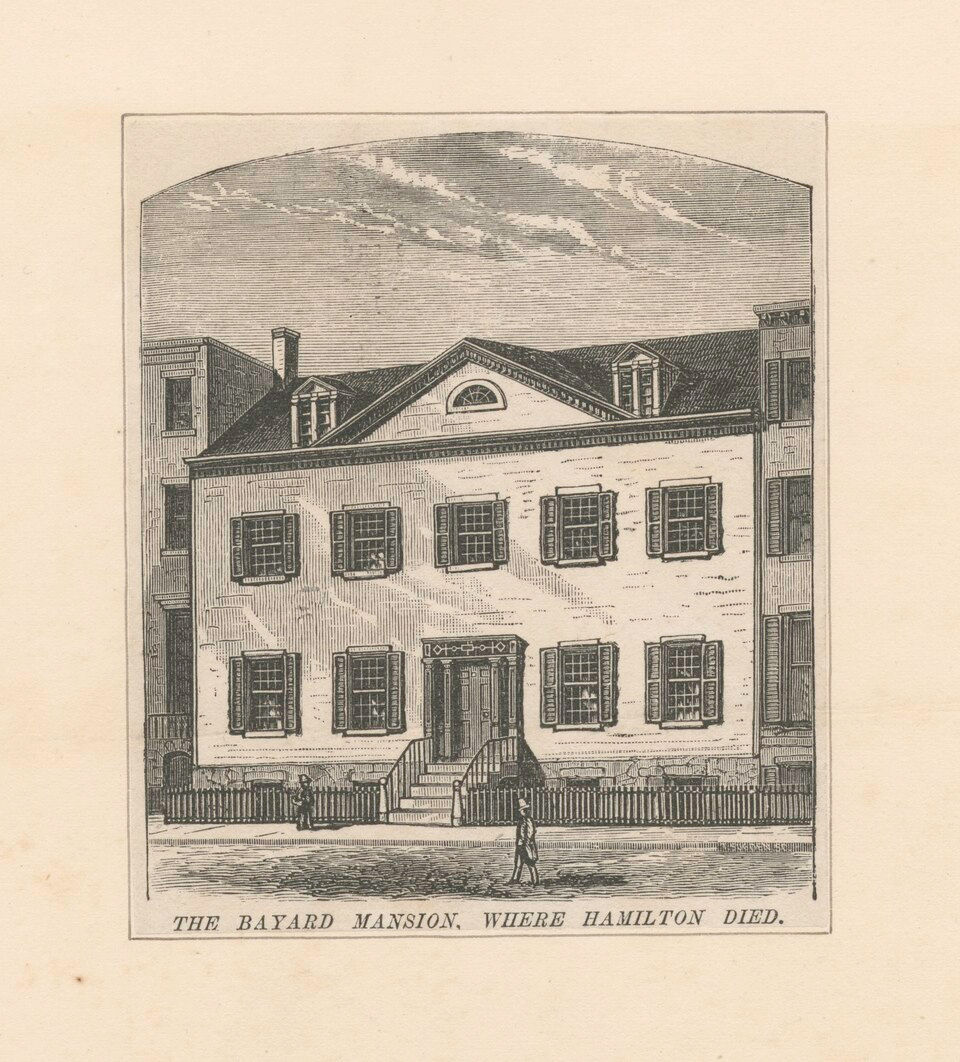
There, surrounded by family and friends, he lingered for roughly thirty-one hours before dying on July 12, 1804.
One detail that often gets lost in the mythology of the duel is what happened immediately afterward. Once Hamilton fell, the political rivalry effectively ended. Pendleton and Van Ness, who had spent weeks representing opposing sides, worked together to get the wounded Hamilton back across the Hudson and into medical care. For a brief moment, the lawyers, politicians, and partisans disappeared. What remained was the reality that one man was dying and everyone present knew it.
Aaron Burr returned to Richmond Hill.
The Aftermath Was Immediate
The public reaction was swift and unforgiving. Within days, Burr was being burned in effigy. Newspapers across the country condemned him. Coroners' juries in both New York and New Jersey returned murder indictments. Although neither prosecution ultimately succeeded, the political damage was irreversible.
Hamilton's death transformed him.
During his lifetime, he had been admired, criticized, celebrated, and attacked in almost equal measure. In death, he became something else: a national martyr. The man who had spent years frustrating Aaron Burr's ambitions accomplished one final political victory without intending to. Burr's career never recovered.
Burr finished his term as vice president because there was no constitutional mechanism forcing him out. But he never again held elected office. Within a few years he would be tried for treason. Within a decade he would lose his daughter Theodosia at sea.
The duel did not end Aaron Burr's physical life, it did though, end the life he had spent thirty years building.
Walking Through It Today
What strikes me most when I tell this story isn't only the duel itself, but how geographically small the entire drama was.
Richmond Hill stood in what is now Greenwich Village. Hamilton died only a short distance away. Federal Hall, Wall Street, Trinity Church, and the centers of New York politics all sat within a compact stretch of lower Manhattan that both men knew intimately.
For fifteen years, Burr and Hamilton moved through many of the same rooms, the same streets, and the same political circles.
Then one July morning they crossed the same river. One returned with a mortal wound.
The other returned to a future that would never look the same again.
Hamilton received a funeral that effectively stopped New York City and, two centuries later, became the subject of one of the most successful Broadway musicals in history.
Burr got Richmond Hill dismantled, decades of public disgrace, and—if the stories told at One if by Land, Two if by Sea are to be believed—an afterlife spent haunting his former carriage house on Barrow Street.
Not a bad ghost story.
But a remarkably bleak ending for a man who once came within a single election of the presidency.
The duel is one chapter in a larger Aaron Burr story that runs through Greenwich Village—from Richmond Hill, the estate he lost, to the disappearance of his daughter Theodosia, whose fate remains one of America's enduring mysteries. Those stories appear on my Haunted Greenwich Village Tour.
For Hamilton's side of the rivalry—the rise of the immigrant who built America's financial system, the streets where he lived and worked, and the city that shaped his legacy—that story continues on my Hamilton Walking Tour of Lower Manhattan.
Hamilton's side of this story — his life, his death, and the streets where both played out — is the heart of my Hamilton walking tour.
More Reading
Local company. Local obsession. Local Vibes.
Vibe NYC Tours is a Lower Manhattan walking tour company run by a native New Yorker who has spent her career turning archival research into unforgettable experiences. Small groups. Real history. No filler. Book at vibenyctours.com.

