
The Tragic, Haunted Footprint of Aaron Burr in Greenwich Village: From Vice President to Village Ghost

Updated: Jul 31
Most people who know the name Aaron Burr know exactly one thing about him: he killed Alexander Hamilton on a narrow rocky ledge in Weehawken, New Jersey. In our collective cultural memory, Burr has been flattened into a single, static moment—the ultimate villain of someone else's story.
But history is rarely that simple. The duel wasn't the end of Aaron Burr’s life; it was merely the flashpoint that triggered a bizarre, thirty-year downward spiral. Burr lived for nearly three decades after that fatal morning on July 11, 1804. His descent from the peak of American political power to an impoverished outcast moving through the streets of Manhattan under an assumed name is one of the most spectacular falls from grace in American history.
To understand the full, sweeping tragedy of Aaron Burr, you have to look at the ground beneath your feet. His rise, his financial ruin, the mysterious disappearance of his brilliant daughter, and the legends that still surround his memory all map directly onto a single radius in Lower Manhattan and Greenwich Village. The real story isn't just about a single gunshot; it's about the decades of unresolved history that followed.
Act I: The Flight of the Sitting Vice President
The rivalry between Vice President Aaron Burr and former Treasury Secretary Alexander Hamilton reached its absolute climax in the summer of 1804. On the morning of July 11, Burr woke up at his country estate, walked down to the water, and had himself quietly rowed across the Hudson River to Weehawken. By the time the sun was fully up, he had shot Alexander Hamilton.

Burr returned to Manhattan that very afternoon. Hamilton died the following day, and the reaction across New York was immediate and overwhelming. Crowds gathered in the streets, church bells tolled continuously, and newspapers ran lengthy, grief-stricken tributes. Almost overnight, public opinion turned against Burr with a viciousness he never anticipated.
But Burr didn't just leave a legal and political scar on the Village; he left a metaphysical one. If you want to stand outside the carriage house where his spirit allegedly still throws plates, explore dates for our Haunted Greenwich Village Tour this fall.
The Bizarre Absurdity of the Law
What followed sounds entirely impossible to modern eyes. Burr was quickly indicted for murder in two different states. New Jersey charged him because the shooting took place on their soil; New York charged him because Hamilton technically died in a Greenwich Street home in Manhattan the next day. From a legal standpoint, the sitting Vice President was in catastrophic trouble.
Yet, Aaron Burr did not spend a single day in prison. After spending time away from the immediate fallout, Burr eventually returned to Washington to complete the remainder of his vice-presidential term, continuing to preside over the Senate even while murder indictments technically remained outstanding. He even managed the historic Senate impeachment trial of Supreme Court Justice Samuel Chase, all while state warrants for his arrest remained active.
                  ┌────────────────────────────────────────┐
                  │       THE 1804 LEGAL REALITY           │
                  ├────────────────────────────────────────┤
                  │ • No Federal Murder Statutes           │
                  │ • No National Interstate Police(An FBI)│
                  │ • No Constitutional Suspension Rules   │
                  └────────────────────────────────────────┘
By 1804, dueling was strictly illegal in both New York and New Jersey—meaning Lin-Manuel Miranda’s famous theatrical line that "everything is legal in New Jersey" is pure creative license for entertainment. Yet, elites consistently participated in duels because upper-class culture dictated that reputation was everything. Political, legal, and social standing depended entirely on public perceptions of honor. Refusing a challenge from a prominent peer could damage a gentleman's standing for years.
Because formal legal remedies weren't viewed as sufficient to repair insults to character, duels were tolerated. Furthermore, nobody was actually supposed to die; many duels involved intentionally poor aim or were settled peacefully before a shot was fired. Burr discovered the hard way that the young nation was willing to tolerate the theater of dueling, but it was absolutely not willing to tolerate the killing of Alexander Hamilton.
Ultimately, a combination of legal complications, shifting political priorities, and Burr's prominent political position meant neither indictment resulted in a murder trial. But the punishment happened anyway. The duel permanently destroyed his national political future, and his reputation would never recover.
Burr wasn't the only Revolutionary figure to leave a ghostly mark on these streets. Just a short walk away is the site where Thomas Paine spent his final days at Marie's Crisis, creating a fascinating pocket of early American history.
Act II: The Ground Beneath His Feet & The Astor Vultures
Before his name became synonymous with political ruin, Aaron Burr lived in what was, by every contemporary account, the finest house in New York.
In the 1790s, Greenwich Village was a semi-rural countryside north of the crowded, disease-ridden port streets of lower Manhattan. Wealthy New Yorkers built sprawling country homes here to escape the summer heat and the deadly yellow fever outbreaks. Burr’s slice of this paradise was Richmond Hill, a magnificent estate situated on a high bluff that looked directly over the Hudson River. Today, that lost footprint sits roughly where Varick, Charlton, King, and MacDougal Streets meet in the West Village.

The property was steeped in Revolutionary lore. George Washington used the mansion as his military headquarters after British forces occupied New York, and John Adams lived there while serving as the nation's second vice president. Richmond Hill was the rare address that could claim two future presidents as tenants before it became infamous because of a third.
When Burr took over the long-term lease and property interests from Trinity Church, he poured a fortune into the grounds. An 1861 biography describes the estate as boasting "ample gardens, and a considerable extent of grove and farm" with private grounds running all the way down to the river bank. Burr dammed a local creek to create a picturesque ornamental pool near the entrance.
Inside, the mansion featured a gallery lined with grand windows to display his extensive art collection, and a massive library—Burr's pride and joy—filled with rare books imported directly from London. By the time he became vice president in 1801, Richmond Hill was the social engine of New York, hosting elite dinners where the conversation moved fluidly between literature, philosophy, and global politics. Acting as the hostess of this grand estate was Burr's teenage daughter, Theodosia, who at just sixteen ran the household with a brilliant, charming sophistication that captivated the most powerful people in the country.
The Real Estate Transition
Hamilton's death shattered the world Burr built at Richmond Hill. Paralyzed by mounting legal expenses, crushing personal debt, and a collapsed legal practice, creditors gradually gained control of his holdings. Desperate to raise cash for an impending exile, Burr was forced to let the estate go.
In 1807, out of options, Burr transferred his interest in the property to John Jacob Astor. Astor had arrived in New York as a German immigrant in 1784, quietly buying up farms, leases, and undeveloped wilderness well north of the built-up city. While other investors focused on shipping or commerce, Astor understood that the future value of New York lay in the land itself.
 | 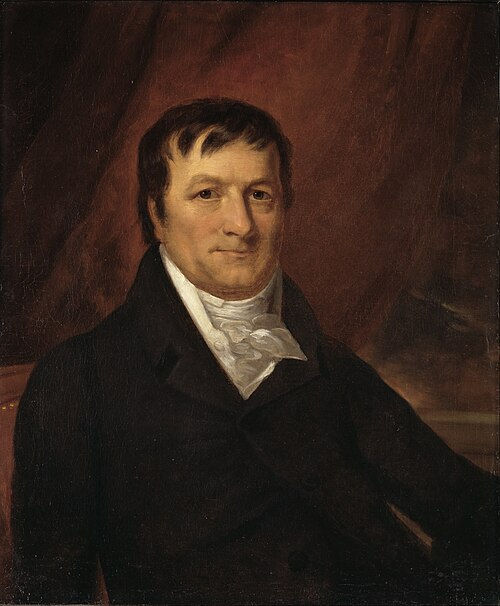 |
According to historical property records, Astor acquired the Richmond Hill interests for approximately $32,000—though historians note the exact value varies depending on whether calculations account for the leasehold itself, the structural improvements, or the total combined transaction.
               ┌────────────────────────────────────────┐
               │    THE URBAN TRANSFORMATION DEED       │
               ├────────────────────────────────────────┤
               │ AARON BURR:                            │
               │ Utilizes a grand country leasehold to  │
               │ entertain the young nation's elite.    │
               │                                        │
               │ JOHN JACOB ASTOR:                      │
               │ Subdivides the 26-acre estate into     │
               │ city lots for an expanding grid.       │
               └────────────────────────────────────────┘
Astor systematically carved the country estate into hundreds of individual urban lots, maximizing density and charging skyrocketing rents as the city's rigid street grid marched north. In December 1820, Astor had the grand mansion physically jacked up, placed on giant logs, and rolled down the street to a new corner at Varick and Charlton Streets. He converted the Founding Fathers' former home into an Italian opera house and theater. As the neighborhood grew denser, the theater slid downmarket into a common neighborhood saloon, and the building was finally demolished in 1849. Astor leveled the actual 40-foot sand hill, filled in Burr's ornamental beaver ponds, and completely erased the physical topography of Richmond Hill.
But the carriage house survived. Astor had the brick-and-stone structure relocated further along the property as he developed the land around it—the same carriage house that still stands today on Barrow Street.
🚶♂️ Want to see where the old estates used to stand? We trace the hidden boundaries, lost topography, and radical structural history of these exact blocks on our Greenwich Village Day Tour.
Act III: The 29-Year Internal Exile & Treason on Trial
With his estate swallowed up by Astor's real estate machine, Burr's life morphed into a bizarre historical thriller. Between 1805 and 1807, the former Vice President went west, traveling through the Mississippi Valley. He built deep relationships with military figures, land speculators, and assembled an armed network of supporters tied to western expansion projects.
Exactly what Burr was planning out there remains one of the most fiercely disputed mysteries in American history. The federal government panicked, accusing him of a treasonable plot to assemble an armed military force, detach the western territories from the United States, and carve out an independent empire under his own control, possibly by seizing Spanish-held lands in Mexico or Florida. Burr’s defense was much narrower and more technical: he maintained he was merely organizing a land settlement and agricultural development project within the borders of the Louisiana Territory.
Many modern historians conclude that while there is clear evidence of ambitious and potentially extralegal planning, there is no unanimous proof of a fully formed operational plan to wage war against the United States.
The enterprise came crashing down because of General James Wilkinson. Wilkinson was Burr's primary collaborator in the west, but history later revealed through the U.S. National Archives that he was also a secret, paid spy for the Spanish crown. Getting nervous about his own skin, Wilkinson turned on Burr, sending an alarmist letter to President Thomas Jefferson accusing Burr of outright treason. Jefferson moved fast. Burr was arrested in Alabama in February 1807 and sent to Richmond, Virginia, to stand trial for his life.
The Trial That Tested the Constitution
The landmark case of United States v. Aaron Burr became an absolute national spectacle. Chief Justice shadow John Marshall himself presided over the circuit court trial. In a dramatic constitutional showdown, President Jefferson was subpoenaed by the defense to produce confidential documents. Jefferson asserted presidential discretion and executive privilege regarding his personal appearance and unchecked papers, though he ultimately partially complied by transmitting several requested documents through the attorney general.
Ultimately, Chief Justice Marshall took an incredibly strict, literal view of how the Constitution defined treason. He instructed the jury that under Article III, Section 3, treason requires a visible, "overt act" of war against the country, backed by two witnesses—not merely a conspiracy, bad intentions, or private letters. By that high legal standard, the evidence simply wasn't there. On September 1, 1807, Aaron Burr was officially acquitted.
   ┌─────────────────────────────────────────────────────────────┐
   │ "Treason against the United States, shall consist only in   │
   │ levying War against them, or in adhering to their Enemies...│
   │ No Person shall be convicted of Treason unless on Testimony │
   │ of two Witnesses to the same overt Act..."                  │
   │                            — US Constitution, Art. III, S. 3│
But it didn't matter. The public had already convicted him. Even walking free, Burr was finished in America. Within months, he fled to Europe—alone, broke, and effectively stateless.
For four years (1808–1812), Burr bounced around England, Scotland, Sweden, Germany, and France, chasing increasingly far-fetched political schemes. According to Encyclopaedia Britannica, his European years were defined by utter financial instability and total reputational collapse. He lived in constant, grinding debt, scratching around for pennies and eating stale bread.
In 1812, he finally decided to come home. He slipped back into New York City under the assumed name "Aaron Edwards" to avoid immediate detection by a relentless army of creditors, opening a modest law practice to scratch out a living in the city he once practically ruled. Years later, upon hearing news of the Texas Revolution—where American settlers successfully fought to carve an independent republic out of Mexican land—a late-70s Burr reportedly remarked to a friend with bitter satisfaction that he had been right all along; according to several later accounts, he noted he was simply thirty years too early. What the government had called treason in him in 1807, the country was now calling patriotism in someone else.
Act IV: The Ultimate Heartbreak (Theodosia)
The worst thing that ever happened to Aaron Burr didn't happen on the dueling grounds of Weehawken or in a Virginia courtroom. It happened at sea, and it left a wound that never healed.
For all his volatile political faults, Burr was an extraordinarily progressive and devoted father. He rejected the standard 18th-century view of women’s education, forcing his only child, Theodosia, to master Latin, Greek, French, mathematics, and philosophy from the time she was a little girl. He corresponded with her constantly, treated her opinions with absolute seriousness, and adored her completely. The tender bond between them lasted her entire life.
By late 1812, Theodosia was living in South Carolina as the wife of the state's newly elected governor, Joseph Alston. She had endured years of declining health, and her spirit was completely broken in June of that year when her ten-year-old son, Aaron Burr Alston, contracted malaria and died.
Desperate to see her father after his return from European exile, she prepared to travel north. Because her husband was pinned down by his gubernatorial duties during the outbreak of the War of 1812, Burr sent a trusted family friend, Dr. Timothy Green, to South Carolina to safely escort her to Manhattan.
On December 31, 1812, Theodosia, Dr. Green, and a small crew boarded a fast pilot schooner called the Patriot in Georgetown, South Carolina, bound for New York. The voyage normally took five to six days.
Weeks passed. Then a month. No word arrived.
Governor Joseph Alston's letters from this period are almost unbearable to read. By February 1813, both men had completely given up hope. When a well-meaning friend tried to comfort Burr by suggesting that perhaps the Patriot had merely been captured by a British warship, Burr gave an answer that has echoed through New York history for two centuries:
"No, no, she is indeed dead. Were she still alive, all the prisons in the world could not keep her from her father."
The Patriot vanished completely. No wreckage, no debris, and no survivors were ever found. The explanation favored by many maritime historians is that the ship was caught and destroyed in a notorious, violent winter storm that battered the dangerous waters off Cape Hatteras, North Carolina, in early January 1813.
But the lack of a single trace left a massive void that the 19th century eagerly filled with sensationalized urban legends, including rumors of pirates boarding the vessel or deathbed confessions from elderly sailors claiming they forced the passengers to walk the plank.

Decades later, an unresolved mystery emerged from a small beach cottage in Nags Head, North Carolina. A local doctor was given an old, unsigned oil portrait of a wealthy young woman by a patient, who claimed her sailor husband had salvaged it from an abandoned ship during the War of 1812. Many who examined the painting swore the face belonged to Theodosia. The "Nags Head Portrait" now hangs at Yale University—unauthenticated and completely unresolved, mirroring the unresolved nature of her entire story.

Joseph Alston never recovered from the dual loss of his son and his wife within months of each other; he died in 1816. Burr lived for another 23 years, practicing law in Manhattan and living largely alone. He endured a brief, disastrous late-life marriage to the wealthy widow Eliza Jumel, who filed for divorce on grounds of adultery—a divorce finalized on the literal day Burr died on September 14, 1836. He spent his final decades walking down to the edge of the Battery, staring out across the open harbor, waiting for a ship that would never arrive.
Act V: The Legends of 17 Barrow Street
John Jacob Astor's systematic development of Greenwich Village left virtually nothing of Richmond Hill standing above ground. The grand mansion and its rolling lawn were entirely swallowed by the modern, rigid street grid.
Except for one building.
The only physical piece of Aaron Burr's estate that survived the march of the grid was his stone-and-brick carriage house. To clear the path for development, Astor had the structure relocated to what is now 17 Barrow Street.

Over the next two centuries, the building lived a colorful, gritty New York life. It served as a neighborhood firehouse, a quiet blacksmith shop, an illicit silent-era brothel, and a silent movie theater. Finally, in 1972, the historic structure underwent a massive upscale renovation to become One if by Land, Two if by Sea—a world-famous fine-dining establishment frequently named the most romantic restaurant in New York City.
       ┌────────────────────────────────────────────────────────┐
       │             17 BARROW STREET ARCHITECTURE              │
       ├────────────────────────────────────────────────────────┤
       │ 1790s: Burr's Carriage House (Richmond Hill Estate)    │
       │ 1820s: Physically moved on logs by John Jacob Astor    │
       │ 1800s-1900s: Firehouse ➔ Blacksmith ➔ Brothel ➔ Cinema │
       │ 1972-Present: One if by Land, Two if by Sea Restaurant │
       └────────────────────────────────────────────────────────┘
Inside, the restaurant features low ceilings, roaring brick fireplaces, ambient candlelight, and the music of a live piano. Marriage proposals happen somewhere in the dining room nearly every single night of the year. Modern New Yorkers toast their futures inside the last surviving piece of Aaron Burr’s spectacular ending.
The Accounts of Barrow Street
For decades, staff, bartenders, and guests at 17 Barrow Street have reported a massive volume of unexplained activity, making the restaurant one of Greenwich Village's most frequently discussed ghost-story locations.
According to longtime employees and published neighborhood accounts, these stories manifest not as cheap scares, but as persistent anomalies:
The Displaced Glassware: Staff members have reported heavy dinner plates and glassware moving unexpectedly or falling from stable shelves and tables, breaking against the floors.
The Swinging Chandelier: Local legend holds that heavy, historical chandeliers slowly swing on their own in completely draft-free dining rooms, and string lights periodically flicker in patterns that defy modern electrical diagnostics.
The Lifted Jewelry: Multiple guests sitting at the lower-level bar have reported the distinct sensation of their earrings being gently unclasped and lifted straight off their lobes—not yanked, but paused over and dropped, as if a presence were leaning in close to admire the jewelry.
The Cold Spots: Servers describe sudden, localized drops in temperature and the distinct feeling of being watched when locking up the old building alone at midnight.
Local legend frequently divides these accounts between two distinct entities. The volatile, door-slamming disruptions are traditionally attributed to Burr himself—the spirit of a brilliant politician whose life shattered in this very architecture. The gentler, inquisitive presence at the bar is often attributed to Theodosia, returning to the last physical home she shared with her father.
When a story loses almost every physical landmark to a modern, expanding city, the one structural fragment left behind becomes the lightning rod where the history has to live. Burr and Theodosia don't have their country retreat anymore; they have a candle-lit dining room on Barrow Street, and according to the stories told within those walls, they refuse to leave the Village behind.
The legends are captivating, but the historical record is even better. That's exactly why this single building contains one of the most remarkable historical arcs in Greenwich Village, serving as a dual anchor for our neighborhood routes. During the day, it's a vital piece of the story of how Greenwich Village evolved from rural country estates into a dense metropolis. After dark, it becomes part of a completely different conversation—one about the stories, legends, and unresolved mysteries that refuse to leave the city behind.
Aaron Burr's story is usually taught as a duel that lasted a few seconds. In reality, the duel was merely the opening chapter of one of the longest and strangest afterlives of any American founder. Walk through Greenwich Village today, and you'll find that almost every stage of that story—from his grand estate to his carriage house to the legends that still surround it—can still be traced on the streets.
🎧 The Village After Dark: A Different Ghost Tour
On our Haunted Greenwich Village Night Tour, every guest is equipped with a premium wireless audio receiver and earpiece. This allows us to deliver an atmospheric soundscape —bringing the dark, documented history of 14 West 10th Street and the Washington Square mass graves to life while you choose your pace. No shouting. No jump scares. Just you, the darkness and the stories the daylight hides.
Space is strictly limited to keep groups small and premium. 👉 Join the 2026 Haunted Waitlist & Secure Your Audio Headset Now
Frequently Asked Questions About Aaron Burr's Later Life
What happened to Aaron Burr after he killed Alexander Hamilton?
Burr completed his term as Vice President of the United States despite facing active murder indictments in New York and New Jersey. He later traveled west, was arrested and tried for treason in 1807, and was ultimately acquitted before spending four years in European exile.
Why wasn't Aaron Burr convicted of murder for the duel?
Dueling was deeply embedded in the honor culture of early American elites. Because the political machinery was small and decentralized, and because many leaders privately condoned the practice, state authorities ultimately let both indictments fade away without ever bringing the sitting Vice President to trial.
Was Aaron Burr actually guilty of treason?
Legally, Burr was acquitted because the Constitution requires proof of an “overt act” of war against the United States. Historians still debate his true intent in the Mississippi Valley, but the high legal standard for treason was not met in a court of law.
Where exactly was the Richmond Hill estate located?
The estate sat on a high hill in modern Greenwich Village. Its boundaries roughly covered the area where King, Charlton, Varick, and MacDougal Streets intersect today in the West Village.
Is Aaron Burr's carriage house still standing?
Yes. The carriage house was physically relocated by John Jacob Astor to 17 Barrow Street. Today, the historic building houses the fine-dining restaurant One if by Land, Two if by Sea.
🏛️ Primary Historical Sources & Deep-Dive Reading
U.S. National Archives: The Burr Conspiracy & Treason Trial Records (United States v. Aaron Burr) – https://www.archives.gov/milestone-documents/united-states-v-burr
Oyez Supreme Court Project: Constitutional Breakdown of the 1807 Marshall Decision – https://www.oyez.org/cases/1792-1850/1807/1807_0
Encyclopaedia Britannica: Aaron Burr Biography & European Exile Timeline – https://www.britannica.com/biography/Aaron-Burr
The Jefferson Papers (Monticello): Official Executive Correspondence Regarding the Burr Trial Subpoena – https://www.monticello.org/site/research-and-collections/aaron-burr-trial
National Park Service: Port Richmond & Staten Island Historical Summaries (Burr's Final Days and Death) – https://www.nps.gov/places/port-richmond.htm


