
Fleet Week NYC 2026: Ships, History, and What to Do July 3–8
- Dana at Vibe Tours

- 1 day ago
- 8 min read
Updated: 1 day ago
This year Fleet Week is different.
It's not happening in May around Memorial Day weekend, the way it normally does. In 2026, Fleet Week has been folded into something much larger — the International Naval Review 250, a once-in-a-generation maritime celebration marking America's 250th birthday.
The ships are bigger, there are more of them, the nations represented stretch across the globe, and the whole thing is happening at the same time as Sail4th 250, the Fourth of July, and the FIFA World Cup Final weekend. If you are anywhere near New York City the first week of July, you need to know what's happening on the water.
Here's everything — the history, the schedule, and the best ways to experience it.
What Is Fleet Week, and Why Does It Matter?
Fleet Week is the annual tradition of welcoming U.S. Navy, Marine Corps, and Coast Guard vessels into New York Harbor for a week of public ship tours, military demonstrations, and free events across the city. Sailors and service members fan out across the five boroughs in their uniforms — a visible, tangible presence of the military in a city that doesn't always feel connected to that world.

The first Fleet Week in New York was held in 1982. But the tradition of naval reviews in New York Harbor goes back much further. The harbor has been a strategic military asset since the colonial era — the British controlled it during the Revolution, the Union Army fortified it during the Civil War, and it served as the primary departure and arrival point for American troops in both World Wars. The ships that sail into New York Harbor during Fleet Week are sailing the same water that has always mattered most to whoever controls this city.
Why New York City Hosts Fleet Week
Fleet Week could happen in dozens of American cities. It happens in New York because few harbors in the world have played a larger role in military, economic, and maritime history.
New York Harbor is one of the great natural harbors on earth—deep, protected, and strategically positioned at the mouth of the Hudson River. Long before there was a Fleet Week, control of this harbor meant control of trade, transportation, and military access to much of North America.
That importance became especially clear during the American Revolution. When British forces captured New York City in 1776, they transformed the harbor into the center of their North American military operations. The fleet that arrived that summer was part of the largest overseas military expedition Great Britain had ever assembled up to that point. For the next seven years, New York remained Britain's most important military base in America.
The harbor that welcomed British warships in 1776 is the same harbor that welcomes naval vessels from around the world today.
Why 2026 Is Different
In a normal year, Fleet Week runs for about a week around Memorial Day. Ships come in, sailors hit Times Square, there are some demonstrations, and then everyone goes home.
This is not a normal year.
The International Naval Review 250 is expected to be one of the largest gatherings of naval vessels in New York Harbor in decades. Organized around the 250th anniversary of American independence, the event is expected to bring together U.S. military vessels, allied navies, and historic tall ships from around the world in a scale rarely seen in modern New York.
The timing matters too. Fleet Week 2026 overlaps with:
Sail4th 250 — the tall ship parade and review in the harbor on July 4th
The Fourth of July — with fireworks and events across the waterfront
FIFA World Cup Final Weekend — the tournament final is being held at MetLife Stadium
New York City has hosted enormous events before. This particular week is genuinely unusual.
Our America 250 walking tour covers the occupation, the resistance, the liberation — [Book an America 250 Tour →]
The History Behind the Harbor
There is a reason naval reviews have happened in New York Harbor for centuries. The geography made it inevitable.
New York Harbor is one of the great natural harbors of the world — deep enough for large vessels, protected from the open Atlantic, and positioned at the mouth of the Hudson River, which opens the entire interior of the continent. Whoever controlled this harbor controlled trade, military access, and the economic life of the northeastern seaboard.

The military significance of New York Harbor was obvious to anyone looking at a map. A fleet anchored here could protect supply lines, control access to the Hudson River, and project power throughout the Northeast. During the Revolution, whoever controlled New York Harbor effectively controlled the most important transportation and logistics hub in North America.
When the British finally left in 1783 — Evacuation Day, November 25th — it was a naval departure. The ships that carried the last British troops out of New York sailed through the same water where tall ships will anchor this July.
Washington knew the harbor's importance too. His first act as president, before the inauguration at Federal Hall in 1789, was to cross New York Harbor by barge from New Jersey — escorted, fittingly, by a naval review of boats and vessels that had gathered to mark the occasion.
The harbor that shaped this city's history is the same harbor hosting Fleet Week 2026.
Why Fleet Week Matters Beyond the Ships
It's easy to think of Fleet Week as a collection of ship tours and military demonstrations. But the event is really a reminder that New York has always been a maritime city.
The harbor shaped everything. It helped make New York the nation's busiest port, turned Lower Manhattan into a financial center, brought millions of immigrants through the harbor's waters, and played a critical role in every major American conflict from the Revolution through World War II.
Fleet Week isn't simply about modern naval vessels. It's about seeing the harbor perform the same role it has played for centuries: connecting New York to the wider world.
What to Expect: July 3–8
Here is what's happening during Fleet Week 2026 and how to approach it.
Ship Tours (Free)
The centerpiece of Fleet Week is always the public ship tours at Pier 88 on the West Side. U.S. Navy and Coast Guard vessels open their decks to visitors — aircraft carriers, destroyers, frigates, and support ships — at no charge. Lines can be long, especially on weekends, so arriving early in the morning on a weekday gives you the best experience.
In 2026, international naval vessels are also participating in the review, and some may be available for tours. Check the official Fleet Week NYC schedule as it's released for confirmed vessels and pier assignments.
Sail4th 250 — July 4th
The tall ship parade and naval review on the Fourth of July is the visual centerpiece of the entire week. Dozens of historic and replica tall ships, joined by U.S. and international naval vessels, will sail through New York Harbor in a formal review — the kind of event that happens once in a generation.

The best viewing locations are along the Battery Park waterfront, Governors Island, Brooklyn Bridge Park, and the Hudson River esplanade on the West Side. All of these are free and accessible to the public, though they will be crowded. Getting there early is not optional.
Where to Watch Fleet Week Ships in New York City
If your goal is simply to see the ships, there are several excellent public viewing locations throughout the harbor.
Battery Park offers some of the closest views of vessels entering and leaving New York Harbor, with the Statue of Liberty serving as a dramatic backdrop.
Brooklyn Bridge Park provides panoramic views across the East River and Upper New York Bay.
Governors Island may offer some of the most unique vantage points during the celebration, placing visitors directly in the middle of the harbor landscape.
Hudson River Park provides long stretches of waterfront viewing on Manhattan's west side.
For visitors who want a free harbor experience, the Staten Island Ferry remains one of the best ways to see naval vessels, the Statue of Liberty, and Lower Manhattan from the water.
Arriving early will be essential. With Fleet Week, Sail4th 250, Independence Day celebrations, and World Cup visitors all converging on the city, crowds are expected to be significant.
Intrepid Sea, Air & Space Museum
The Intrepid, docked permanently at Pier 86, runs Fleet Week programming every year including aircraft demonstrations, veteran meet-and-greets, and special exhibitions. This year's programming will be expanded given the anniversary context. Admission applies for the museum itself.
Fleet Week Street Presence
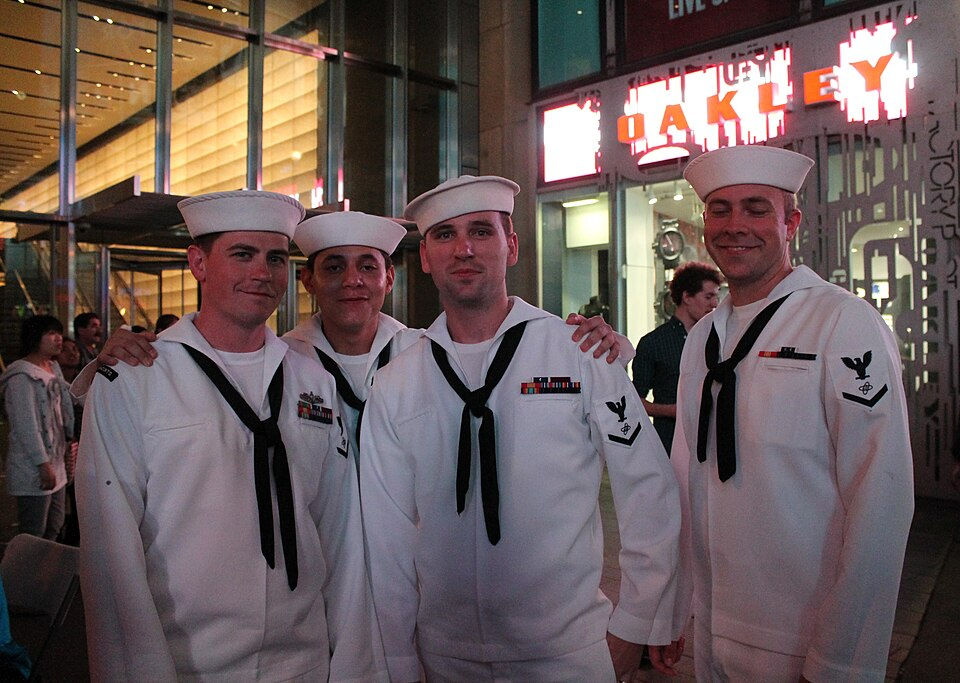
One of the underrated elements of Fleet Week is simply the presence of sailors and service members across the city. Midtown, Lower Manhattan, and the waterfront areas will have a visible military presence throughout the week. It's one of the few times New York City feels genuinely connected to the armed forces in a daily, street-level way.
Connecting It to the Rest of the City's History
If you want to understand why this harbor matters—not just in 2026 but across the full sweep of American history—the Financial District is where to start.
Within a few blocks of Battery Park you'll find the sites where George Washington was inaugurated, where Alexander Hamilton helped build America's financial system, where New Yorkers watched British troops evacuate the city in 1783, and where generations of merchants, sailors, immigrants, soldiers, and politicians arrived by water.
Fleet Week may last a few days. The history that made it possible stretches back more than 250 years.
The Financial District and the waterfront are where the story of American independence was lived out: the British occupation, the prison ships, Evacuation Day, Washington's first inauguration at Federal Hall. The ships in the harbor this July are a direct echo of the ships that shaped this city 250 years ago.
Our America 250 walking tour covers exactly that history — the occupation, the resistance, the liberation — and ends at Battery Park, where you'll be looking out at the same harbor the tall ships will be sailing into.
Experience Revolutionary New York During Fleet Week
Watching a destroyer pass Lower Manhattan is impressive.
Understanding why that harbor mattered to George Washington, Alexander Hamilton, the British Army, generations of immigrants, and the United States Navy is what turns the spectacle into a story.
Our America 250 Walking Tour explores Revolutionary-era New York, including the British occupation, the city's role in the War for Independence, Evacuation Day, Federal Hall, Fraunces Tavern, and Battery Park—placing you directly in the landscape that made New York Harbor one of the most important waterways in American history.
The tour concludes near the waterfront, where you'll be looking out at many of the same waters hosting Fleet Week and the International Naval Review 250.
Frequently Asked Questions About Fleet Week NYC 2026
Is Fleet Week NYC free?
Yes. Public ship tours and many Fleet Week events are traditionally free, although museums, special programs, and transportation costs may require admission or tickets.
Where can I tour Navy ships in New York City?
Ship tours are typically offered at designated Manhattan piers during Fleet Week. Visitors should consult official Fleet Week schedules for confirmed ship assignments and tour hours.
What is the International Naval Review 250?
The International Naval Review 250 is a multinational gathering of naval vessels and tall ships organized as part of the United States Semiquincentennial—the nation's 250th anniversary celebration.
Where are the best places to watch Fleet Week ships?
Battery Park, Brooklyn Bridge Park, Governors Island, Hudson River Park, and the Staten Island Ferry all offer excellent public viewing opportunities.
Why is Fleet Week held in New York City?
New York Harbor has been one of the most strategically important ports in North America since colonial times. Fleet Week highlights the city's longstanding connection to maritime commerce, naval history, and national defense.


