
The Deep-Dive NYC Christmas Archive: History, Secrets & Hidden Gems

Updated: 6 days ago
Welcome to the ultimate backstage pass to December in New York. If you are looking for the standard, cookie-cutter recommendations on where to find the biggest midtown light displays or the most crowded ice rinks, you won't find them here.
Consider this your personal digital library. We have organized our entire collection of niche holiday features into distinct buckets below so you can skip the tourist traps and uncover the real magic of Manhattan.
📍 THE TABLE OF CONTENTS
This archive is for the curious traveler, the die-hard history buff, and the reader who wants to understand the soul of the city. Over the years, we have meticulously documented the untold human-interest stories, the hidden architectural marvels, the complex cultural history, and the hyper-local survival strategies that define New York during the winter.
Archive Directory: Choose Your Chapter
Cluster 1: Cultural & Immigrant Roots
Cluster 2: Origins of Iconic NYC Holiday Traditions
Cluster 3: Untold Local Lore & Frontline Resilience
Cluster 4: The Sensory & Sacred Experience
CLUSTER 1: CULTURAL & IMMIGRANT ROOTS OF NEW YORK CHRISTMAS
Every December, New Yorkers and visitors crowd the wooden stalls of Bryant Park and Union Square, sipping hot cider and browsing handmade goods. The Christmas fairs of NYC feel like permanent fixtures of the city — ancient, inevitable. What most people don't know is that they have a specific origin, a specific community, and a specific moment in history when they arrived in New York.
What Are Christmas Markets in NYC — And Where Did They Come From?
Christmas markets — Weihnachtsmärkte — have existed in German-speaking Europe since the late Middle Ages. The earliest recorded market dates to Dresden in 1434. By the 19th century they were a defining feature of German city life: outdoor stalls selling food, handmade crafts, wooden decorations, and the specific category of goods — candles, carved figures, glass ornaments — that we now associate universally with Christmas. The German Christmas market tradition is, in other words, the direct ancestor of every holiday market in New York City today.
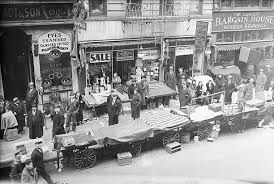
New York's Christmas market tradition didn't emerge in isolation — it arrived as part of a centuries-old European culture of winter markets, two of which predate Columbus's arrival in America.
The Vienna Christkindlmarkt traces its origins to 1296, when Duke Albrecht I granted Vienna’s citizens permission to hold a December market known as the “Krippenmarkt,” making it one of Europe’s oldest documented Christmas markets. (Christkindlmarkt)
Meanwhile, Nuremberg Christkindlesmarkt is traditionally dated to 1628, based on the earliest surviving written reference to a “Kindles-Marck” preserved on a decorative wooden box in the Germanisches Nationalmuseum. (Nuremberg Tourism)
How German Immigrants Brought the Holiday Market to New York
In the 1840s and 1850s, waves of German immigrants arrived in New York City, settling primarily in what is now the East Village and the area known then as Kleindeutschland — Little Germany — stretching along the Lower East Side. They brought with them the customs they had grown up with: the decorated tree (itself a German invention, popularized in England by Prince Albert), the Advent calendar, the handcrafted ornament, and the outdoor Christmas market.
By the mid-19th century, German vendors had established Christmas market stalls on the Lower East Side, selling decorations, toys, and food — roasted chestnuts, stollen, pfefferkuchen. These were neighborhood events, not tourist attractions, serving the immigrant community that had created them.
By the mid-nineteenth century, German Christmas traditions were already firmly embedded in Lower Manhattan immigrant life. The New-Yorker Staats-Zeitung — founded in 1834 and later one of New York’s most influential daily newspapers — regularly chronicled the social life of Kleindeutschland. Surviving archives suggest that by December 1858 the paper was already documenting seasonal markets, holiday gatherings, and German Christmas customs on the Lower East Side, providing a rare primary-source window into immigrant holiday culture in pre–Civil War New York.
At its height, Kleindeutschland was one of the largest German-speaking urban enclaves in the world outside Europe, and the Staats-Zeitung functioned as both its newspaper of record and cultural connective tissue.
How the German Christmas Tradition Became New York's Christmas Tradition
The tradition spread gradually into the broader culture of New York City. By the late 19th century, department stores — themselves largely founded by German Jewish immigrants like Benjamin Altman, who founded B. Altman on Sixth Avenue in 1865, and the Bloomingdale brothers, Lyman and Joseph, who opened their first store on the Lower East Side in 1861 — had absorbed the German gift-giving tradition into their Christmas retail strategies.
The decorated window display, the toy department, the Christmas catalogue: all of these trace a direct line back to German immigrant culture in Lower Manhattan. Even Irving Berlin's White Christmas, the song that defined the American holiday for a generation, came from a Jewish immigrant shaped by this same New York milieu.

Bryant Park, Union Square, and the Living Legacy of NYC's Christmas Fairs
New York’s modern holiday markets owe as much to European Christmas traditions as to local retail culture. Two of the city’s best-known examples — Union Square Holiday Market and Bryant Park Winter Village — consciously borrow from the centuries-old Christkindlmarkt model popularized in German-speaking Europe.
The Union Square Holiday Market is the elder of the two. It was founded in 1993 by British urban planner Eldon Scott and his company Urban Space Management (later Urbanspace), helping introduce the European-style holiday market concept to modern New York. Today it is one of America’s largest seasonal markets, typically featuring 150–185 vendors selling artisan goods, gifts, jewelry, food, and holiday décor. (Union Square Holiday Market) (FSR Magazine)
Bryant Park’s Holiday Shops / Winter Village opened later, in 2002, inspired explicitly by Europe’s Christmas markets as part of an effort to activate Bryant Park during the winter season. The market was not originally operated by Urbanspace; Bryant Park Corporation brought Urbanspace in as operator in 2016. Since then, the market has expanded dramatically, growing from about 80 boutiques in its inaugural 2002 season to roughly 170–200 vendors in recent years, making it one of Manhattan’s largest holiday shopping destinations. (Wikipedia) (Urbanspace Markets)
Hester Street Fair Holiday Market at the Seaport adds a downtown Lower Manhattan counterpart to the larger Midtown markets. Operated by Hester Street Fair at 18 Fulton Street, the holiday market typically runs from late November through Christmas Eve and focuses on independent local makers, artists, designers, and food vendors. Vendor participation varies seasonally but generally ranges from several dozen rotating merchants and pop-ups throughout the season. (Hester Street Fair)
Together, the three markets create a layered geographic holiday circuit:
Union Square channels the dense urban energy of downtown Manhattan,
Bryant Park delivers the grand European-style winter village atmosphere in Midtown,
and the Seaport market adds cobblestone waterfront nostalgia beside some of the city’s oldest surviving streets.
That combination — lights, temporary wooden stalls, cider stands, skating rinks, handmade ornaments, waterfront fog, and cold-weather crowds — is what increasingly defines New York’s modern “atmosphere of December.”
These markets also sit atop an older, often overlooked layer of New York Christmas history: Kleindeutschland (“Little Germany”), Manhattan’s once-massive German immigrant enclave. In the nineteenth century, Kleindeutschland stretched roughly from 4th Street to 14th Street, east of Third Avenue, encompassing parts of today’s East Village and Lower East Side. German immigrants brought with them traditions including Christmas trees, Advent customs, beer halls, holiday baking, and open-air winter celebrations that helped shape American Christmas culture long before Rockefeller Center or modern holiday pop-ups existed.
The Christmas fairs of NYC have become so embedded in the city's identity that their origins feel invisible. But origins matter — they give the tradition weight, and they tell a larger story about what New York has always done best.
The stall you're browsing in Bryant Park this December sits on a tradition that traveled from Dresden in 1434, through the streets of Kleindeutschland, into the city you're standing in. That's worth knowing.
🎄 Experience the History in Person If you loved uncovering this piece of New York's holiday history, don't just read about it—walk through it. Most holiday tours pack you onto crowded buses or repeat the same surface-level tourist traps. On our authentic, small-group walking tours, a native guide will show you the real stories, secrets, and magic of Manhattan in December.
December slots are highly limited and fill up months in advance. Click here to view our dates and secure your tickets on the Vibe NYC Tours main Christmas Tour Page.
There is a paradox at the heart of Christmas in New York City that is rarely stated plainly, yet sits behind nearly every sound, storefront, and seasonal ritual in the city. Many of the most enduring cultural expressions of the American Christmas — the songs, the retail traditions, the emotional vocabulary of the season — were shaped, popularized, or outright created by Jewish New Yorkers. This is not a contradiction of Christmas in New York. It is one of its foundational truths.
To understand Christmas in this city is to understand that it was never the product of a single community or tradition. It was assembled in layers, like the city itself — immigrant by immigrant, neighborhood by neighborhood, melody by melody. And nowhere is that layering more visible than on the Lower East Side, where the modern American Christmas was quietly, improbably invented.
Irving Berlin, White Christmas, and the Sound of Christmas Longing in New York City
Few figures define Christmas music New York has given the world more completely than Irving Berlin. Born Israel Beilin in 1888 in what was then the Russian Empire, Berlin arrived in New York as a child immigrant and grew up on the Lower East Side — streets crowded with Yiddish theaters, pushcarts, tenements, and the dense cultural life of the city's great immigrant neighborhoods. He would go on to become the most successful songwriter in American history, and his relationship to Christmas would produce the most enduring popular song the holiday has ever generated.
In 1942, during the darkest year of World War II, Berlin wrote White Christmas. It remains, according to Guinness World Records, the best-selling physical single in recorded music history. Yet it is not a triumphal song. It is not a hymn of celebration. It is a song structured entirely around absence — snow that is remembered rather than present, a home that is longed for rather than inhabited, a holiday imagined from a distance that the song never closes.

That emotional architecture is not accidental. Berlin was writing from personal loss as much as cultural observation. On Christmas Day 1928, his infant son Irving Berlin Jr. died at three weeks old. That grief never fully resolved itself in his work. In White Christmas it becomes subtle, almost invisible — but present in every line, bending what could have been a cheerful seasonal number into something that reaches further and lasts longer. That is why the song endures across generations, cultures, and faiths. It is not about Christmas as spectacle. It is about Christmas as memory. And memory, in New York City, has always been the deepest register of the holiday season.
Johnny Marks and the NYC Christmas Music Songbook
Berlin was not alone. The broader songbook of American Christmas music draws heavily from Jewish New York composers working in the same creative tradition. Johnny Marks — born in Mount Vernon, New York, and based in Manhattan — wrote Rudolph the Red-Nosed Reindeer, Rockin' Around the Christmas Tree, and A Holly Jolly Christmas, among others. These songs emerged from the same Tin Pan Alley and Brill Building ecosystem that produced Broadway musicals and popular standards — urban music, shaped in Manhattan recording studios and theater offices, that subsequently became the universal soundtrack of the American holiday season.

To understand Christmas music New York produced is to understand that most of it is not religious music in the traditional sense. It is urban music — written in the same creative economy that built the American entertainment industry, and reflecting the city's defining emotional tone in December: a blend of nostalgia, ambition, melancholy, and spectacle that no other city has ever quite replicated.
The Jewish Architects of Christmas Commerce and Holiday Traditions in New York City
If Berlin and Marks shaped the emotional soundscape of Christmas in New York City, Jewish immigrant entrepreneurs shaped its commercial and visual infrastructure with equal permanence. The modern American Christmas economy — gift-giving, seasonal retail cycles, window displays, and department store spectacle — was built in large part by Jewish families who arrived in New York in the nineteenth century and built the institutions that defined what the holiday would look like in public life.
Benjamin Altman founded B. Altman on Sixth Avenue in 1865. Lyman and Joseph Bloomingdale opened their first store on the Lower East Side in 1861. The Gimbel family built one of the dominant retail empires of the twentieth century. These were not outsiders exploiting a tradition — they were New Yorkers constructing a new urban commercial language in which seasonal celebration and public display became inseparable from the life of the city. Department stores turned Christmas into something visible to everyone: lights in glass windows, curated fantasies staged for the street, and the transformation of shopping into a civic ritual that required no money to participate in, only a willingness to stand on the sidewalk and look.

That system eventually extended into holiday cards, animated window displays, the Christmas catalogue, and the entire framework of what we now recognize as the modern Christmas season in New York City. The holiday traditions New York City exports to the world — the window displays, the retail spectacle, the sense that December demands a particular kind of beauty from its streets — were designed in large part by immigrant entrepreneurs who understood aspiration intimately because they had lived it.
The Christmas Spirit New York Built: A Shared Composition
What makes the Christmas spirit New York carries so distinctive is not that it has one origin story. It is that it has none. Instead it is a composite tradition assembled across communities over two centuries, each contributing something the others could not.
German immigrants brought Christmas tree customs and winter market traditions that took root in Kleindeutschland and eventually shaped the holiday retail culture of the entire city. Irish Catholic communities reinforced church-centered Christmas observance and the Midnight Mass traditions that still fill St. Patrick's Cathedral on Christmas Eve. Jewish New Yorkers shaped the commercial, musical, and entertainment industries that defined how the holiday sounded and looked in public life. African American musicians and performers — in the jazz clubs of Harlem, the recording studios of Midtown, the theater stages of Broadway — helped define the popular standards that now form the ambient soundtrack of December in New York, from department store speakers to hotel lobbies to the radio stations that play without interruption from Thanksgiving to New Year's.
Each community contributed something different: sound, structure, commerce, ritual, memory. Over generations those contributions fused into something that no longer clearly belongs to any single origin. The seams became invisible. And that invisibility is precisely what makes the tradition feel seamless — and also what makes it worth examining.
NYC Christmas Culture: Walking Through a Layered Archive
When you walk down Fifth Avenue in December and take in everything New York's Christmas culture has assembled over two centuries, you are not simply experiencing a holiday tradition. You are walking through a layered cultural archive assembled across two centuries by people who arrived in this city with nothing recognizable as Christmas and ended up defining what the holiday means for an entire country.
The songs playing from the storefront speakers were written by immigrant composers on the Lower East Side. The window displays you're photographing evolved from commercial experiments pioneered by Jewish retail entrepreneurs in the 1860s. The emotional quality of the season — that particular blend of nostalgia and ambition, melancholy and spectacle — was shaped by people who understood, from personal experience, what it meant to long for something just out of reach.
Once you see that structure clearly, the city changes. The lights on Fifth Avenue are no longer just decoration. They are authorship — collective, immigrant, and distinctly New York. The christmas spirit New York projects onto the world every December is not a single tradition preserved intact. It is a living collaboration across generations, languages, and communities, assembled in one of the most diverse cities in the world and exported everywhere else as though it had always been exactly this way.
It hadn't. It was made. And knowing who made it makes it more extraordinary, not less.
🎄 Experience the History in Person If you loved uncovering this piece of New York's holiday history, don't just read about it—walk through it. Most holiday tours pack you onto crowded buses or repeat the same surface-level tourist traps. On our authentic, small-group walking tours, a native guide will show you the real stories, secrets, and magic of Manhattan in December.
December slots are highly limited and fill up months in advance. Click here to view our dates and secure your tickets on the Vibe NYC Tours main Christmas Tour Page.
The 130-Year History of the NYC Salvation Army Kettle
The sound is so deeply embedded in the NYC Christmas spirit that it has become almost subliminal — the bell, the kettle, the red-capped figure on the street corner. And if you're an NFL fan, you remember the first time Ezekiel Elliott hopped inside one at the back of the Dallas Cowboys end zone in December 2016 — a new tradition that continues in 2026. While it's a nationally recognized icon, it is part of what makes Christmas in New York City unlike anywhere else on earth.

The Salvation Army kettle campaign is everywhere in December, so omnipresent that most people pass it without really seeing it — unless you happen upon one of the entertaining jinglers who sing or dance to a unique bell beat. When you're in town for the holiday season in New York City, note that the New York chapter of this giving tradition has a specific and fascinating history. It is one of the longest NYC Christmas traditions around — pre-dating the Rockefeller Center Christmas Tree by a country mile.
The Kettle Arrives in New York: 1897
The kettle tradition began in San Francisco — as did SantaCon, but that's another story — in 1891, when a Salvation Army captain named Joseph McFee set up a crab pot on a street corner and invited passersby to drop in what they could to fund a Christmas dinner for the poor. Within a few years the idea had spread across the country.

It arrived in New York City in 1897, and the city's scale immediately transformed it. New York's Salvation Army operation became the largest in the country, raising funds that fed thousands at Christmas dinners held in the Bowery and the Lower East Side — the neighborhoods where poverty was most concentrated and most visible. For context on how immigrant New Yorkers shaped the city's holiday identity during the same era, the story runs deeper than most visitors realize.
For natives, the bell ringers and the red kettles are a defining part of Christmas in New York City — and if they ever went away, the holiday spirit would indeed suffer.
Who the Ringers Are
The volunteers and paid workers who staff New York's kettle stations in December come from every background imaginable. Some are Salvation Army members. Many are volunteers who sign up for a shift or two as a form of service. Others are people who have themselves been helped by the organization and return each year to give back.

The corner at 34th Street and Seventh Avenue, outside Macy's, has been staffed every Christmas season for over a hundred years. There is a lineage to it — a sense that this specific corner, this specific ritual, connects the December of this year to every December going back to the 1890s. It's the same civic instinct that fills the streets of Lower Manhattan with Christmas trees each December and draws visitors from around the world to experience the holiday season in New York City's oldest neighborhoods.
Christmas in New York City 2026 will feature our beloved kettles and the jingle bellers — feel free to dance and sing along with any of the more cheerful elves. Grab a selfie and post it on Instagram #redkettle
The Bell in the City's Christmas Soundscape
New York's Christmas soundscape is a layered thing: the carols from storefront speakers, the chestnut carts, the honking that never stops, the occasional burst of music from a passing car. The Salvation Army bell is the one sound in that mix with genuine historical depth — a signal, continuous for over a century, that the holiday season in New York City has always included an acknowledgment of those who need help.
That acknowledgment is part of the city's Christmas character. New York is hard, expensive, and sometimes brutal. But it has never stopped putting out the kettle. It's the same spirit you feel standing outside the NYSE watching the Wall Street Christmas Tree glow against the winter sky, or watching the Seaport tree reflected in the East River — a city that insists on its own beauty even when things are hard.
🎄 Experience the History in Person If you loved uncovering this piece of New York's holiday history, don't just read about it—walk through it. Most holiday tours pack you onto crowded buses or repeat the same surface-level tourist traps. On our authentic, small-group walking tours, a native guide will show you the real stories, secrets, and magic of Manhattan in December.
December slots are highly limited and fill up months in advance. Click here to view our dates and secure your tickets on the Vibe NYC Tours main Christmas Tour Page.
CLUSTER 2: ORIGINS OF ICONIC TRADITIONS
The First Rockefeller Tree: The Great Depression Story Behind the Icon
It is one of the most recognizable images in the world — a towering Norway spruce ablaze with light, anchoring the midpoint of Midtown Manhattan every December. But the story of how the Rockefeller Center Christmas tree began is nothing like the spectacle it became. It began, instead, with a group of men who had almost nothing, choosing to celebrate anyway.
December 1931: The Workmen's Tree
In the depths of the Great Depression, construction workers broke ground on Rockefeller Center — a massive, ambitious building project that put thousands of New Yorkers to work at a moment when work was desperately scarce.
By 1931, city records show that New York City was experiencing mass unemployment on an unprecedented scale, with contemporary estimates placing the number of unemployed New Yorkers between roughly 640,000 and 750,000. At the Depression’s peak a few years later, about one-third of NYC workers were unemployed, while more than 1.25 million New Yorkers were receiving relief assistance.
On Christmas Eve of 1931, those workers did something spontaneous and quietly extraordinary: they chipped in their own money, pooled what little they had, and erected a small balsam fir tree in the mud at the construction site. The men's names were never recorded — they were construction workers, not celebrities, and that was precisely the point.

It was twenty feet tall. They decorated it with garlands of cranberries and paper, tin cans flattened into ornaments, and whatever else they could find. There was no ceremony. No press coverage. No lighting event. Just a group of working men, covered in construction dust, standing around a tree they'd put up themselves because it felt like the right thing to do.
There is something almost unbearably moving about the image, once you know it. These were men who had survived the crash of 1929, who had watched neighbors and colleagues lose everything, who were earning wages that barely covered rent. And they chose, on Christmas Eve, to make something beautiful.
1933: The First Official Rockefeller Center Christmas Tree Lighting
Two years later, in 1933, the tradition became official. A tree was erected and strung with 700 lights — a genuine luxury in an era when electricity itself was not guaranteed. The event drew a crowd. Photographs were taken. And a tradition was born that would outlast the Depression, two world wars, and nearly a century of change.

The tree grew in scale year by year. By the 1940s it was drawing tens of thousands of spectators. By the television era in the 1950's, the Rockefeller Center Christmas tree lighting had become a national event — one of the first major live broadcasts to define the holiday season for Americans across the country.

1951: The First Nationally Televised Tree Lighting
In 1951, the Rockefeller Center Christmas Tree crossed an important threshold: it stopped being merely a New York City spectacle and became a national ritual. That year, the lighting ceremony was broadcast coast-to-coast on NBC’s hugely popular The Kate Smith Show, bringing the image of the glowing Manhattan tree into millions of American living rooms for the first time.
The timing mattered enormously. America was emerging from the austerity of World War II and entering the optimistic boom years of the 1950s. Television ownership was exploding nationwide — by the early 1950s, TV sets were rapidly replacing radios as the centerpiece of American family entertainment. Rockefeller Center suddenly had a medium capable of transforming a local civic tradition into shared national theater.
Before 1951, the tree was primarily something New Yorkers experienced in person: construction workers, Midtown office employees, churchgoers, tourists, and families gathering beneath the lights in Manhattan. After the NBC broadcast, Americans from small towns in Iowa to suburbs in California could participate in the same holiday moment simultaneously. The tree became not just New York’s Christmas tree, but effectively America’s Christmas tree.
The association with Kate Smith also amplified the ceremony’s emotional resonance. Smith was one of the most recognizable media personalities of the era, famous for her patriotic image and performances like “God Bless America.” Her involvement framed the tree lighting as more than entertainment — it became a symbol of postwar American unity, prosperity, and tradition.
In many ways, 1951 was the moment Rockefeller Center ceased being simply an architectural landmark and became a permanent piece of American cultural mythology. What began in 1931 as a modest 20-foot tree funded by Depression-era construction workers evolved, through the power of television, into one of the country’s most enduring holiday traditions.
Rockefeller Center Christmas Tree: Then vs. Now (1931–2025)
Year | What Changed | Tree Details | Historical Context |
1931 | The very first Rockefeller Center Christmas tree was erected by Depression-era construction workers on Christmas Eve. | 20-foot balsam fir decorated with paper garlands, cranberries, and tin cans. (Rockefeller Center) | Workers building Rockefeller Center under Starrett Bros. & Eken pooled their own money during the Great Depression. |
1933 | Rockefeller Center introduced the first official public tree lighting ceremony. | About 50 feet tall with roughly 700 lights. (Wikipedia) | The tree became a formal civic holiday attraction as NYC struggled through the Depression. |
1941 | The display expanded into a larger holiday spectacle before wartime austerity changed traditions. | 83-foot Norway spruce with illuminated reindeer decorations. (Wikipedia) | America was on the brink of entering World War II. |
1951 | The tree lighting entered the television age. | 82-foot Norway spruce. (Wikipedia) | The ceremony was televised nationally for the first time on The Kate Smith Show. (Time) |
1961 | The trees of the 1960s grew larger and increasingly elaborate. | Trees during this era regularly exceeded 70 feet. (People.com) | Rockefeller Center was becoming an internationally recognized Christmas destination. |
1971 | Rockefeller Center began recycling trees after the season ended. | 65-foot balsam fir from Vermont. (People.com) | The tree was turned into mulch for environmental reuse — an early sustainability initiative. |
1981 | Modern lighting and logistics transformed the event into a massive production. | Trees commonly reached 70–75 feet. | National TV audiences and tourism surged during the 1980s. |
1991 | The tree became a global media symbol of New York holidays. | Large Norway spruces averaging roughly 75 feet. | Rockefeller Center holiday broadcasts were drawing worldwide audiences. |
2001 | The tree took on symbolic importance after 9/11. | Decorated in patriotic red, white, and blue themes. (Wikipedia) | The tree became a symbol of resilience and unity in post-9/11 New York. |
2011 | The lighting ceremony evolved into a major live entertainment broadcast. | Trees commonly topped 75 feet with tens of thousands of LED lights. (Wikipedia) | LED technology dramatically increased brightness while reducing energy use. |
2021 | Social media turned the tree into a global digital event. | Norway spruce approximately 79 feet tall with 50,000+ LEDs and Swarovski star. (People.com) | Millions viewed the tree online in addition to in person. |
2025 | The modern Rockefeller Center tree represents nearly a century of evolution from the modest 1931 original. | 75 feet tall, 45 feet wide, approximately 11 tons, decorated with over 50,000 multicolored LED lights and topped by a Swarovski crystal star. (Rockefeller Center) | What began as a worker-funded Depression-era gesture is now one of the world’s most recognized holiday traditions. |
What the Rockefeller Tree Actually Stands For
The tourists who crowd Fifth Avenue in December to photograph the tree are not wrong to find it beautiful. But they're missing the deeper layer. This is not a tree about wealth or spectacle. It began as an act of communal resilience — a refusal, in the darkest of times, to let the season pass without acknowledgment.
That original spirit — the tin cans and cranberries, the construction workers pooling coins — is still present if you know where to look for it. It's in the tree lot vendors who travel from Vermont every November to set up on street corners. It's in the families who make the pilgrimage every year not because they have to, but because it connects them to something larger than themselves.
The Christmas spirit of New York City was not born in luxury. It was born in a muddy construction lot in 1931, among men who had very little and gave what they had. That's the story worth telling.
🎄 Experience the History in Person If you loved uncovering this piece of New York's holiday history, don't just read about it—walk through it. Most holiday tours pack you onto crowded buses or repeat the same surface-level tourist traps. On our authentic, small-group walking tours, a native guide will show you the real stories, secrets, and magic of Manhattan in December.
December slots are highly limited and fill up months in advance. Click here to view our dates and secure your tickets on the Vibe NYC Tours main Christmas Tour Page.
The Window Display Revolution: How NYC Changed Global Shopping Forever
Stand on Fifth Avenue in December and look into the glowing windows of a department store and you are looking at something New York City helped invent: Christmas as public spectacle. For well over a century, Christmas in New York City has meant one thing above all others on Fifth Avenue: the windows.
Not Christmas as religion. Not Christmas as family ritual. Christmas as theater.
The modern holiday window — the idea that a storefront could become a temporary work of art designed purely to enchant strangers on the street — was born in Manhattan during the late nineteenth century. And once New York discovered that spectacle could transform winter shopping into emotional experience, the city permanently changed Christmas holiday traditions around the world.
How New York City Invented the Christmas Window Display — A History
Most retail historians credit Lord & Taylor with creating one of New York's first major Christmas window displays in 1874.
At the time, department stores traditionally used their ground-floor windows for straightforward merchandise presentation: dresses, hats, gloves, silverware. But during the Christmas season of 1874, Lord & Taylor reportedly unveiled something radically different — elaborate winter tableaux featuring mechanical dolls, festive scenery, and animated figures designed not simply to sell products but to stop pedestrians in their tracks.

The concept was revolutionary. Instead of displaying inventory, the windows told a story.
New Yorkers crowded the sidewalks to watch the moving figures. Children pressed against the glass. Adults lingered in the cold simply to experience the spectacle. The display transformed shopping into public entertainment and Fifth Avenue into a stage set for the holidays.
Some later accounts credit Macy's with pioneering animated holiday windows during the same era, and Macy's unquestionably helped popularize and expand the tradition by the late nineteenth century. But most retail historians place the earliest large-scale Christmas window spectacle at Lord & Taylor in 1874.
Within a few decades, nearly every major New York department store had joined the competition — Macy's, B. Altman, Saks Fifth Avenue, Bloomingdale's, Tiffany & Co., and eventually Bergdorf Goodman. By the early twentieth century, NYC Christmas windows had become one of New York's defining holiday traditions.
Why Fifth Avenue Christmas Windows Changed Holiday Traditions in New York
The brilliance of the Christmas window was not commercial. It was democratic.
You did not need money to experience it. You did not even need to enter the store. Rich or poor, immigrant or millionaire, every New Yorker standing on the sidewalk received the same invitation into a world of warmth, fantasy, abundance, and light. The windows turned the street itself into a public cultural space — and in doing so, they redefined what holiday traditions in New York could look like.

That mattered enormously in a city built by immigrants. The department store founders themselves — Benjamin Altman, the Bloomingdale brothers, the Gimbels — were often Jewish immigrants or children of immigrants who understood aspiration intimately. Meanwhile, the gift-giving traditions these stores capitalized upon had been shaped decades earlier by German immigrant Christmas customs spreading through neighborhoods like Kleindeutschland on the Lower East Side.
The holiday window became the visual expression of both worlds: European Christmas tradition fused with New York capitalism and theatrical ambition.
Gene Moore: The Man Who Turned NYC Christmas Windows Into Art
By the mid-twentieth century, New York holiday windows had evolved from a retail novelty into legitimate art. No figure shaped that transformation more than Gene Moore, the legendary display director for Tiffany & Co. from 1955 to 1994.
Moore rejected conventional retail display entirely. Instead of simply arranging jewelry in elegant cases, he built surreal dreamscapes — floating diamonds, impossible architectural illusions, theatrical winter fantasies, and whimsical scenes blending humor with luxury. One of his most famous recurring concepts involved Tiffany jewels suspended within fantastical environments that looked more like Salvador Dalí installations than storefront merchandising. His windows often appeared deliberately sparse, using negative space and unexpected objects to create mystery and emotional resonance rather than straightforward salesmanship.
Moore understood something essential about New York: most people admiring Tiffany's windows would never buy anything inside. And that was fine. The windows were public art for the street.
His work became inseparable from New York Christmas mythology, especially after Breakfast at Tiffany's immortalized the Fifth Avenue storefront in popular culture. Audrey Hepburn gazing into Tiffany's windows helped cement the idea that Manhattan holiday windows were not merely retail decoration — they were emotional landmarks, and a defining part of the Christmas spirit New York has always projected onto the world.

Bergdorf Goodman and the Modern Fifth Avenue Christmas Window
If Tiffany elevated the window into surrealist elegance, Bergdorf Goodman transformed it into immersive fantasy architecture — and in doing so set the standard for what a Fifth Avenue Christmas window could aspire to be.
Modern Bergdorf windows are less like advertisements and more like temporary museum installations. Each season involves months of fabrication by teams of sculptors, painters, prop designers, lighting technicians, fashion stylists, and craftspeople. Former visual director David Hoey became especially famous for creating hyper-detailed fantasy environments that blended haute couture with theatrical storytelling — hand-sculpted miniature worlds, elaborate paper constructions, surreal holiday symbolism, and couture gowns integrated into dreamlike narrative scenes. One iconic Bergdorf approach involved transforming entire windows into fantastical conceptual worlds — underwater kingdoms, celestial observatories, enchanted forests, mythological winter palaces — where fashion became part of a larger visual narrative rather than the sole focus.
The effect is intentionally ephemeral. Thousands of hours of labor go into displays that exist for only a few weeks before vanishing entirely in January. That impermanence is part of the magic.
When New York City's Christmas Windows Are Revealed: The 2025 Schedule
Today, the unveiling of New York's holiday windows effectively marks the beginning of Christmas in New York City. Current reveal schedules generally follow a familiar rhythm: Macy's typically debuts its holiday windows in late October or early November, helping launch the broader NYC holiday season; Bergdorf Goodman generally unveils in mid-November; and Saks Fifth Avenue usually reveals both its holiday windows and façade light show in mid-to-late November.

By Thanksgiving week, Fifth Avenue becomes an open-air gallery of Christmas imagination — crowds gathered beneath glowing displays, tourists photographing windows through drifting steam, children lifted onto shoulders, reflections of lights flickering across the glass. This is one of the great recurring holiday traditions of New York City, renewed every year without fail.
The Spirit of Christmas in New York City
Stand in front of a Bergdorf window for five minutes and really look at it.
Someone spent months building this. Artists sculpted it by hand. Designers obsessed over details invisible from the sidewalk. Craftspeople poured imagination into a creation that will survive for only six weeks before disappearing forever.
There is something deeply New York about that combination of ambition and impermanence — the willingness to create beauty at enormous scale for strangers passing on the street. It is, in its way, the purest expression of the Christmas spirit New York has always carried: the belief that the city owes its people something extraordinary, even in winter, even for free, even for strangers.
That is the deeper meaning of the Fifth Avenue Christmas window. Not commerce. Not even nostalgia. But the belief that a city can briefly transform itself through light, fantasy, craftsmanship, and collective wonder — and that ordinary people, simply by walking down the sidewalk in December, deserve to experience something magical.
🎄 Experience the History in Person If you loved uncovering this piece of New York's holiday history, don't just read about it—walk through it. Most holiday tours pack you onto crowded buses or repeat the same surface-level tourist traps. On our authentic, small-group walking tours, a native guide will show you the real stories, secrets, and magic of Manhattan in December.
December slots are highly limited and fill up months in advance. Click here to view our dates and secure your tickets on the Vibe NYC Tours main Christmas Tour Page.
America 250 and Christmas: How Revolutionary New York Shaped the Holidays
The first free American Christmas happened in Lower Manhattan. In 2026, you can stand on the streets where it was celebrated.
In December of 1783, something happened in New York City that had never happened before and could never happen again: the first Christmas of an independent American nation, celebrated in the city that had been the seat of British power for seven years, by people who had survived the longest military occupation of any American city during the Revolutionary War.
George Washington was there. He had just said farewell to his officers at Fraunces Tavern. The British were gone — finally, irrevocably gone, having evacuated on November 25th in an event that New Yorkers would celebrate as Evacuation Day for over a century. The streets that had been patrolled by redcoats since September 1776 were, for the first time in seven years, American streets.
That December, in that city, the Christmas of 1783 was unlike any that had come before it. And in 2026 — America's 250th anniversary year — you can walk those same streets, stand in that same tavern, and touch the history that made it possible.
Seven Christmases Under Occupation: 1776–1782
To understand what the Christmas of 1783 meant, you have to understand what the seven Decembers before it were like.
The British occupied Manhattan from September 1776 until November 1783 — the longest occupation of any American city in the entire war. When they arrived, the city had a population of over 20,000. By the time they left, that number had been dramatically reduced. Thousands of patriots had fled. Churches had been converted into prisons, hospitals, and barracks. The Sugar House Prison — a converted sugar warehouse that stood steps from what is now the Financial District — held American captives in conditions of deliberate brutality. Historians estimate that more Americans died in British captivity in New York than in all the battles of the Revolution combined.
The Christmas of those occupation years was divided. The British and Hessian forces celebrated in their traditions — feasting, drinking, the relaxed vigilance that famously cost them on the night of December 25, 1776, when George Washington led his forces across the ice-choked Delaware River and launched a surprise attack on Hessian troops at Trenton, New Jersey. Their commander, Colonel Johann Rall, had been celebrating Christmas in the German tradition. He was caught unprepared, mortally wounded in the battle, and died that day. The victory changed the momentum of a war that had been going badly.
Back in occupied New York, the loyalist population marked Christmas with British officers at gatherings from which the rebel population was excluded. The churches that hadn't been converted to military use held services, but the holiday had the quality of all celebrations under occupation: muted, provisional, shadowed by the knowledge of what surrounded it.
For seven years, Lower Manhattan — the neighborhood that Alexander Hamilton had helped transform into the financial center of a new nation, the neighborhood where Washington had been inaugurated, where the first Congress had met, where the republic had taken its first institutional steps — was in foreign hands. Seven Christmases passed in a city that was not free.
Evacuation Day: November 25, 1783
The British evacuation of New York on November 25, 1783 was one of the most emotional days in the city's history. General Washington rode into the city at the head of his troops, and the people who had stayed through seven years of occupation came into the streets to see him. Some of them had been waiting for this moment since 1776.

Evacuation Day became a New York City holiday — celebrated annually with as much fervor as the Fourth of July, right up until the Civil War redirected the city's commemorative attention. The Fraunces Tavern Museum still holds an annual Evacuation Day Dinner on November 25th, following the exact thirteen toasts offered at the first celebration dinner hosted by Governor George Clinton to honor Washington and his officers at Fraunces Tavern in 1783.
What is less remembered is what came nine days later.
December 4, 1783: The Farewell at Fraunces Tavern
On December 4, 1783, George Washington gathered his officers in the Long Room of Fraunces Tavern at 54 Pearl Street to bid them farewell before returning to Mount Vernon. The war was over. The occupation was ended. The republic had survived. And Washington, who could have become a king and chose not to, was going home.
The farewell was emotional beyond what most of the officers expected. Washington raised a glass of wine, looked around the room at the men who had fought with him for eight years, and found he could barely speak. Henry Knox, his chief of artillery, was the first to embrace him. Each officer came forward in turn. Washington embraced them all — a gesture so unusual for a man of his reserve and the formality of the era that it was remarked upon in every account that survives.

Then he walked out of Fraunces Tavern, through a crowd of New Yorkers who had gathered outside, down to Whitehall Ferry, and crossed the Hudson toward New Jersey and eventually Mount Vernon. He would not return to New York until April 1789, when he came back to be inaugurated as the first President of the United States on the steps of Federal Hall — one block from where you are standing on our Wall Street tour.
The building where all of this happened is still there. Fraunces Tavern at 54 Pearl Street has stood on this corner since 1762. The Long Room on the second floor — the room where Washington said goodbye — still exists. The Fraunces Tavern Museum preserves it and, on December 6, 2026, will stage a full reenactment of Washington's farewell, open to the public from 12pm to 5pm. It is one of the most remarkable America 250 events in New York City and it happens to fall on the opening day of our 2026 Christmas tour season.
The First Free American Christmas: December 1783
With Washington's farewell on December 4th, the stage was set for something that had not existed before: a Christmas in a free American New York.
The churches that had been converted to military use were being reclaimed and restored. St. Paul's Chapel at 209 Broadway — the oldest surviving church building in Manhattan, completed in 1766, which had survived the Great Fire of September 1776 without a single broken window — held Christmas services in December 1783 as it had, somehow, held them through the occupation. Trinity Church on Broadway, which had been destroyed in the Great Fire and was still in ruins in 1783, would be rebuilt and restored over the following years.
The people who gathered for Christmas in Lower Manhattan in December 1783 were celebrating something more than the holiday. They were celebrating survival — of themselves, of their city, of the idea that had animated seven years of war and sacrifice. The British were gone. The republic existed. They had made it.
That is the Christmas that the streets of Lower Manhattan remember, even if most of the people walking them today do not know it.
The Revolutionary War Sites You Walk Through on Our Christmas Tours
Every stop on the Vibe NYC Tours Christmas walking and minibus tours carries this history. In 2026 — America's 250th anniversary year — that history carries extra weight.
St. Paul's Chapel, 209 Broadway
The oldest surviving church building in Manhattan, standing since 1766. It survived the Great Fire of September 21, 1776 — which destroyed 493 buildings and nearly a quarter of the city — without a single broken window, in circumstances that contemporaries described as miraculous. George Washington worshipped here after his inauguration in April 1789. During the months after September 11, 2001, it served as a sanctuary for first responders working at Ground Zero. At Christmas, St. Paul's holds its annual Community Carol Sing — free, open to all. The bells of St. Paul's have rung through every Christmas this city has ever had.
Trinity Church, Broadway at Wall Street
The current Trinity Church — the third building on this site — was completed in 1846. Its predecessor was destroyed in the Great Fire of 1776. In the churchyard, Alexander Hamilton and his wife Elizabeth Schuyler Hamilton are buried, along with Hercules Mulligan, Hamilton's friend and one of the most effective spies of the Revolutionary War. Trinity has held Christmas services on this corner for over 300 years. Its annual performance of Handel's Messiah — named the "gold standard" by The New York Times — fills the nave with music in December that the entire neighborhood can hear.
Federal Hall, 26 Wall Street
On April 30, 1789, George Washington stood on the balcony of the original Federal Hall and was inaugurated as the first President of the United States. The bronze statue on the steps marks the approximate spot where he took the oath. Every December it stands at the center of the Wall Street Christmas district, a few feet from the NYSE Christmas tree, connecting the holiday season to the founding of the republic in the most direct possible way.
Fraunces Tavern, 54 Pearl Street
The building where Washington said farewell to his officers on December 4, 1783 — nine days before the first free American Christmas. Open as a restaurant and museum. On December 6, 2026, the Fraunces Tavern Museum will stage a reenactment of Washington's farewell in the Long Room where it happened, 12pm–5pm, free.

The Seaport District
The South Street Seaport was the commercial heart of Revolutionary New York. The Culper Spy Ring operated in and around this neighborhood. Today, the Seaport Christmas tree — framed by the Brooklyn Bridge at the waterfront — is one of the most beautiful and least crowded holiday scenes in the city. The Gingerbread City at Pier 17 is one of the most original Christmas exhibitions anywhere.
Why 2026 Makes All of This Matter More
Every year, the Christmas lights go up in Lower Manhattan and most of the people standing under them don't know what they're standing on. The corner where Hamilton built the financial system of a nation. The church where Washington prayed after his inauguration. The tavern where he said goodbye to the men who had fought eight years to make it all possible.
In 2026, America marks 250 years since the Declaration of Independence. The anniversary gives everyone standing in Lower Manhattan in December a specific reason to connect the holiday season to the history beneath it. The first free American Christmas happened here, in these streets, 243 years ago. The people who celebrated it had earned it in ways that are almost impossible to imagine now.
That is the gift that 2026 offers: a year in which the connection between the holidays and the history is not just available but urgent. The lights are beautiful. They are always beautiful. But the stories underneath them are what make them mean something.
Walk the Revolutionary Christmas City With Vibe NYC Tours
The America 250 tour takes guests through the occupied city — the Sugar House Prison, the Liberty Poles at City Hall Park, St. Paul's Chapel, Fraunces Tavern, and the sites of the espionage networks that helped win the war. In December, this tour gains an additional resonance: you are walking through the streets of the first American city, seeing the sites of the first free American Christmas.
🎄 Experience the History in Person If you loved uncovering this piece of New York's holiday history, don't just read about it—walk through it. Most holiday tours pack you onto crowded buses or repeat the same surface-level tourist traps. On our authentic, small-group walking tours, a native guide will show you the real stories, secrets, and magic of Manhattan in December.
December slots are highly limited and fill up months in advance. Click here to view our dates and secure your tickets on the Vibe NYC Tours main Christmas Tour Page.
CLUSTER 3: UNTOLD LOCAL LORE & RESILIENCE
The Secret Tradition of NYC’s Quebecois Christmas Tree Vendors
The Christmas tree lots are so familiar that most New Yorkers barely register them. The people running them have earned a second look.
Every November, they appear overnight. One day a corner is empty; the next it holds twenty-foot Fraser firs in wire netting, the smell of pine sharp enough to stop a New Yorker in their tracks. The Christmas tree lots are so familiar a feature of the city's December that most people barely register them — they're just there, the way the subway is just there.
But the people running those lots are not just there. They've traveled hundreds of miles to be standing on that cold corner, and they'll be there for six weeks, sleeping in trailers and tents behind their inventory, before packing up and making the drive home in January. New York City issues roughly 700 to 900 Christmas tree vendor permits annually through the NYC Department of Parks & Recreation — a number that has stayed roughly consistent for decades, because the corners are fixed and the families who work them tend not to give them up.
Where They Come From
The majority of New York City's Christmas tree vendors come from two regions: the Laurentian Mountains of Quebec and the mountains of Vermont and New Hampshire. The trees are grown there — it takes seven to ten years to grow a Christmas tree to retail size — and the families that grow them often sell them too, driving south with their inventory in early November.
The most common species you'll find on New York corners are Fraser firs, Balsam firs, and Douglas firs, with the Fraser fir — grown primarily in the Appalachian highlands of North Carolina and Virginia as well as Quebec — prized for its needle retention and symmetrical shape. The National Christmas Tree Association estimates that approximately 25 to 30 million real Christmas trees are sold in the United States each year. A meaningful percentage of the ones sold in Manhattan came down from the Laurentian Mountains on a flatbed truck in early November.
Many of these are multi-generational operations. Families who have been selling trees on the same Manhattan corners for twenty, thirty, forty years. Regulars who return to buy from the same vendor every season. A form of commercial loyalty so consistent it borders on the ceremonial.
Six Weeks on the Street
What the tree vendors endure for those six weeks is genuinely extraordinary by most people's standards. They work from before dawn until late at night. They sleep on-site, in structures that range from insulated trailers to improvised shelters built from plywood and tarpaulin behind their inventory. They work through rain, sleet, and the particular cruelty of a New York December wind tunnel — the specific phenomenon of mid-block gusts that anyone who has spent a winter in Manhattan knows intimately.

They also, by nearly every account, love it. The relationships built with returning customers over decades have the warmth of something much more than commerce. Children who used to ride in shopping carts while their parents chose trees now bring their own children. There are vendors on the Upper West Side who have watched three generations of the same family grow up in front of their lot.
This is not a business model that optimizes for efficiency. It is a tradition — one that has survived the rise of big-box retail, artificial trees, and a pandemic that shut down the city entirely. In 2020, the tree vendors came anyway. The lots opened. New Yorkers bought trees. Some things, it turns out, are not optional.
The Economics of the Corner Lot
Running a New York City Christmas tree lot is a serious logistical and financial operation. The vendor must obtain a city permit, secure a corner location — many of which are passed down within families or held by the same operators for decades — transport thousands of trees from hundreds of miles away, hire staff, and manage inventory over six weeks in unpredictable weather, all while sleeping on-site to protect the merchandise.
A tree that costs $15 to grow and transport can retail for $80 to $200 in Manhattan depending on size and species. The margins sound generous until you factor in the permit fees, transportation costs, staff wages, and the trees that don't sell — because every unsold tree at the end of the season is a loss. The economics are tighter than they appear, and the vendors who have survived in this business for decades have done so through relationships, reputation, and an intimate knowledge of their specific corner's demand patterns built over years.
The Smell of Christmas in New York
Ask a New Yorker what Christmas smells like and the answer is almost always the same: cold air, chestnuts from a corner cart, and pine. That pine smell — produced by the compound alpha-pinene, which activates the olfactory system in ways that connect unusually directly to memory — is one of the most powerful sensory triggers the city offers in December.
The smell hits you a half-block before you reach a tree lot. It is produced by families who travel from Quebec and Vermont to stand on street corners in the cold because this is what they do, and they are good at it, and something about it matters. That something is not easy to name — it is somewhere between commerce and ritual, between a job and a calling — but it is real, and New York would smell different in December without it.
The Rockefeller Tree: The Most Famous Delivery of the Season
The most watched tree arrival of any New York December is the Rockefeller Center Christmas Tree — typically a Norway spruce, donated by a private family, arriving on a flatbed in early November and requiring a crane to set upright. The 2025 tree stood approximately 75 feet tall, weighed around five tons, and was strung with roughly 50,000 LED lights before its lighting ceremony in early December.
But the Rockefeller tree is the exception in every way. The rule — the version that plays out on 700 street corners across the five boroughs — is quieter, more personal, and in its own way more interesting. It involves a family from the Laurentian Mountains, a city permit, a rented corner, and six weeks of cold. It has been happening this way for over a century.
What Happens to the Trees in January
By December 26th, the earliest wave of tree disposal has already begun — Fraser firs on the curb outside apartment buildings on the Upper West Side and the East Village, their tinsel still attached. By early January, hundreds of thousands of trees line the city's curbs.
The NYC Department of Sanitation's Mulchfest program collects and chips these trees every January — typically the first two weekends of the month — turning them into mulch for the city's parks. The same trees that filled apartments with light and pine smell for a month become, by February, the soil in which the following year's flowers grow. The vendors from Quebec who brought them down in November are already home, already planning for next November. The corner is empty again.
It will not stay empty. It never does.
That's the Christmas Spirit of New York
Not a landmark. Not a spectacle. A relationship — a recurring human connection, renewed every year, between a vendor from the mountains and a city that needs its trees. The same corner, the same faces, the same smell of cut pine on cold air. The city changes constantly. This does not.
That is the Christmas spirit of New York in one of its purest forms.
Experience the Stories Behind the Season
Vibe NYC Tours runs small-group Christmas walking tours and minibus tours through Lower Manhattan from December 6 through January 6, 2027. The pine smell at the Wall Street tree. The cold river air at the Seaport. The human stories behind every block.
🎄 Experience the History in Person If you loved uncovering this piece of New York's holiday history, don't just read about it—walk through it. Most holiday tours pack you onto crowded buses or repeat the same surface-level tourist traps. On our authentic, small-group walking tours, a native guide will show you the real stories, secrets, and magic of Manhattan in December.
December slots are highly limited and fill up months in advance. Click here to view our dates and secure your tickets on the Vibe NYC Tours main Christmas Tour Page.
Behind the Badge: How the NYPD and FDNY Celebrate the Holidays
Every December, millions of visitors arrive in New York City chasing a familiar postcard. They gather beneath the Rockefeller Center Christmas Tree, skate at Wollman Rink, wander through the Bryant Park Winter Village, and admire the glittering holiday windows along Fifth Avenue. Those traditions deserve every bit of their reputation. They're spectacular.
But while visitors stand shoulder to shoulder in Midtown, another Christmas is unfolding across the five boroughs — one with far less fanfare and, arguably, even more heart. Inside neighborhood firehouses, firefighters decorate the stations that have become their second homes. Across precincts, police officers fill collection bins with toys destined for children who might otherwise wake up to very little on Christmas morning. Families gather quietly to remember colleagues who aren't around to celebrate. Volunteers deliver gifts, meals, and presence to people who need it most.

These NYPD Christmas traditions in NYC and the holiday customs of the FDNY rarely appear on postcards or travel itineraries, yet they represent something deeply authentic about New York City Christmas traditions: service, resilience, generosity, and community. If you want to understand Christmas in New York beyond the famous landmarks, this is where the story really begins.
A Different Kind of New York City Christmas
For most New Yorkers, Christmas isn't primarily about dazzling displays — it's about neighborhoods. It's the corner bakery selling rainbow cookies by the pound, apartment windows glowing above brownstone-lined streets, and church bells echoing through Lower Manhattan at midnight. It's firefighters stringing lights across bay doors while dinner simmers in the kitchen behind them.
For the city's first responders, the holiday often arrives while they're on duty. Police officers patrol packed sidewalks filled with holiday shoppers. Firefighters respond to kitchen fires and medical emergencies while families elsewhere sit down to dinner. Christmas Day doesn't pause the demands of New York — it simply folds itself into the rhythm of serving one of the busiest cities in the world.
That's what makes the NYC first responders' holiday season so distinctive. These aren't performances for visitors. They're customs that have evolved naturally inside institutions built on teamwork and sacrifice, practiced year after year with or without an audience.
The NYPD Toy Drive: Building More Than Holiday Joy
Among the most meaningful NYPD Christmas traditions in NYC is the department's annual toy drive — a citywide effort that quietly transforms precinct houses into community gathering points throughout December. For generations, officers across all five boroughs have partnered with schools, local businesses, nonprofits, and residents to collect gifts for children whose families are facing financial hardship during the holidays. The PAL (Police Athletic League), an organization with a huge positive impact on the city's youth since 1914, also works with NYPD every Christmas.
As the season progresses, precinct lobbies undergo a subtle transformation. Collection bins fill with stuffed animals, board games, books, sports equipment, and arts and crafts supplies. Tables disappear beneath wrapped presents. Hallways fill with boxes organized by age group. Volunteers arrive to sort donations while officers finishing overnight tours help prepare deliveries before heading home. The atmosphere shifts — less government building, more neighborhood community center.
For many officers, participating in the toy drive becomes one of the most meaningful parts of the entire year. They spend much of their time responding to crises. December offers something different: a chance to be part of creating joyful memories rather than managing difficult ones.
The impact extends well beyond the presents themselves. Parents who might only interact with police officers during stressful situations instead meet them while helping children pick out gifts. Young kids who have never stepped inside a precinct experience it as a welcoming place. Volunteers from every background work alongside officers toward a shared goal. These moments tend to be the ones people remember — not because they were heavily publicized, but precisely because they weren't.
In addition to individual company and precinct collections, the FDNY Foundation's annual toy drive helps collect and distribute thousands of gifts throughout the holiday season, supporting children and families across New York City.
Christmas and Remembrance
For many NYPD officers, Christmas decorations share space with memorials that remain on display throughout the year. Inside precinct houses across the city, photographs of officers lost in the line of duty serve as quiet reminders that every generation inherits the responsibility to protect the next. During the holiday season, that sense of remembrance becomes even more personal, as active officers balance celebrations with visits to family, friends, and colleagues whose loved ones never came home.
The same spirit can be found throughout Lower Manhattan, where the holiday season unfolds only blocks from the 9/11 Memorial. Christmas in New York has always been about more than lights and shopping. For many first responders, it is also a season of gratitude, remembrance, and continuing traditions that honor those who served before them.
Christmas Inside an FDNY Firehouse
If you've ever walked through New York in December, you've probably noticed that the city's firehouses become some of the most festive buildings anywhere. Christmas lights frame garage doors. Handmade wreaths hang above apparatus bays. Trees sparkle beside fire engines polished to a mirror finish. Unlike department store windows designed to attract foot traffic, these decorations are created for the firefighters themselves — and that distinction changes everything about how they feel.
To understand FDNY Christmas, it helps to understand what life inside a firehouse actually looks like. Firefighters don't simply clock in and clock out. They spend extended tours living together — cooking meals, watching sports, celebrating birthdays, and supporting each other through tragedies and triumphs. The firehouse becomes a second family, and decorating it for Christmas is, in the most literal sense, decorating a home. Every ornament and strand of lights reflects pride in the company and genuine affection for the people sharing that space.
Visitors walking past open bay doors often catch glimpses of Christmas trees standing only feet from gleaming fire apparatus — a uniquely New York City scene that captures the warmth hidden inside these historic buildings. Some companies create elaborate holiday displays that rival commercial storefronts. Others keep it understated. The common thread is that the decorations exist because the people inside wanted them there.
Lower Manhattan offers particularly meaningful stops for anyone exploring NYC Christmas traditions on foot. Near the World Trade Center, firehouses that responded on September 11 carry holiday traditions with a depth of emotional significance that goes well beyond seasonal décor.
Christmas After September 11
Perhaps no firehouse carries more emotional weight than Engine 10/Ladder 10 beside the 9/11 Memorial. Every December, the holiday decorations outside the quarters stand only yards from the Memorial itself—a reminder that Christmas and remembrance have coexisted here ever since 2001.

No account of New York City first responders and the holiday season can avoid the shadow of September 11, 2001. The attacks changed both departments permanently. The FDNY lost 343 firefighters — the largest single loss of life of any emergency response agency in American history. The NYPD lost 23 officers. In the years since, thousands more first responders have battled serious illnesses linked to recovery work at Ground Zero.
Every holiday season carries that weight. Inside firehouses and precincts, remembrance becomes part of Christmas itself — not as organized ceremony, but as something quieter. Photos remain on display. Memorial plaques are acknowledged without fanfare. Stories are shared with younger firefighters and officers who never had the chance to know the people who came before them. The emphasis isn't only on grief. It's on continuity: each generation inheriting the responsibility to remember while continuing to serve.
Organizations supporting first responder families intensify their work during the holidays, providing financial assistance to families who have lost loved ones in the line of duty and delivering gifts and meals to those who need them. Many New Yorkers make supporting these causes a deliberate part of their own December traditions — a way of participating in the city's Christmas beyond the famous attractions.
The Work That Never Stops
Unlike many cities, New York's first responders spend Christmas serving neighborhoods that never completely stop. Millions of people continue shopping, dining, attending Broadway shows, visiting Christmas markets, and celebrating across the five boroughs. While the city enjoys the holidays, police officers, firefighters, EMTs, and dispatchers quietly make it all possible. It's an invisible tradition—but one woven into every New York Christmas.
It is perhaps the most remarkable aspect of the NYC first responders' holiday season: Christmas doesn't interrupt the work. Calls still come in. Fires still happen. Medical emergencies continue regardless of what's on the calendar. Police officers continue patrolling through crowds of holiday shoppers. Firefighters remain ready to respond within seconds of an alarm.

Holiday meals get interrupted. Presents wait unopened until shifts end. Family gatherings are scheduled around duty rosters rather than tradition. This quiet commitment is easy to overlook amid New York's dazzling holiday spectacle — the famous tree, the ice rinks, the window displays that draw visitors from around the world. But it forms an essential part of the city's real Christmas story.
How to Experience These Traditions Respectfully
Unlike Rockefeller Center or Times Square, these traditions aren't attractions designed for tourism. They're living parts of neighborhood life, which means experiencing them requires a different mindset than visiting a ticketed event.
If you're exploring Lower Manhattan in December, you'll pass several active firehouses within a short walk of Wall Street, Trinity Church, the 9/11 Memorial, and the South Street Seaport. Look for decorated bay doors, wreaths hanging above century-old brick buildings, and Christmas trees glowing beside fire engines. These aren't attractions—they're simply neighborhoods celebrating Christmas while remaining ready to answer the next alarm.
The most reliable approach is simply to walk. Explore residential neighborhoods in Brooklyn, the Bronx, Queens, and Lower Manhattan instead of staying anchored in Midtown. Notice decorated firehouses as you pass. If bay doors are open, admire the displays from the sidewalk — an invitation inside, when it comes, tends to come naturally. Consider donating to the NYPD Toy Drive if collection locations are accepting gifts, or support one of the organizations that assist first responders and their families year-round.
The most memorable moments usually arrive unexpectedly: a decorated engine pulling back into quarters after a run, firefighters laughing over dinner preparations visible through an open bay door, or officers greeting neighborhood kids dropping off toys at a precinct. Those experiences aren't staged. They're simply New York being itself.
The Christmas New York Keeps for Itself
The city's famous attractions deserve their reputation. The Rockefeller Center Tree is genuinely magnificent. The Fifth Avenue windows inspire real wonder. Dyker Heights dazzles visitors and natives alike. But beneath that spectacle lies another layer of Christmas that most visitors never reach — found inside precinct houses filled with donated toys, inside firehouses glowing warmly against the December cold, inside communities where first responders and neighbors work together to make the season brighter for strangers.
These traditions don't appear on every travel blog because they aren't designed for publicity. They persist because generations of New Yorkers believe they're worth continuing — and because they reflect values that define the city at its best: generosity without expectation, resilience after hardship, and service that continues whether anyone is watching or not.
If you leave New York having seen only the famous tree, you've experienced one version of Christmas. If you've also noticed the decorated firehouse on a quiet block, the precinct house collecting gifts, or the subtle memorials to those who came before — you've seen something rarer. You've glimpsed the Christmas that belongs to New Yorkers themselves.
🎄 Experience the History in Person If you loved uncovering this piece of New York's holiday history, don't just read about it—walk through it. Most holiday tours pack you onto crowded buses or repeat the same surface-level tourist traps. On our authentic, small-group walking tours, a native guide will show you the real stories, secrets, and magic of Manhattan in December.
December slots are highly limited and fill up months in advance. Click here to view our dates and secure your tickets on the Vibe NYC Tours main Christmas Tour Page.
The City That Kept the Lights On: NYC Christmas During Wartime and Crisis
On December 7, 1941, everything changed. Pearl Harbor pulled the United States into World War II, and within eighteen days New York City found itself approaching Christmas under the shadow of global war. The question was immediate and uneasy: how do you celebrate Christmas when the world is collapsing into conflict?
In many cities, the answer might have been restraint. In New York, it became something more complicated — not celebration in spite of war, but celebration as a form of endurance. This is the story of the wartime Christmas that defined New York's modern holiday identity, and the civic instinct it revealed that the city has never lost.
Christmas in New York City 1941: The Holiday Season That Changed Everything
By mid-December 1941, New York had already become the logistical and emotional center of America's war mobilization. Troops moved through Penn Station daily. Ships departed from the harbor. Midtown hotels filled with military personnel, defense workers, and government staff. The city was not yet under attack, but it was no longer at peace.

The Christmas season arrived into that atmosphere — not absent of joy, but reshaped by urgency. Holiday traditions in New York that had felt permanent and inevitable suddenly seemed fragile. What the city chose to do with that fragility would define its character for the next century.
Rockefeller Center Christmas Tree History: The Dimmed Lights of 1941
The Rockefeller Center Christmas tree — a tradition already a decade old by 1941 — was still erected that year. But it was different. Contemporary accounts describe a more restrained display: lights were dimmed, the ceremony subdued, the tone noticeably less celebratory than in previous years. The tree still stood at the center of Midtown, but it now existed in a city conscious of blackout protocols and wartime conservation.

The symbolism mattered. Even as Europe burned and the Pacific war escalated, New York kept its central holiday ritual intact — adjusted to the gravity of the moment, but present. The Rockefeller Center Christmas tree in December 1941 was not a spectacle. It was a signal: we are still here. For the full story of how this tradition began, read our deep dive into the first Rockefeller Center Christmas tree — a Depression-era story of defiance and joy.
And if Rockefeller Center feels too crowded for your taste, New York's best Christmas trees beyond Rockefeller Center include some genuinely extraordinary alternatives — including the Wall Street Christmas Tree outside the NYSE, which glows in one of the most dramatic settings in the city.
Cardinal Spellman and the Wartime Midnight Mass at St. Patrick's Cathedral
Cardinal Francis Spellman, Archbishop of New York, presided over Christmas services at St. Patrick's Cathedral. Spellman would soon become one of the most influential religious figures in wartime America, deeply involved with military chaplaincy and troop morale across every theater of the war. In December 1941, however, he was still stepping into that role as New York itself was stepping into war.

Midnight Mass that year drew unusually large crowds — not of celebratory tourists, but of families, soldiers in transit, and civilians seeking meaning in an uncertain moment. Churches across the city reported the same pattern: Christmas in New York City in 1941 was not louder. It was heavier. The pews filled not with the ease of tradition but with the weight of what everyone in them understood was coming.
NYC Wartime Christmas: How WW2 New York City Built a Holiday Hospitality Network
As Christmas approached, New York's role expanded beyond symbolic gestures into direct support infrastructure. The United Service Organizations operated numerous sites across Manhattan, transforming Times Square entertainment halls, Midtown hotel ballrooms, and church basements into spaces where soldiers passing through the city could find a hot meal, write a letter home, dance to live music, and rest before shipping out to Europe or the Pacific.
In the neighborhoods around Penn Station and Grand Central Terminal — both of which processed enormous volumes of military traffic throughout the war — hospitality rooms and USO lounges became as much a part of the Christmas landscape as decorated shopfronts and Christmas fairs. WW2 New York City's wartime economy had reached into every corner of civic life, but it had also generated something unexpected: a city more attuned to human need, more practiced at care, than it had ever been in peacetime.
For the tens of thousands of young men moving through New York in December 1941, Christmas was measured not in tree lights or department store windows but in whether there was somewhere warm to sit and someone willing to listen.
Holiday Traditions New York Lost to WW2 — and Recovered: The Macy's Parade
The Macy's Thanksgiving Day Parade in November 1941 still took place normally — its final full-scale parade before wartime restrictions fundamentally changed the event. By 1942, the parade was suspended entirely. Helium was redirected for military use, rubber shortages made balloon production impossible, and civic resources were concentrated on the war effort. The interruption lasted through 1944, with the parade only resuming in 1945 as the war drew toward its close.
That three-year pause is worth sitting with. The Macy's Parade had been one of the defining holiday traditions of New York since 1924. Its suspension was not a minor logistical adjustment — it was a visible, annual reminder that the war economy had reached into the most ordinary rituals of city life. What had been a spectacle of civic abundance became, for three years, simply impossible.
WW2 and the Christmas Spirit New York City Was Built On
Stripped of excess, the 1941 Christmas season in New York revealed something essential about the city's character. The lines forming at Red Cross donation centers were longer than the lines at department stores. USO dances in Midtown ballrooms were filled with a particular kind of urgency — the intimacy of people who understood, with unusual clarity, that the person in front of them mattered. Church attendance increased not as ritual obligation but as emotional necessity, as something people reached for when ordinary language ran out.
The city's energy did not disappear in December 1941. It redirected itself. The Christmas tree at Rockefeller Center, still standing in Midtown with its dimmed lights, became less a celebration and more a marker of continuity in a fractured world. That continuity — the insistence that the ritual remain even when everything around it is unstable — is what defined the NYC Christmas spirit New York carried through four years of war.
The Pattern That 1941 Established: NYC Christmas Spirit Through Every Crisis
The wartime Christmas of 1941 established a pattern New York has repeated in every subsequent crisis. When catastrophe arrives, the city does not abandon its holiday rituals. It adapts them, carries them forward in whatever diminished or modified form the moment allows, and treats their continuation as a statement of civic will.
After September 11, 2001, Christmas in New York City took on a quality of deliberate defiance — decorations that felt less like festivity and more like insistence. During the 2008 financial crisis, the Rockefeller Center tree lighting drew some of its largest crowds in years, as though the city needed the ritual more precisely because everything else felt precarious. And on December 2, 2020, in a city that had buried tens of thousands of its own and emptied its streets for months, the Rockefeller Center tree was lit in a modified ceremony without public crowds — the same principle first tested in 1941, applied to a new emergency: the lights stay on, whatever it costs to keep them there.
Understanding the Christmas spirit New York carries today means understanding where it was forged. Not in the spectacular postwar years or the glittering commercial boom of the 1980s, but in December 1941, when the city had every reason to go dark and chose, quietly and deliberately, not to.
🎄 Experience the History in Person If you loved uncovering this piece of New York's holiday history, don't just read about it—walk through it. Most holiday tours pack you onto crowded buses or repeat the same surface-level tourist traps. On our authentic, small-group walking tours, a native guide will show you the real stories, secrets, and magic of Manhattan in December.
December slots are highly limited and fill up months in advance. Click here to view our dates and secure your tickets on the Vibe NYC Tours main Christmas Tour Page.
CLUSTER 4: THE SENSORY & SACRED
Roasted Nuts & Evergreens: A Sensory Guide to What NYC Smells Like in December
Every city has a smell. New York's is famously complex. In December, it becomes something else entirely.
New York's base note is well established — the particular combination of concrete, exhaust, food, river, and underground air that announces the city to anyone who has lived there and left. Distinctive. Not always pleasant. Entirely specific to this place.
In December, that base note is overlaid with something warmer. The result is one of the most evocative sensory environments in the world — a smell that belongs only to this city in this season, and that triggers the kind of memory no photograph or recording can reach.
Pine on Cold Air: The Smell That Announces Christmas
The most powerful Christmas smell in New York is also its most simple: cut pine on cold air. The Christmas tree lots that appear on street corners from early November onward release this smell continuously, and it travels in cold air with unusual efficiency. You can smell a tree lot from half a block away — that sharp, resinous, alive quality that stops a New Yorker mid-stride in a way that no Christmas decoration ever quite manages.
There is biochemistry behind this. The primary aromatic compound in pine resin is alpha-pinene, which activates the olfactory system in ways that connect unusually directly to memory. The neural pathway from smell to memory is shorter and more direct than from any other sense — which is why the smell of a Christmas tree can transport you in a way that a carol or a photograph cannot.
Knowing this doesn't diminish the experience of rounding a corner in the West Village and being stopped in your tracks by the smell of Fraser fir on a cold December morning. It just explains why it hits so hard.
Most of New York's Christmas tree vendors come from two regions: the Laurentian Mountains of Quebec and the mountains of Vermont and New Hampshire. They travel south every November with their inventory, work six-week seasons on the same corners year after year, and return home in January. Many are multi-generational operations — families who have been selling trees on the same Manhattan blocks for twenty, thirty, forty years.
Roasted Chestnuts: The City's Secondary Christmas Scent
The chestnut cart smell is New York's secondary Christmas scent — smokier, warmer, carrying the sweet-starchy character of the nuts alongside the charcoal smoke of the grate. The vendors who operate these carts are largely West African — many from Senegal and Gambia — and have worked the same corners for decades. Grand Central. Fifth Avenue near the Plaza. The side streets of midtown that have hosted the same carts since before most of their current customers were born.
It is a smell that exists almost nowhere else in urban America in December. Chicago doesn't have it. Los Angeles doesn't have it. It is specifically, stubbornly New York — which gives it unusual power as a location trigger. Many New Yorkers report that the chestnut smell is more evocative of Christmas than any carol or decoration. You can choose not to look at the tree. You cannot choose not to smell the chestnuts.

The roasted chestnut tradition in New York stretches back to at least the 1880s, when vendors from Southern Italy and Sicily worked the same midtown corners that their West African successors work today. The faces changed. The smell didn't.
Cold Air Off the Hudson: December's Gift From the River
The Hudson River generates its own microclimate in winter — a cold, clean wind that carries traces of water and, when the tide is right, the particular mineral smell of a large river in cold weather. This smell is most present along the waterfront in Lower Manhattan and the West Village, and it intensifies after dark.
Walk along Hudson River Park on a cold December evening, with the lights of New Jersey reflected on the water, and you will experience a smell that has no commercial counterpart. No candle, no air freshener, no manufactured product approximates what that cold river air delivers. It is a gift the geography gives the city freely, once a year, to anyone willing to walk to the water.
The South Street Seaport waterfront — steps from some of the stops on our Christmas tours — carries this smell on the east side of the island, where the East River moves fast past the Brooklyn Bridge and the smell of cold water mixes with the pine from the Seaport Christmas tree. It is one of the more quietly extraordinary sensory experiences the city offers in December, and almost no tourist guide mentions it.
The Particular Smell of a Warm Space After the Cold
December has one more smell that belongs entirely to the season: the smell of entering a warm space from the cold. The lobby of a building. The door of a restaurant opening onto a cold street. The entrance to a church on Christmas Eve — the shift from cold outdoor air to warm interior carrying its own complex of smells that the cold sharpens and the warmth releases.
This is the smell of St. Paul's Chapel at 209 Broadway when you step inside from Broadway on a cold December evening — two hundred and sixty years of wood and stone and candle wax meeting the cold air you've just carried in from the street. It is the smell of Fraunces Tavern at 54 Pearl Street when you push open the door that has been opening onto Pearl Street since 1762. It is the smell of the Brookfield Place Winter Garden when you come in from the waterfront — warm air, coffee, and the faint sweetness of the Luminaires installation overhead.
Experienced in December, in New York, it is as festive as any carol. It is the smell of the city offering you shelter from its own cold, which is something it does uncommonly well.
The Smell of the Subway in December
This one is not romantic and it is entirely real: the New York City subway has a specific December smell. The combination of wet wool, damp umbrellas, and the particular underground warmth that the system generates makes the subway in winter unlike any other time of year. It is not a pleasant smell in isolation. But it is the smell of eight million people navigating the same cold city, and there is something in that collective warmth — that shared human presence pressing down into the tunnels under Manhattan — that is, in its way, as much a part of the Christmas atmosphere as anything happening above ground.
New York's subway system carries over 3 million riders on an average weekday. In December that number includes people carrying shopping bags, people in coats too big for the seats, people humming carols they heard in the store they just left. The underground smell in December is the smell of the city working — which is the city at its most itself.
The Smell of Lower Manhattan Specifically
Lower Manhattan has its own December smell, distinct from the rest of the city. The Financial District empties out in the evenings — the office workers go home, the tourists thin out after dark — and what remains is the cold river air from both the Hudson and the East River, the pine from the Wall Street Christmas tree outside the NYSE, the wood smoke that sometimes drifts from open restaurant doors on Stone Street, and the particular stillness of a neighborhood built on 400 years of history that has learned to be very quiet when no one is watching.
Stone Street — the oldest paved street in New York, dating to the 1650s — has a cluster of restaurants and bars that string lights between the buildings every December, turning the narrow cobblestone lane into something that looks like it belongs in another century. The smell there on a cold December evening, with the lights overhead and the cold coming off the stone, is as close as New York gets to the smell of its own past.
Smell It For Yourself
Vibe NYC Tours runs small-group Christmas walking tours and minibus tours through Lower Manhattan from December 6 through January 6, 2027. The pine from the Wall Street tree. The cold river air at the Seaport. The warmth of St. Paul's Chapel after the cold of Broadway. These are not abstractions — they are the specific sensory experience of a neighborhood that has been marking December for 260 years.
🎄 Experience the History in Person If you loved uncovering this piece of New York's holiday history, don't just read about it—walk through it. Most holiday tours pack you onto crowded buses or repeat the same surface-level tourist traps. On our authentic, small-group walking tours, a native guide will show you the real stories, secrets, and magic of Manhattan in December.
December slots are highly limited and fill up months in advance. Click here to view our dates and secure your tickets on the Vibe NYC Tours main Christmas Tour Page.
Sirens, Footsteps, and Carols: What a NYC Christmas Sounds Like
Most Christmas guides describe what to see in New York in December. This one is about what to hear.
The city's Christmas soundscape is one of its most distinctive and least documented features. It changes block by block, hour by hour, in ways that a photograph cannot capture and a guidebook rarely bothers to describe. But if you close your eyes on a Manhattan street corner in December and actually listen, what you hear is unlike anything the holiday season sounds like anywhere else.
The Chestnut Cart: New York's Most Reliable Christmas Sound
The roasted chestnut cart is the most reliable Christmas sound in New York — the specific hiss and pop of the nuts on the grate, and the smell that carries half a block in the cold air. The vendors who operate them work the same corners year after year: outside Grand Central, on Fifth Avenue near the Plaza, on midtown side streets that have hosted the same carts for decades. Many are West African — a significant number from Senegal and Gambia — and they have maintained this specific New York December tradition with a consistency that puts most institutions to shame.
The chestnuts themselves are a minor thing. But the sound and smell they produce is, for a specific generation of New Yorkers, the primary sensory trigger for Christmas. You can choose not to look at the tree. You cannot choose not to hear the cart.
The Carols: Commercial and Otherwise
The commercial carol loop — the same fifteen songs cycling through retail sound systems across the city — is so ubiquitous that most New Yorkers have developed a sophisticated capacity to hear it without registering it. Mariah Carey's "All I Want for Christmas Is You," recorded in 1994, has been estimated to have earned over $60 million in royalties and is now as much a part of the New York December soundscape as taxi horns.
What breaks through the commercial noise: a brass quartet busking at a subway entrance, cold enough that the instruments are slightly out of tune, playing "Good King Wenceslas" with visible breath. A children's choir outside Trinity Church Wall Street on a weekday afternoon. A lone violin at the Bethesda Fountain in Central Park, audible from fifty feet away in the acoustic clarity of a cold morning.
These unrehearsed, unpaid, unofficial performances are the real Christmas music of the city. They are unscheduled and unrepeatable, and the best ones happen when no one is looking for them.
The Bells of New York: A Christmas Sound Since 1766
New York's churches still ring bells, and in December they ring more often and more elaborately than at any other time of year.
The most spectacular is the Laura Spelman Rockefeller Memorial Carillon at Riverside Church at 490 Riverside Drive — 74 bells, the heaviest weighing 20 tons, audible for miles across the Hudson River Valley. It is officially the world's largest carillon and on Christmas Eve the bells are played at midnight by the church's carillonneur in a concert that carries across Harlem and the river. Standing on Riverside Drive at midnight on Christmas Eve, listening to those bells, costs nothing and requires only knowing the tradition exists.
But the bells with the deepest historical roots are downtown. St. Paul's Chapel at 209 Broadway — the oldest surviving church building in Manhattan, completed in 1766 — has rung its bells through every Christmas this city has ever had. Through the seven years of British occupation. Through the first free American Christmas of 1783. Through the Civil War, two World Wars, September 11th, and the pandemic. The bells of St. Paul's are a continuous thread connecting every December in New York's history to every other.
Trinity Church on Broadway at Wall Street rings its bells at noon every weekday year-round, and amplifies with additional peals in December. Stand on Broadway at Trinity at noon on a weekday in December and the streets around you — normally one of the noisiest commercial corridors in the world — are briefly organized around the sound of bells that have been ringing on this corner since the city was barely a city at all.
The Handel's Messiah Standard: Trinity's December Concert
Every December, Trinity Church Wall Street presents what The New York Times has called the "gold standard" performance of Handel's Messiah. The Trinity Choir and Trinity Baroque Orchestra fill the nave — a space with extraordinary acoustics — with music that spills out onto Broadway through the church's thick walls. The December performances (typically December 10, 11, and 12, with a free outreach performance on December 10 at 4pm) are open to all. No tickets required for the outreach performance. This is one of the finest free musical events in New York City and one of the least crowded, because most visitors don't know it exists.
The same church presents its Community Carol Sing at St. Paul's Chapel on December 22 at 7:30pm and December 23 at 3pm — an extravaganza of Christmas favorites for brass and choir, free and open to all, in a building that has hosted music on this corner for 260 years.
The Subway Musician in December
New York City's Music Under New York program places auditioned musicians throughout the subway system year-round, but in December the unofficial performers multiply. The acoustics of certain subway stations — the arched tile ceilings of the City Hall station, the long corridors of the Times Square shuttle — turn a single saxophone or guitar into something that stops people mid-stride.
The best subway music encounters in December are not planned. They are the ones you walk into by accident: a cellist at 14th Street playing "O Holy Night" to a platform of strangers at 7pm on a Tuesday, everyone briefly connected by something none of them expected to feel on the way home from work.
The Sound of the Salvation Army Bell
The Salvation Army bell — rung continuously outside department stores and on street corners throughout December — is the sound that connects New York's Christmas present to its Christmas past most directly. The kettle campaign arrived in New York in 1897, brought from San Francisco where Captain Joseph McFee had set up a crab pot on a street corner in 1891 to fund a Christmas dinner for the poor.
The corner at 34th Street and Seventh Avenue, outside Macy's, has been staffed every Christmas season for over a century. The bell is the one sound in New York's December mix with genuine historical continuity — a signal, unchanged for 130 years, that the holiday season in this city has always included an acknowledgment of those who need help.
The Sound of Midtown Going Quiet
The most surprising sound of Christmas in New York is the one that happens on Christmas Eve after 10pm: silence. Or what passes for silence in this city — the absence of the usual density of noise, the traffic thinned to almost nothing, the commercial hum switched off, the streets of Midtown empty enough that your own footsteps are audible.
Walk through Midtown at midnight on Christmas Eve and the city sounds like itself on a Sunday morning in February, except that the lights are still on everywhere, the decorations are still up, and the temperature has driven everyone indoors. For a few hours, New York is quiet in a way it almost never is. It is one of the stranger and more beautiful sounds the city offers, available once a year to anyone willing to be up late enough to hear it.
The Sound of Lower Manhattan at Christmas
The Financial District has its own December soundscape, distinct from Midtown. The narrow streets amplify sound differently — the bells of Trinity Church and St. Paul's carry further here, bouncing off the canyon walls of buildings that have stood on these blocks for centuries. On weekday evenings after the offices empty, Lower Manhattan becomes one of the quietest neighborhoods in Manhattan, and the Christmas lights in that quiet hit differently than they do uptown surrounded by crowds.
The Wall Street Christmas Tree outside the NYSE, the Brookfield Place Luminaires filling the Winter Garden with music every hour, the sound of the East River one block east of the Seaport — this is the Christmas soundscape that our tours are built around. Not the commercial loop, not the manufactured spectacle, but the specific sounds of a neighborhood that has been marking December since before the United States existed.
🎄 Experience the History in Person If you loved uncovering this piece of New York's holiday history, don't just read about it—walk through it. Most holiday tours pack you onto crowded buses or repeat the same surface-level tourist traps. On our authentic, small-group walking tours, a native guide will show you the real stories, secrets, and magic of Manhattan in December.
December slots are highly limited and fill up months in advance. Click here to view our dates and secure your tickets on the Vibe NYC Tours main Christmas Tour Page.
Midnight Mass & History: Inside New York's Great Churches on Christmas Eve
Every Christmas Eve, something remarkable happens inside a handful of New York City's great churches — and almost none of it makes the tourist guides. While millions of people photograph the exterior of St. Patrick's Cathedral during December, very few know what occurs inside on the night itself.
This is Christmas Eve in New York as most visitors never experience it — not the crowds, not the commerce, but the stillness at the center of the city's most chaotic night.
St. Patrick's Cathedral
The midnight Mass at St. Patrick's on Fifth Avenue is one of the oldest and most elaborate liturgical events in the American Catholic calendar. The Cardinal presides. The cathedral's famous pipe organ — one of the largest in the country — fills the nave with music that is physically felt as much as heard. The choir, drawn from professional singers and choristers who have rehearsed for months, performs a program that typically includes works by Handel, Bach, and contemporary composers alongside traditional carols.

The doors open at 11pm. By 11:30 the cathedral is full — standing room only in the side aisles. The crowd is genuinely diverse: lifelong Catholics, lapsed Catholics who return once a year, tourists from every country, people of no religious affiliation who simply want to experience what this sounds like. Nobody is turned away. The midnight Mass at St. Patrick's is perhaps the most democratic event on the New York Christmas calendar — a tradition that, like the Salvation Army bell on the street corner outside, belongs to everyone.
Looking for holiday choral concerts, historic church histories, or seasonal services outside of Christmas Eve? Read our full, dedicated guide to [The Sacred Side of NYC Christmas]
St. Bartholomew's and the Episcopal Tradition
St. Bartholomew's Church on Park Avenue is architecturally one of the most beautiful buildings in the city — a Byzantine-Romanesque confection that looks slightly displaced from Constantinople. On Christmas Eve it hosts a candlelight service of unusual intimacy for such a grand space. The entire nave is lit only by candles in the final portion of the service, a tradition that produces an atmosphere of extraordinary stillness in the middle of one of the city's most chaotic nights.

For visitors who want to understand New York's architectural and spiritual heritage beyond the obvious landmarks, St. Bartholomew's is the kind of place our private NYC tours are built to include — the buildings and stories that reward curiosity but rarely appear in standard itineraries.
Riverside Church and the Carillon
Riverside Church, up at 120th Street, has the world's largest carillon — 74 bells, the heaviest weighing twenty tons. On Christmas Eve the bells are played at midnight by the church's carillonneur, a concert that carries across Harlem and the Hudson River Valley. It is one of the most spectacular and least-known NYC Christmas traditions in the city.

Standing on Riverside Drive at midnight on Christmas Eve, listening to those bells, is an experience that very few tourists — and honestly not enough New Yorkers — have had. It costs nothing. It requires only knowing it exists.
Trinity Church and Lower Manhattan on Christmas Eve
No list of New York's great Christmas Eve churches is complete without Trinity Church at the corner of Wall and Broadway. The oldest active parish in Manhattan, Trinity has held Christmas services continuously since the 1690s. Alexander Hamilton and Eliza Schuyler Hamilton are buried in its churchyard — the same churchyard you can visit on our NYC Christmas lights tour as you walk the cobblestone streets of the Financial District after dark. On Christmas Eve, Trinity's choir performs one of the finest choral services in the city, in a setting that connects the holiday directly to the founding of the nation.
What These Spaces Offer
The great churches of New York offer something the holiday season in NYC otherwise struggles to provide: stillness. Not the forced quiet of a museum, but an achieved silence — a space where the commercial noise of December simply cannot enter. For an hour or two on Christmas Eve, these buildings hold something that the city doesn't easily accommodate the rest of the year.
Understanding what makes Christmas in New York City unlike anywhere else means understanding this side of it — the traditions that predate the Rockefeller tree, the department store windows, and the tourist guides by centuries.
🎄 Experience the History in Person If you loved uncovering this piece of New York's holiday history, don't just read about it—walk through it. Most holiday tours pack you onto crowded buses or repeat the same surface-level tourist traps. On our authentic, small-group walking tours, a native guide will show you the real stories, secrets, and magic of Manhattan in December.
December slots are highly limited and fill up months in advance. Click here to view our dates and secure your tickets on the Vibe NYC Tours main Christmas Tour Page.
🗽 Plan the Rest of Your 2026 NYC Holiday Trip
Don't stop with the history. We’ve mapped out the entire holiday season with insider, native-led blueprints to help you skip the tourist traps and experience New York like a local.
The Ultimate Master Blueprint: Read our massive Christmas in NYC: The 2026 Guide Nobody Else Will Give You for elite logistics, dining secrets, and timing tips.
Escape the Holiday Chaos: Check out our Non-Touristy Christmas in NYC: The 2026 Crowd-Free Layout to discover the quietest, most magical spots in the city.
See Available Tour Dates: Head straight to the Vibe NYC Christmas Tours Page to check December calendar availability.

