The New York City Fire Museum Reopens Ahead of the 25th Anniversary of 9/11

Updated: Sep 1
After more than two years behind closed doors, the New York City Fire Museum officially reopened to the public on August 20, 2026.
The timing carries enormous significance. The museum’s return comes just three weeks before New York marks the 25th anniversary of the September 11 attacks—the deadliest day in the history of the FDNY.

Housed inside a beautifully preserved 1904 Beaux-Arts firehouse at 278 Spring Street, the museum tells a much larger story than most visitors expect. Its collection follows the evolution of firefighting in New York from the bucket brigades of New Amsterdam through the city’s notoriously competitive volunteer companies, the creation of the professional fire department and the extraordinary modern responsibilities of the FDNY.
It is also home to one of New York’s most important—and most deeply affecting—memorials to the firefighters killed on September 11, 2001.
Why Was the New York City Fire Museum Closed?
The New York City Fire Museum closed in May 2024 after concerns arose about the structural integrity of its historic building. What was initially described as a temporary closure ultimately lasted more than two years.
During that time, the three-story museum underwent structural and aesthetic repairs, including new flooring and improvements throughout the building. On August 20, 2026, Fire Commissioner Lillian Bonsignore joined museum leadership for the long-awaited reopening.
The museum occupies the former quarters of Engine Company No. 30 on Spring Street. The firehouse was constructed in 1904, and the New York City Fire Museum opened there in 1987 after the building was renovated to accommodate the city’s growing collection of firefighting artifacts.
Its reopening preserves more than a museum. It restores public access to a building that is itself part of New York’s firefighting history.
The FDNY’s Story Begins Long Before the Modern Fire Engine
Visitors who associate the FDNY exclusively with red fire trucks and modern turnout gear may be surprised by how deeply the museum reaches into New York’s past.
Its collection begins with the bucket brigades organized during the Dutch colonial era. Before pressurized hydrants, motorized engines or even a professional city fire department, New Yorkers relied on leather buckets, hand-drawn pumps and groups of volunteers responding through crowded streets.
The museum’s apparatus, uniforms, helmets, fire trumpets, lanterns, tools and other objects document the gradual transformation of firefighting from an informal neighborhood responsibility into one of the most sophisticated emergency-response systems in the world.
The exhibits also explore the colorful—and occasionally chaotic—era of New York’s volunteer fire companies. These organizations were important centers of neighborhood identity, political influence and civic pride. They could also be fiercely competitive with one another, sometimes racing rival companies to fires and even fighting over access to hydrants.
The professional Metropolitan Fire Department was established in 1865, replacing the old volunteer system. It became the Fire Department of the City of New York following the consolidation of the five boroughs in 1898.
That progression—from leather buckets and hand-pumped engines to modern rescue equipment—is what makes the museum more than a collection of old fire trucks. It is a physical history of how New York learned to protect an increasingly dense, vertical and complicated city.
The Museum’s 9/11 Memorial Room
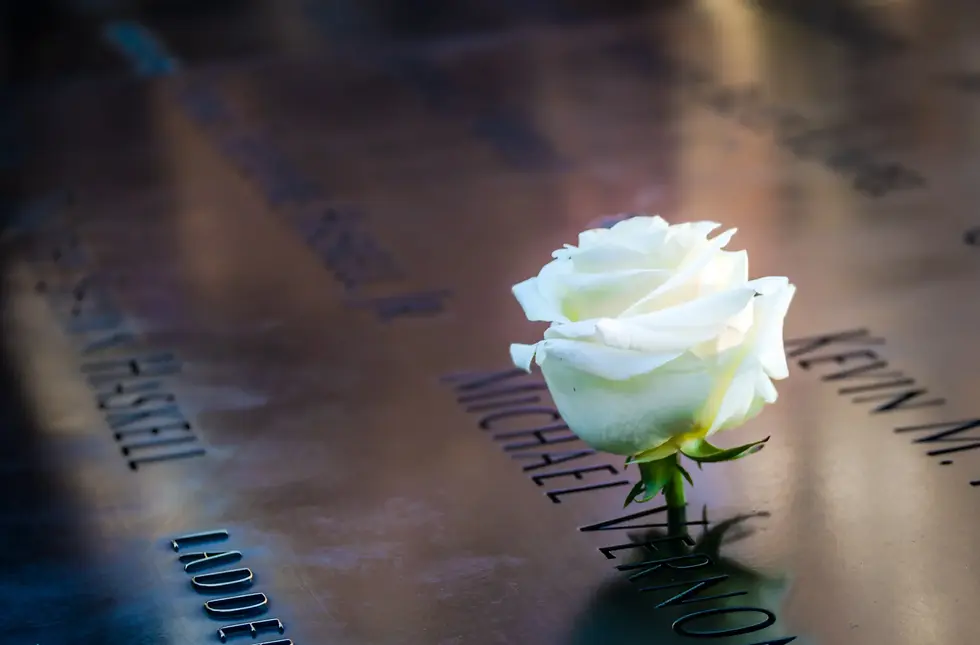
The most solemn space inside the New York City Fire Museum is its permanent 9/11 Memorial Room.
The museum identifies it as the first permanent memorial created for the 343 members of the FDNY who were killed in the September 11 attacks. The room is built around a black marble-and-tile memorial bearing the names and images of the firefighters who died.
It is not merely a wall of names.
Display cases contain tools and equipment associated with the response and recovery operation at Ground Zero, including objects recovered from the World Trade Center site. One case holds a ruptured air cylinder from an FDNY self-contained breathing apparatus—the equipment that allows firefighters to breathe while entering smoke-filled and toxic environments.
Photographs record the attacks and their aftermath, while a wall-sized timeline traces the events of September 11.
The objects are powerful because they remain physical evidence of the work performed that day. They belonged to an operation in which firefighters climbed upward while thousands of office workers were evacuating downward. They also speak to the recovery effort that continued at Ground Zero long after television cameras began to leave.
The room does not need theatrical effects. The damaged equipment, photographs and 343 individual faces provide all the context required.
Why This Memorial Is Different From the 9/11 Memorial & Museum
The New York City Fire Museum and the National September 11 Memorial & Museum serve different purposes.
The 9/11 Memorial & Museum at the World Trade Center documents the attacks in their broadest historical context: the victims, survivors, buildings, perpetrators, rescue operations, global consequences and continuing legacy of September 11.
The Fire Museum tells a more concentrated story. Its memorial focuses specifically on the FDNY, the 343 department members killed that day and the equipment carried into one of the most dangerous emergency operations in American history.
Visitors interested in understanding September 11 should not necessarily view these two museums as alternatives. Seen together, they provide different layers of the same history.
The Fire Museum explains the institution, traditions, tools and culture from which the responding firefighters came. The 9/11 Memorial & Museum documents the scale of the attack and its consequences. The outdoor 9/11 Memorial then returns visitors to the precise footprints of the North and South Towers.
The Fire Museum is roughly a 20-minute walk from the World Trade Center campus, making it possible to visit both areas during the same day without rushing through either one.
A Personal Reason I Recommend Visiting
For me, September 11 is not abstract history. My oldest brother was killed in the North Tower, along with people I had known since childhood.
That is why I am extremely careful about recommending attractions connected to 9/11. The attacks should never be treated as a backdrop for entertainment, sensational storytelling or easy social-media content.
The Fire Museum’s Memorial Room earns its place in a thoughtful September 11 itinerary because it centers service, material evidence and individual loss. It helps visitors understand what the FDNY carried into the World Trade Center, what the department lost there and why the consequences of that day continue within the firefighting community.
The broader museum also provides necessary context. The firefighters who responded on September 11 were part of a department shaped by centuries of fires, disasters, technological changes and accumulated institutional knowledge. Understanding that history makes the scale of the department’s response even more meaningful.
Is the New York City Fire Museum Appropriate for Children?
The museum’s larger collection is especially appealing to families. Historic fire engines, horse-drawn apparatus, uniforms and firefighting tools give children tangible ways to engage with New York history.
The museum has also traditionally operated fire-safety education programs in cooperation with the FDNY, including an instructional apartment used to teach children how to identify hazards and respond during a fire.
Parents should approach the 9/11 Memorial Room differently. It is a respectful, emotionally serious space containing images of the firefighters who died and objects recovered from Ground Zero. Whether a child is ready for it depends on their age and understanding of September 11.
It can provide an important opportunity for a family conversation, but it should not be introduced as simply another display of firefighter equipment.
Planning a Visit After the Reopening
The New York City Fire Museum is located at:
278 Spring Street Between Varick and Hudson StreetsHudson Square, Manhattan
The nearest subway options include the C or E train to Spring Street and the 1 train to Houston Street.
As of August 21, the museum’s official visitor-information page still displays its old closure notice and has not posted reliable updated hours or admission prices. That information should change shortly following the reopening.
Until the website is updated, call the museum directly at 212-691-1303 before making a special trip. Do not rely on older third-party listings for current hours or ticket prices.
The reopening has been confirmed; the online visitor logistics simply have not caught up yet.
What Else Is Nearby?
The museum sits in Hudson Square, immediately west of SoHo and within walking distance of several sites that can deepen the historical experience:
The 9/11 Memorial and World Trade Center campus
FDNY Ten House, directly across from the World Trade Center
St. Paul’s Chapel, which became a relief center for recovery workers after September 11
The Oculus and Liberty Park
The Hudson River waterfront
SoHo’s cast-iron architecture
Greenwich Village
If September 11 is your primary interest, allow sufficient time for the Fire Museum’s Memorial Room rather than treating it as a quick stop on the way to Ground Zero.
You can also read our complete visitor’s guide to the 9/11 Memorial and World Trade Center campus before planning your route.
More Than a Reopening
The reopening of the New York City Fire Museum would matter in any year. Its return ahead of the 25th anniversary of September 11 gives it additional weight.
New York’s history is often told through its wealthiest families, largest buildings and most famous politicians. The Fire Museum preserves a different history: the people expected to enter those buildings when everyone else needs to leave.
Its collection follows that responsibility from the leather buckets of colonial New Amsterdam to the equipment recovered from the World Trade Center site. Few museums reveal so clearly how a city’s growth, architecture, technology, disasters and public service are connected.
After two years of uncertainty, those stories are accessible to the public again.
That is very good news for New York.
Sources and Visitor Updates
This article was published immediately after the August 20 reopening. We will update the visitor information when the museum releases its new operating hours and admission prices.