
How Aaron Burr's Fall Helped Build the Astor Fortune
- Dana at Vibe Tours

- 2 days ago
- 6 min read
Most people think of Aaron Burr and John Jacob Astor as figures from completely different stories.
Burr belongs to the Revolutionary generation — the duels, the Founding Fathers, the election of 1800, and Alexander Hamilton. Astor belongs to another New York entirely — the rise of American capitalism, Manhattan real estate speculation, and fortunes so large they helped create the modern Gilded Age.
 | 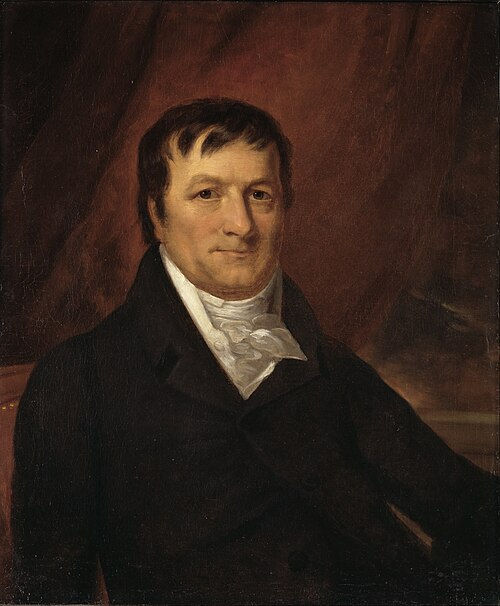 |
But the two men are connected, and the connection is a real estate deed, not a friendship. One of the most valuable pieces of land in Astor's empire had once belonged to Aaron Burr, and the story of how it changed hands tells you almost everything you need to know about how New York transformed from a small port city into the financial capital of the United States.
Richmond Hill: Aaron Burr's Country Estate
When Aaron Burr took over the lease on Richmond Hill in the 1790s, Greenwich Village wasn't really part of New York City as we think of it today. The city itself stayed concentrated much farther south, and what's now the Village was considered countryside — a 26-acre property leased from Trinity Church, sitting on a bluff that, before landfill pushed the shoreline out, looked directly over the Hudson.
The estate already had a history before Burr ever arrived. During the Revolutionary War, George Washington used the property as a headquarters after British forces occupied New York, and John Adams lived there as well, while serving as the nation's second vice president — meaning Richmond Hill is the rare address that can claim two future vice presidents as tenants before it became infamous because of a third.

When Burr took it over, he poured money into it, redecorating the mansion and reshaping the grounds, even damming a local creek to create an ornamental pool near the entrance. Statesmen visited. Diplomats attended dinners. Political alliances were formed over its dinner table. His daughter Theodosia grew up there. For a time, Richmond Hill represented everything Burr had achieved: a successful law practice, real political power, social standing, and some of the most desirable real estate in New York.
The Duel Changed More Than Burr's Reputation
When Burr shot Alexander Hamilton in Weehawken in 1804, the immediate casualty was Hamilton. The long-term casualty was Burr's future. His political career collapsed, his legal troubles multiplied, and three years later, in 1807, he found himself acquitted of treason but financially ruined and desperate to start over in Europe.
That's the part of the story that often gets compressed or skipped — Burr didn't lose Richmond Hill the week after the duel. He held onto it through his vice presidency, through the conspiracy that led to his treason trial, and only let it go once he had no other way to raise cash for his exile. Desperate for money, he transferred the deed to a buyer who'd been circling the property for years.
Enter John Jacob Astor
John Jacob Astor arrived in America as a German immigrant with almost nothing — by his own later account, carrying little more than a shipment of flutes when he landed in 1784. By the early 1800s, he'd already built a real fortune through the fur trade. But unlike most wealthy New Yorkers of his era, Astor understood something that would eventually make him far richer than fur ever could: the future of New York wasn't going to be decided on the water. It was going to be decided on the land underneath it.

While most investors focused on shipping, commerce, or banking, Astor quietly bought up land — farms, leases, undeveloped lots well north of the built-up city. People thought he was buying wilderness. Astor was buying the city's future address.
In 1807, Richmond Hill became part of that pattern in the most direct way possible. Burr, fleeing for Europe and out of options, transferred the deed to Astor for $32,000 — a price Burr apparently believed reflected a temporary, almost favor-like arrangement. Astor did not see it that way. Over the following two decades, he carved the 26-acre estate into hundreds of individual lots, negotiating ever-higher rents and resale prices as the city grew up around them.
The Land Beneath Greenwich Village
What happened to the property afterward is its own small piece of New York theater. Rather than simply tearing the Richmond Hill mansion down, Astor had it physically moved — rolled on logs in December 1820 to a new street corner at Varick and Charlton, where it was converted into a theater and opera house. For a brief stretch, the same building where Burr once entertained Revolutionary War generals hosted Italian opera, its boxes dressed in blue hangings and gilded cornices. It eventually slid downmarket into a saloon, and the building was finally demolished in 1849.
Even Burr's old carriage house didn't stay put. Astor had it moved further along the property as he developed the land around it — the same carriage house that still stands today on Barrow Street, now home to the restaurant One If By Land, Two If By Sea. The building you can walk into for dinner tonight isn't just connected to Burr's estate. It was physically relocated by the man who profited from Burr's downfall.
As Manhattan pushed northward through the early nineteenth century, the rest of the old estate followed the same pattern: country roads became city streets, private grounds became row houses, and property values climbed steadily upward. By the middle of the century, the Astor name had become nearly synonymous with New York real estate, built on a philosophy that the land itself was worth more than whatever happened to be standing on it at any given moment.
The New York Story in One Block
What fascinates me about the connection between Burr and Astor is how completely it captures New York's habit of reinventing itself out from under the people who briefly own it. Burr saw Richmond Hill as a country retreat, a place to entertain and raise his daughter, removed from the crowded city to the south. Astor saw the same acreage as the inevitable next neighborhood of a growing metropolis. Both men were intelligent. Both understood opportunity. But Astor understood something Burr never had the chance to fully exploit: in New York, the land usually outlives whoever happens to be standing on it.
The estate that symbolized Burr's rise disappeared. The real estate remained, and over the decades it became worth far more than either man could have imagined when the deed changed hands for $32,000 in 1807.
Burr, Hamilton, and Wall Street
The connection also creates an interesting bridge between Burr, Hamilton, and the financial history of New York. Hamilton helped build America's financial system. Burr became famous for killing him, and then, separately, for losing the ground beneath his own feet. Astor demonstrated how immense fortunes could be built simply by understanding where the city was about to grow next.
Together, the three men represent different phases of the same transformation. Hamilton helped create the rules of the system. Burr embodied the volatile, often self-destructive politics of the early republic. Astor mastered the economics of an expanding metropolis once the political drama had moved on without him. All three stories ultimately intersect within a few blocks of each other, in Lower Manhattan and Greenwich Village.
Standing There Today
Very little of Richmond Hill survives in any visible form. The mansion is gone, rolled away and torn down generations ago. The pond, the gardens, and the carriage drive vanished beneath the street grid long before anyone alive today was born. Yet the story remains visible if you know where to look — the same carriage house Astor once had relocated still stands on Barrow Street, doing a very different kind of business than it ever did for Burr.
The surrounding neighborhood is, in a real sense, Astor's neighborhood now, built lot by lot on the bones of Burr's old estate, reflecting exactly the rise in land values he anticipated two centuries ago. The transformation of Greenwich Village from a rural retreat for vice presidents into one of the most famous neighborhoods in the world is still one of the clearest examples of how New York continually reinvents itself, and how rarely it does so on the original owner's terms.
One man's country estate. Another man's real estate empire. The same land. A completely different city.


