
The Deep-Dive NYC Christmas Archive: History, Secrets & Hidden Gems

Updated: 9 hours ago
Updated September 14, 2026
Christmas in New York City is built on far more than famous trees, window displays and crowded Midtown attractions. Its traditions were shaped by immigrant communities, construction workers, composers, retailers, first responders, street vendors and generations of New Yorkers who carried the season through war, crisis and constant change.
This archive brings together 12 stories exploring the hidden history and sensory character of Christmas in NYC—from German holiday markets and Jewish songwriters to Rockefeller Center, Québécois tree vendors and Christmas Eve inside the city’s historic churches.
📍 THE TABLE OF CONTENTS
This archive is for the curious traveler, the die-hard history buff, and the reader who wants to understand the soul of the city. Over the years, we have meticulously documented the untold human-interest stories, the hidden architectural marvels, the complex cultural history, and the hyper-local survival strategies that define New York during the winter.
Archive Directory: Choose Your Chapter
Immigrant and Cultural Origins of Christmas in New York
The History of New York City’s Iconic Christmas Traditions
Untold Christmas Stories and Traditions of Local New Yorkers
The Sights, Sounds and Sacred Traditions of Christmas in NYC
CULTURAL & IMMIGRANT ROOTS OF NEW YORK CHRISTMAS
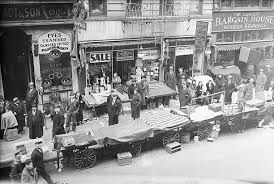
How German Immigrants Invented the NYC Holiday Market
The wooden stalls, handmade ornaments, roasted treats and warm drinks found at New York City’s Christmas markets belong to a tradition far older than Bryant Park or Union Square. Their ancestry reaches back to the Weihnachtsmärkte of German-speaking Europe, including centuries-old winter markets in Vienna, Dresden and Nuremberg.
When large numbers of German immigrants settled in nineteenth-century New York, especially in Kleindeutschland—Little Germany—on the Lower East Side, they brought Christmas trees, Advent customs, holiday baking, handcrafted decorations and communal winter celebrations with them. These traditions gradually entered the wider culture of the city, influencing how New Yorkers celebrated, shopped and experienced Christmas in public.
Today’s markets are modern creations: Union Square Holiday Market opened in 1993, followed by Bryant Park’s Holiday Shops in 2002. Yet their wooden booths, artisan gifts, seasonal foods and European atmosphere draw unmistakably from the older Christkindlmarkt tradition.
The full story follows that journey from medieval Europe through immigrant Lower Manhattan and into the holiday markets that now define December in New York City.
Read the full story of how German immigrant traditions shaped NYC’s Christmas markets.
The Hidden Impact of Jewish New Yorkers on the Modern Holiday
Some of America’s most familiar Christmas songs, storefront traditions and seasonal emotions were shaped by Jewish New Yorkers. That is not a contradiction in the history of Christmas—it is one of the reasons the American holiday became so culturally expansive.
Irving Berlin, a Jewish immigrant raised on the Lower East Side, wrote White Christmas, the best-selling physical single ever recorded. Johnny Marks, born in Mount Vernon and closely connected to New York’s music industry, created Rudolph the Red-Nosed Reindeer, Rockin’ Around the Christmas Tree and A Holly Jolly Christmas. Their work emerged from the same New York songwriting culture that gave the country Broadway, Tin Pan Alley and generations of popular standards.

Jewish entrepreneurs also helped transform Christmas into a public urban spectacle. Benjamin Altman, the Bloomingdale brothers and the Gimbel family built department stores where theatrical windows, seasonal displays and gift shopping became civic traditions available even to people who never entered the stores.
Christmas in New York was never created by a single community. Its music, commerce, ritual and emotional vocabulary were assembled across cultures—and Jewish New Yorkers helped give the modern holiday much of its sound, appearance and enduring sense of longing.
Read the full story of the Jewish New Yorkers who helped shape the modern American Christmas.
The 130-Year History of the NYC Salvation Army Kettle
The bell, the red kettle and the bundled-up figure standing beside it have become almost subliminal parts of Christmas in New York City. Long before the Rockefeller Center tree appeared, New Yorkers were already dropping coins into Salvation Army kettles to help provide food and assistance to people in need.
The tradition began in San Francisco in 1891, when Salvation Army Captain Joseph McFee placed a crab pot on the street and collected donations for a community Christmas dinner. The idea reached New York in 1897, where the city’s enormous population—and the visible poverty of neighborhoods such as the Bowery and Lower East Side—gave the campaign new urgency and scale.

Today, New York’s kettle stations are staffed by Salvation Army members, volunteers, paid workers and people whose own lives have been touched by the organization. Some ring quietly; others sing, dance or turn the familiar bell into its own street-corner performance.
Amid carols, traffic, subway musicians and sidewalk crowds, that bell carries a message with nearly 130 years of local history behind it: New York’s Christmas traditions have always included an obligation to notice—and help—the people standing beside us.
🎄 Join Us in Person on a NYC Christmas Tour
Many December slots are already filled, some slots will be added upon demand. Click here to view our dates and secure your tickets on the Vibe NYC Tours main Christmas Tour Page.
HISTORY OF NEW YORK CITY'S ICONIC CHRISTMAS TRADITIONS
The First Rockefeller Tree: The Great Depression Story Behind the Icon
The Rockefeller Center Christmas Tree may now be one of the world’s most elaborate holiday spectacles, but its origins were remarkably humble. The tradition began in December 1931, while Rockefeller Center was still a muddy construction site and New York was struggling through the Great Depression.
Construction workers erected a roughly 20-foot balsam fir near the worksite and decorated it with simple handmade ornaments, including paper garlands, cranberries, and flattened tin cans. There was no formal ceremony, celebrity performance, or massive lighting display. It was a modest expression of hope created by working New Yorkers during an exceptionally difficult period.
Rockefeller Center introduced its first official tree-lighting ceremony in 1933, illuminating the tree with approximately 700 lights. The event grew steadily, and its 1951 national television broadcast helped transform a local New York tradition into an American holiday ritual.

Knowing that history changes what the tree represents. Beneath today’s thousands of lights and enormous crowds remains the spirit of that first improvised tree: ordinary people choosing to create something beautiful together when circumstances offered them little reason for celebration.
Read the full Depression-era story behind the first Rockefeller Center Christmas Tree.
The Window Display Revolution: How NYC Changed Global Shopping Forever
New York City helped transform Christmas shopping into public theater. In 1874, Lord & Taylor reportedly created one of the city’s earliest major holiday window displays, replacing ordinary merchandise arrangements with elaborate winter scenes and animated figures designed to stop pedestrians in their tracks. Macy’s and other department stores soon expanded the idea, turning Manhattan’s sidewalks into free seasonal entertainment.
The brilliance of the Christmas window was its accessibility. No purchase was required, and everyone—from newly arrived immigrants to New York’s wealthiest residents—could experience the same glowing fantasies from the sidewalk. The displays blended European holiday traditions with New York’s retail ingenuity, theatrical ambition, and belief in spectacle.

During the twentieth century, artists such as Tiffany & Co.’s Gene Moore elevated window design into public art. Bergdorf Goodman later pushed the tradition toward elaborate, museum-like installations created by teams of designers, sculptors, painters, and craftspeople.
Today, Fifth Avenue’s holiday windows remain temporary works of extraordinary imagination. Built over many months and dismantled after only a few weeks, they embody something distinctly New York: the willingness to create beauty on an enormous scale for strangers to enjoy freely.
Read the full story of how New York City turned Christmas windows into a global holiday tradition.
America 250 and Christmas: How Revolutionary New York Shaped the Holidays
Christmas in Lower Manhattan took on extraordinary meaning in December 1783. For seven years, New York had been occupied by British forces, its churches damaged or converted to military use and much of its Patriot population displaced. That occupation finally ended on November 25, when George Washington entered the city following the British evacuation.
Nine days later, Washington gathered his officers inside Fraunces Tavern. After raising a glass to the men who had served beside him, he embraced them individually and departed for Mount Vernon. New Yorkers then celebrated their first Christmas after liberation from British occupation—a holiday shaped as much by survival and independence as by religious tradition.

The streets where that December unfolded remain at the heart of Lower Manhattan. St. Paul’s Chapel survived the Great Fire of 1776 and continued serving the community. Trinity Church, destroyed in the fire, would later be rebuilt. Fraunces Tavern still preserves the room where Washington said farewell, while Federal Hall marks where he returned in 1789 to become the nation’s first president.
During America’s 250th anniversary year, these sites reveal a deeper layer beneath the neighborhood’s Christmas lights: the story of a city reclaiming its streets, institutions, and celebrations after seven years of war.
Read the full story of Christmas in New York following the British evacuation of 1783.
🎄 Join Us in Person on a NYC Christmas Tour
Many December slots are already filled, some slots will be added upon demand. Click here to view our dates and secure your tickets on the Vibe NYC Tours main Christmas Tour Page.
UNTOLD CHRISTMAS STORIES AND TRADITIONS OF LOCAL NEW YORKERS
The Secret Tradition of NYC’s Quebecois Christmas Tree Vendors
Every November, Christmas tree lots seem to appear overnight on New York City sidewalks. Behind many of them are families who have traveled hundreds of miles from Quebec, Vermont, and New Hampshire, bringing truckloads of fir trees and generations of experience with them.
For approximately six weeks, these vendors live and work beside their inventory. They endure long days, freezing rain, and New York’s notorious winter wind tunnels, often sleeping in trailers or temporary shelters behind their lots. Many return to the same corner year after year, building relationships with customers whose families have bought trees from them for decades.

The operation is more complicated than it appears. Vendors must transport thousands of trees, secure locations and permits, hire workers, protect their inventory, and predict demand closely enough to avoid being left with unsold trees after Christmas. Yet the tradition has survived artificial trees, big-box retailers, rising costs, and even the disruptions of 2020.
These seasonal lots provide more than Christmas trees. They give New York one of its defining December sensations: the unmistakable smell of fresh pine drifting down a cold city block. Without the vendors who return each November, Christmas in New York would look—and smell—entirely different.
Read the full story of the families behind New York City’s Christmas tree lots.
Behind the Badge: How the NYPD and FDNY Celebrate the Holidays
Beyond New York’s famous trees and window displays, another Christmas unfolds inside the city’s firehouses and police precincts. First responders decorate their stations, organize toy drives, deliver gifts, and share holiday meals—often while remaining on duty throughout the celebrations.
NYPD precincts work with neighborhood groups, schools, businesses, and organizations such as the Police Athletic League to collect toys for local children. FDNY companies and the FDNY Foundation also distribute thousands of gifts to families across the city. These efforts turn working precincts and firehouses into community gathering places, creating positive connections between first responders and the neighborhoods they serve.
Inside an FDNY firehouse, Christmas is especially personal. Firefighters spend extended shifts cooking, eating, and responding to emergencies together, making the station a genuine second home. Decorations beside polished fire engines reflect the pride and affection of the company rather than a performance created for visitors.
The season also carries remembrance, particularly near the 9/11 Memorial and Engine 10/Ladder 10. Photographs and memorials honor colleagues who died while younger generations continue their work. Calls do not stop for Christmas, but neither do these traditions of generosity, service, community, and remembrance.
The City That Kept the Lights On: NYC Christmas During Wartime and Crisis
When the United States entered World War II in December 1941, Christmas in New York changed almost overnight. Troops passed through Penn Station and Grand Central, ships departed from the harbor, and families confronted the uncertainty of a global conflict. The city continued celebrating, but its holiday traditions took on a more restrained and purposeful character.
Churches filled with soldiers and civilians seeking comfort, while USO centers, hotel ballrooms, and church basements offered service members meals, entertainment, and places to rest before deployment. By 1942, wartime shortages forced Macy’s to suspend its Thanksgiving Day Parade. It would not return until 1945. Even familiar spectacles were adjusted as resources and public attention shifted toward the war effort.

Yet New York never abandoned the season entirely. Christmas became an expression of continuity: a declaration that hardship could alter the city’s rituals without extinguishing them. That instinct resurfaced after September 11, during the 2008 financial crisis, and again in 2020, when Rockefeller Center lit its tree without the usual public crowd.
New York’s resilience is often described through rebuilding and recovery. Its Christmas history reveals another form of resilience—the determination to preserve light, beauty, and human connection when the city needs them most.
Read the full story of how New York carried Christmas through war and crisis.
🎄 Join Us in Person on a NYC Christmas Tour
Many December slots are already filled, some slots will be added upon demand. Click here to view our dates and secure your tickets on the Vibe NYC Tours main Christmas Tour Page.
THE SIGHTS, SOUNDS AND SACRED TRADITIONS OF CHRISTMAS IN NYC
Roasted Nuts & Evergreens: What NYC Smells Like in December
New York has a distinctive smell in every season, but December adds an unmistakable layer of pine, roasted chestnuts, cold river air, and damp winter streets. These scents form a sensory version of Christmas that photographs and decorations cannot reproduce.
Fresh-cut fir is the season’s most powerful note. It drifts from the Christmas tree lots that appear on city corners each November, many operated by families returning from Quebec and northern New England. Nearby food carts contribute the smoky sweetness of roasted chestnuts—a New York winter tradition dating back to nineteenth-century Italian and Sicilian vendors and continued today by vendors from other immigrant communities.

Along the waterfront, cold air carries the mineral scent of the Hudson and East Rivers. At the South Street Seaport, it mingles with the pine of the neighborhood’s Christmas tree. Elsewhere, another familiar sensation arrives when a door opens: the sudden smell of coffee, candle wax, old wood, or restaurant kitchens as you step inside from the cold.
Even the subway contributes its mixture of wet wool, damp umbrellas, and underground warmth. Individually, these smells may seem ordinary. Together, they create an atmosphere that belongs specifically to New York in December—and can summon the city years after a visitor has returned home.
Read the complete sensory guide to what New York City smells like at Christmas.
Sirens, Footsteps, and Carols: What a NYC Christmas Sounds Like
Christmas in New York has a soundscape as distinctive as its lights. It changes from block to block: chestnuts hissing on a vendor’s grate, familiar songs drifting from storefronts, brass musicians playing beside subway entrances, and Salvation Army bells ringing above the traffic.
Some of the city’s most enduring Christmas sounds come from its churches. The bells of St. Paul’s Chapel and Trinity Church carry through Lower Manhattan, connecting the modern holiday season to centuries of New York history. Uptown, Riverside Church’s enormous carillon can be heard across the surrounding neighborhood, while seasonal concerts fill historic sanctuaries with choral and orchestral music.
Underground, subway performers turn tiled platforms and passageways into unexpected concert halls. A saxophone, cello, or lone voice can briefly unite a platform of strangers before everyone continues toward separate destinations.
The season also creates rare moments of quiet. Late on Christmas Eve, Midtown’s traffic thins, storefronts close, and pedestrians can suddenly hear their own footsteps beneath lights that normally glow above enormous crowds.
Together, the bells, music, street vendors, subway performers, traffic, and occasional silence create a Christmas soundtrack that could belong nowhere but New York.
Read the complete sensory guide to what New York City sounds like at Christmas.
Midnight Mass & History: Inside New York's Great Churches on Christmas Eve
Beyond New York’s crowded sidewalks and commercial spectacle, Christmas Eve brings a different atmosphere to the city’s historic churches. Choral music, candlelight, organ performances, and centuries-old traditions create moments of stillness that many visitors never experience.
At St. Patrick’s Cathedral, the Cardinal presides over an elaborate midnight Mass accompanied by the cathedral choir and monumental pipe organ. Nearby, St. Bartholomew’s offers an intimate Episcopal service inside its distinctive Byzantine-Romanesque sanctuary, concluding portions of the evening by candlelight.

Farther uptown, Riverside Church’s 74-bell carillon fills the surrounding neighborhood with music. Its largest bell weighs approximately 20 tons, giving the Christmas Eve performance a scale that can be heard well beyond the church itself.
In Lower Manhattan, Trinity Church connects the holiday to some of New York’s deepest history. Its parish dates to the seventeenth century, while Alexander and Eliza Hamilton rest in its churchyard. Christmas services there continue a tradition older than Rockefeller Center, Fifth Avenue’s department-store windows, or nearly every other attraction associated with the modern New York holiday.
Together, these churches offer something increasingly rare during December: spaces where the city’s noise gives way to reflection, music, history, and communal ritual.
Read the complete guide to Christmas Eve inside New York City’s historic churches.
🎄 Join Us in Person on a NYC Christmas Tour
Many December slots are already filled, some slots will be added upon demand. Click here to view our dates and secure your tickets on the Vibe NYC Tours main Christmas Tour Page.
🗽 Plan the Rest of Your 2026 NYC Holiday Trip
Don't stop with the history. We’ve mapped out the entire holiday season with insider, native-led blueprints to help you skip the tourist traps and experience New York like a local.
The Ultimate Master Blueprint: Read our massive Christmas in NYC: The 2026 Guide Nobody Else Will Give You for elite logistics, dining secrets, and timing tips.
Escape the Holiday Chaos: Check out our Non-Touristy Christmas in NYC: The 2026 Crowd-Free Layout to discover the quietest, most magical spots in the city.
See Available Tour Dates: Head straight to the Vibe NYC Christmas Tours Page to check December calendar availability.

