
Richmond Hill: Aaron Burr's Lost Greenwich Village Mansion and the Carriage House That Survived
- Dana at Vibe Tours

- 2 days ago
- 5 min read
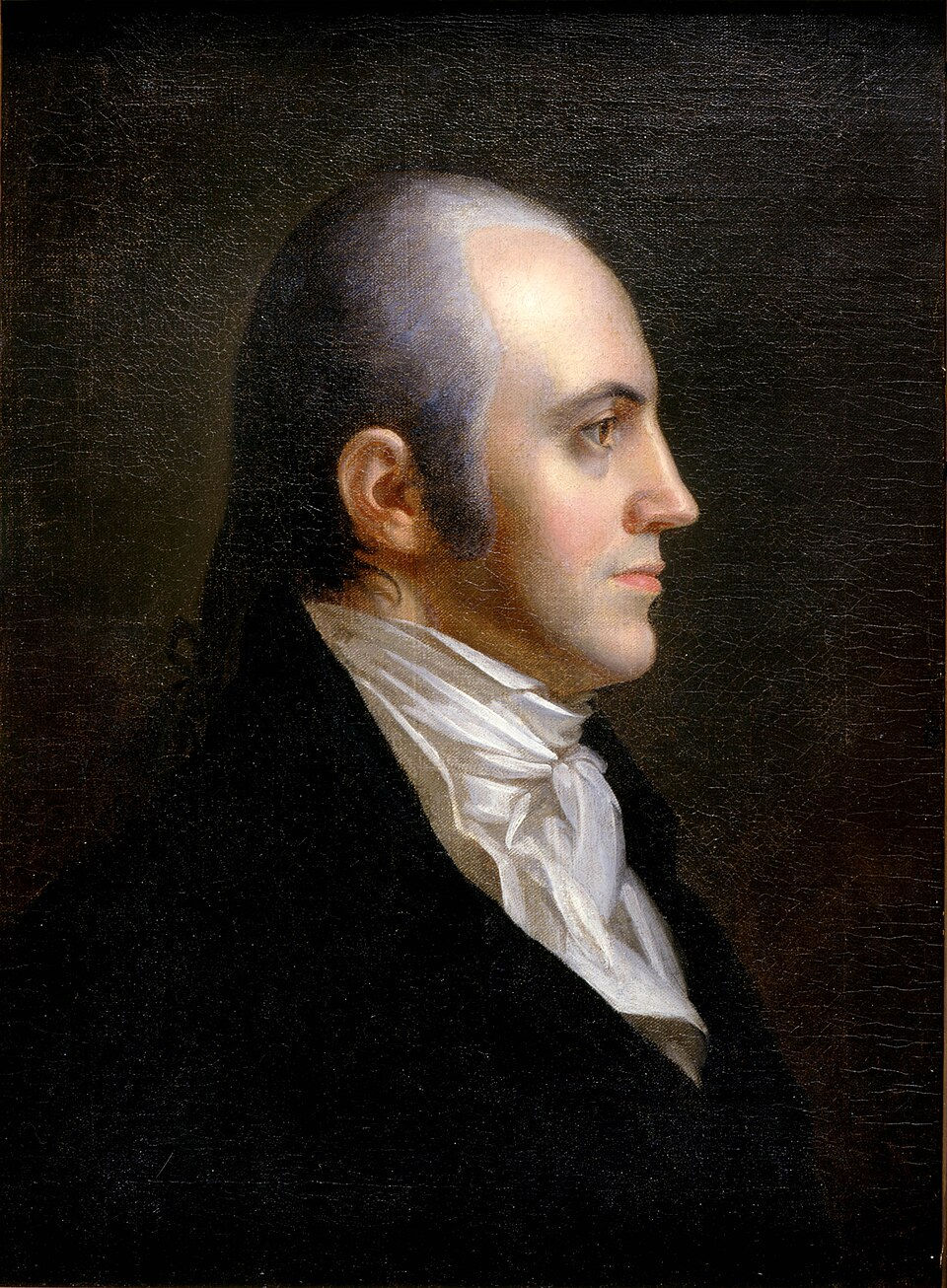
Before he was the most reviled man in America, Aaron Burr lived in what was, by every contemporary account, the finest house in New York. The Aaron Burr house that once stood in what is today's historic Greenwich Village has an incredibly rich history.
It was called Richmond Hill — a 26-acre estate roughly where Varick, Charlton, King, and MacDougal Streets meet today, in what's now the West Village. The mansion had served as George Washington's headquarters during the Revolutionary War. John Adams lived there too, when the federal government was briefly based in New York. By the time Burr bought it in the 1790s, it was already one of the most historically significant addresses in the young country.
Richmond Hill was one of the grandest estates in what would later become Greenwich Village. Few surviving stories connect visitors so directly to Revolutionary-era New York and even fewer b locations in New York City can claim connections to so many Founding Fathers.
Burr made it grander. An 1861 biography describes "ample gardens, and a considerable extent of grove and farm" with grounds running down to the Hudson. The library — Burr's pride — was filled with books imported from London. There was a gallery lined with windows displaying his art collection. By the time Burr became vice president in 1801, Richmond Hill was hosting the kind of dinners where the conversation moved fluidly between literature, philosophy, and politics, with Burr's daughter Theodosia, still a teenager, acting as hostess — charming, brilliant, completely at ease with the most powerful people in the country.
Theodosia grew up in this house. It was where she was educated, where she practiced the languages and ideas her father insisted she master, where she became the woman who could run a vice president's household at sixteen. If you want to understand who Theodosia was before she disappeared at sea — and before her ghost, by local legend, ended up on Barrow Street — Richmond Hill is where that story starts.
For a brief period, Richmond Hill served as Aaron Burr's primary residence in New York City. The estate was Aaron Burr's home, mansion, and political headquarters during the peak of his career. Today, few visitors exploring the neighborhood realize they are walking across the former historic Greenwich Village estate.
July 11, 1804: The Last Morning
The rivalry between Aaron Burr and Alexander Hamilton reached its climax on July 11, 1804. On that morning, Aaron Burr woke up at Richmond Hill, had himself rowed across the Hudson to Weehawken, New Jersey, and shot Alexander Hamilton. He came home that same day. Hamilton died the next.

Within months, everything changed. Burr was still technically vice president — he finished out his term — but politically, he was finished. Hamilton's death turned public opinion against Burr almost overnight, in a way the duel itself, by the standards of the era, might not otherwise have done. Dueling was illegal in both New York and New Jersey but commonly practiced and rarely prosecuted. What made this different was who Hamilton was, and how completely Burr's reputation collapsed in the aftermath.
What Happened to the House
Burr never lived at Richmond Hill again. He sold the estate — to John Jacob Astor, of all people, who would go on to become one of the wealthiest men in American history off the back of New York real estate exactly like this.
Astor didn't keep the mansion standing where it was. As the city's grid expanded northward and the Richmond Hill estate got carved into streets and lots — the same streets that still exist today — Astor had the entire mansion physically moved, rolled on logs to a new corner, and converted into a theater and opera house. For a while, it was apparently a genuinely sumptuous one — boxes furnished like elegant parlors, a serious cultural venue for the growing city.
Eventually the opera house came down too. Today, nothing of Richmond Hill's mansion survives above ground. The footprint is somewhere under the West Village street grid, indistinguishable from any other block unless you know what you're looking for.
But the carriage house survived.
17 Barrow Street
When Astor moved the mansion, Burr's old carriage house was relocated too — further north, to what's now 17 Barrow Street. Over the following two centuries it became, at various points, a firehouse, a brothel, and a silent movie theater, before eventually becoming the restaurant it is today: One if by Land, Two if by Sea, often described as one of the most haunted restaurants in New York City.
This is the building where, before any of this happened — before the duel, before Astor, before the mansion was disassembled and rolled away — Burr lived with Theodosia after her mother died. It's the one piece of Richmond Hill that's still standing in something close to its original form, just moved a few blocks and repurposed a dozen times over. Few visitors dining at One if by Land, Two if by Sea realize they are sitting inside the last surviving piece of Aaron Burr's Richmond Hill estate.
It's also, according to two centuries of reported hauntings, where both of them still are. This legend remains one of the most enduring Greenwich Village ghost stories.
Why This Matters for Where You're Standing
If you walk through the West Village today, there's nothing that announces Richmond Hill was here. No plaque marks the footprint of what contemporaries called the most interesting building ever erected in the neighborhood. The mansion that hosted vice-presidential dinners, that Theodosia ran as a teenager, that Burr woke up in on the last ordinary morning of his political life — it's just gone, absorbed into the grid like it was never there.
Except the carriage house. Except Barrow Street.
I think that's part of why the haunting stories persist the way they do. When almost everything physical from a story has disappeared, the one thing that's left becomes the place where that whole history has to live. Burr and Theodosia don't have Richmond Hill anymore. They have a restaurant on Barrow Street, and — according to the staff who work there — they're not going anywhere.
Today, Richmond Hill is largely forgotten despite once being one of the most famous estates in Revolution era New York City.
This is the first piece of a longer story I'm telling about Aaron Burr and Greenwich Village — including the duel itself and what it cost him, and the disappearance of his daughter Theodosia, whose story is one of the stops on my haunted Greenwich Village ghost tour. The carriage house at 17 Barrow Street also connects directly to my Hamilton walking tour — Burr and Hamilton's rivalry runs through both neighborhoods, right up until the morning it ended one of their lives.
More Reading

